



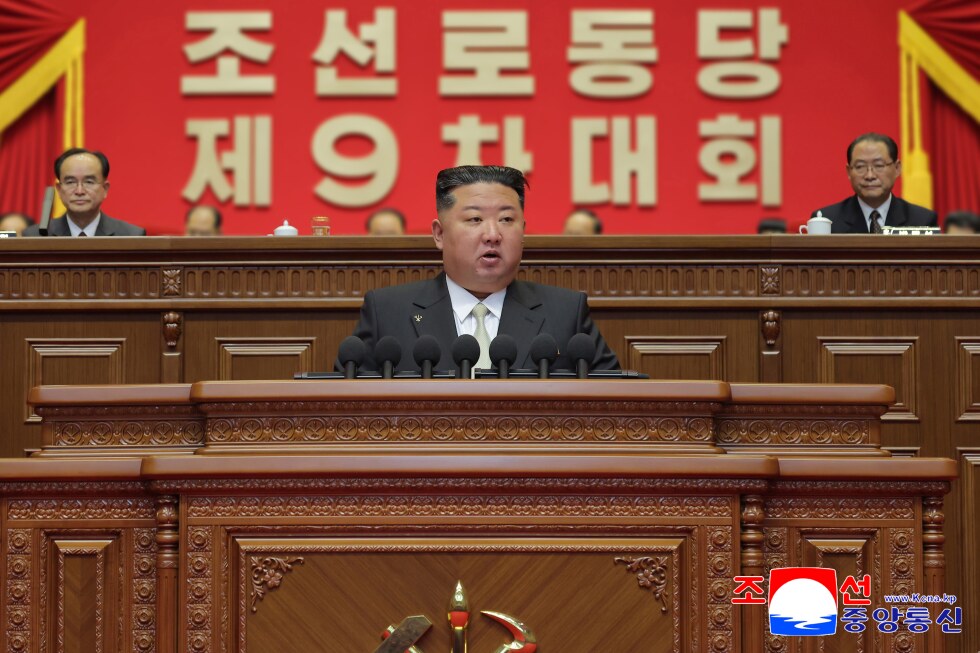
SEOUL, South Korea (AP) — North Korean leader Kim Jong Un praised the country’s economic progress and regional influence during the opening of its most significant political event, where he is expected to outline his domestic and international policy for the next five years, further strengthening his family’s authoritarian regime.
The Workers’ Party congress, anticipated to last several days in Pyongyang, coincides with Kim’s efforts to establish a more aggressive regional presence, bolstered by expanding nuclear capabilities and closer ties with Moscow, escalating tensions with Washington and Seoul.
This meeting may also serve as a platform for Kim to announce critical political and military goals while solidifying his authoritarian control in front of thousands of party delegates. Analysts suggest he might also spotlight his teenage daughter, believed to be named Kim Ju Ae, as a potential successor, formalizing a succession plan for the regime’s fourth generation.
Confidence in Leadership
As he enters his 15th year of leadership, Kim appears to be in a much stronger position compared to 2021, when North Korea faced a struggling economy exacerbated by the COVID-19 pandemic and the fallout from his diplomatic attempts with former U.S. President Donald Trump.
During that time, Kim acknowledged economic setbacks and announced a five-year development strategy through 2025 that stressed economic self-reliance. He reaffirmed his commitment to nuclear development and laid out an extensive list of advanced weapon systems.
Military Development and Geopolitical Maneuvering
Now, Kim enjoys greater confidence and less isolation, thanks to strengthened relations with Russia and China, an improved nuclear arsenal, and what many observers see as an emerging economy. In his recent speech, Kim highlighted substantial advancements since 2021, claiming an “irreversible” strengthening of North Korea’s status.
By leveraging the situation created by Russia’s war in Ukraine, Kim has accelerated weapons development and fostered deeper ties with Moscow, providing military support in exchange for possible humanitarian assistance and military technology.
Relations with Seoul and Washington
Kim has distanced himself from talks with South Korea since 2019, following collapsed negotiations with Trump over sanctions. Relations have further deteriorated as Kim in 2024 abandoned the objective of peaceful unification, now viewing Seoul as a permanent adversary.
At the congress, Kim may further solidify his hardline stance toward the South, potentially modifying party regulations to define inter-Korean relations as existing between “two hostile states.” Although South Korean President Lee Jae Myung seeks engagement, analysts do not foresee a shift in Kim’s perspective.
While maintaining a tougher approach toward Seoul, Kim might adopt a more tempered strategy with Washington to keep potential dialogue channels open, aiming for long-term sanctions relief and recognition as a nuclear state. This nuanced approach may become increasingly necessary as the situation in Ukraine evolves.
