


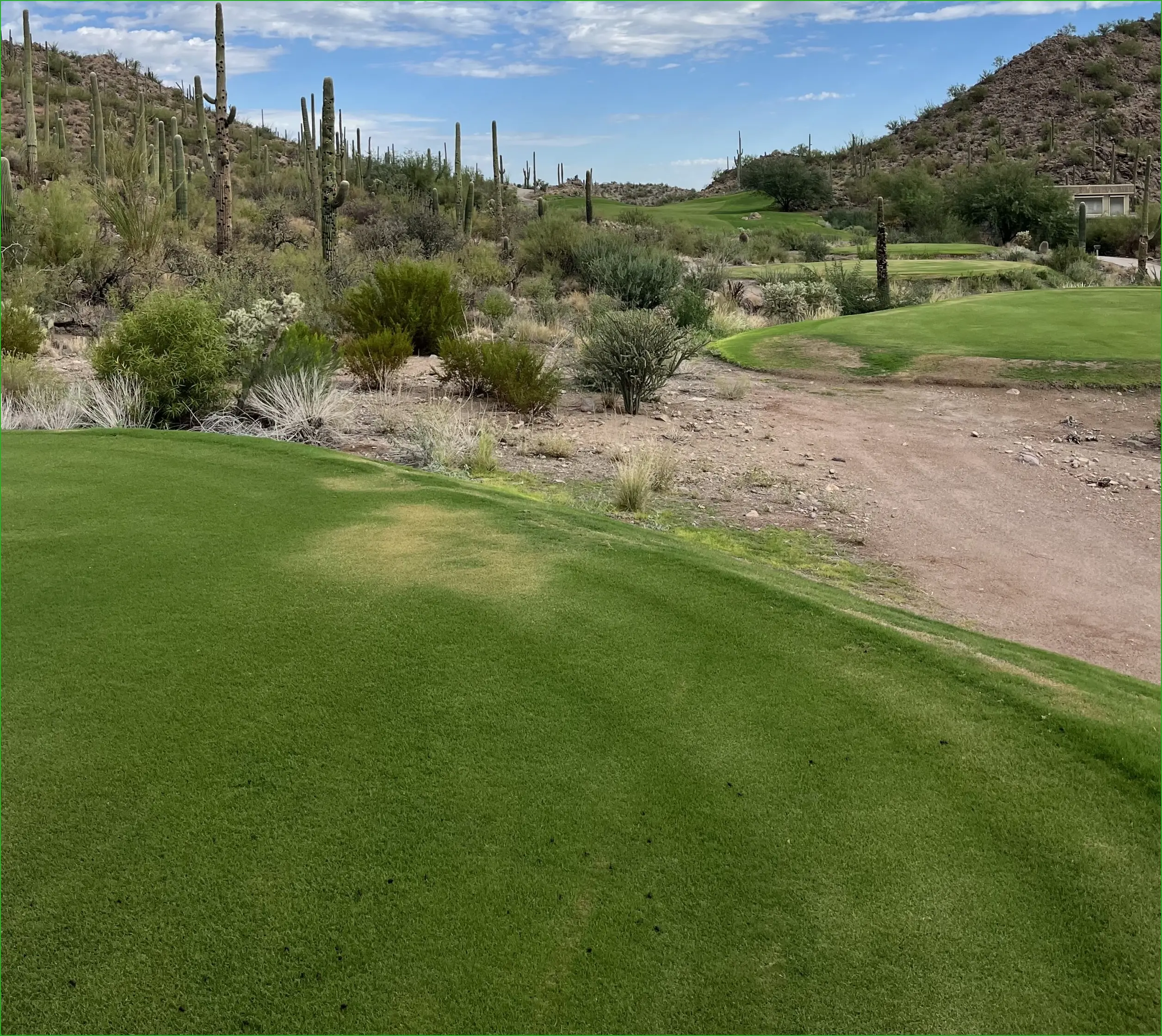
Scouting the New Second Stage Site: Starr Pass
Before the Q-School commenced, I visited Tucson to evaluate a new site for the Second Stage. Applicants rank the five courses based on preference, and for those advancing through the First Stage—or those jumping directly to Second—these choices are significant. The Club at Starr Pass is a recent addition, and reliable information about it was scarce. With it being less than two hours from Phoenix and Young the Giant performing at a historic theater in downtown Tucson, I packed my family into the car and set off southeast.
My arrival at Starr Pass the next morning was still infused with the energy from the concert. However, I soon understood that the excitement would quickly wear off. I was aware that the course was designed through desert terrain and situated on hills, but I wasn’t prepared for how narrow, blind, and challenging some holes would be.
Upon checking in, a staff member in the cart staging area initiated a discussion. “Most tee shots require irons,” he mentioned. While not a Q-School contender himself, he was familiar with the course. “It’s not designed for bombers. It forces you to think—more of an old-school plotter’s venue.” Starr Pass is the only Second Stage site under 7,000 yards, yet with a par of 70, players will still face a daunting challenge.
A tour around the property revealed the course’s difficulty. Errant shots can easily find unforgiving desert terrain, where the best outcome might just be to chip back onto the fairway. Aggressive shots risk entanglement with the sharp cholla and saguaro cacti that stand ominously like waiting sentinels. Many balls lost to the desert will be unrecoverable, and several tee shots are entirely blind, compelling players to aim for distant landmarks. On certain holes, the fairways appear as narrow green bridges over perilous ground, requiring players to adjust for significant elevation changes.
Local player Gavin Cohen, who was on the Korn Ferry Tour last season, chose Starr Pass as his top preference, believing it will dishearten many competitors. While longer courses might suit his game better, he values local knowledge here more highly.
Recently, the Asher Tour held a warm-up event at Starr Pass. Over three rounds, Ollie Osborne shot 10-under and won in a playoff—yet only 16 out of 67 players finished under par. Scores increased significantly, with only two players shooting 5-under in the first round, while no one cracked 4-under in the subsequent rounds. Notable players like Sudarshan Yellamaraju and Josh Creel missed the cut, underscoring the course’s challenges.
As my scouting trip concluded, I envisioned what a final round at Starr Pass would feel like, with everything on the line. Though I won’t be competing this week, I’ll be observing and documenting from a distance, relieved not to be in the spotlight.
