


On a memorable night in 2005, the Mojave Desert was illuminated with a green hue as Microsoft held an unusual launch event for its new console, the Xbox 360, in a desert hangar. As recounted by a Microsoft executive to Gizmodo, the event sought to evoke the spirit of Burning Man, an arts festival known for its extravagant atmosphere reminiscent of a BioShock game. One Microsoft executive even dubbed it an “Xbox 360 oasis.” Journalists and Xbox enthusiasts mingled on beanbags, experiencing Microsoft’s latest console at various stations, while drinks were served from domes that would later become iconic for COVID-era outdoor dining.
Such extravagant gaming events, where companies went all out to capture the attention of fans and the media, have become rare. However, two decades later, a remnant of this flamboyant approach has resurfaced in the Colorado desert, manifested as a mysterious demonic statue adorned with the figures of the damned.
The Game Awards’ Portal to Hell
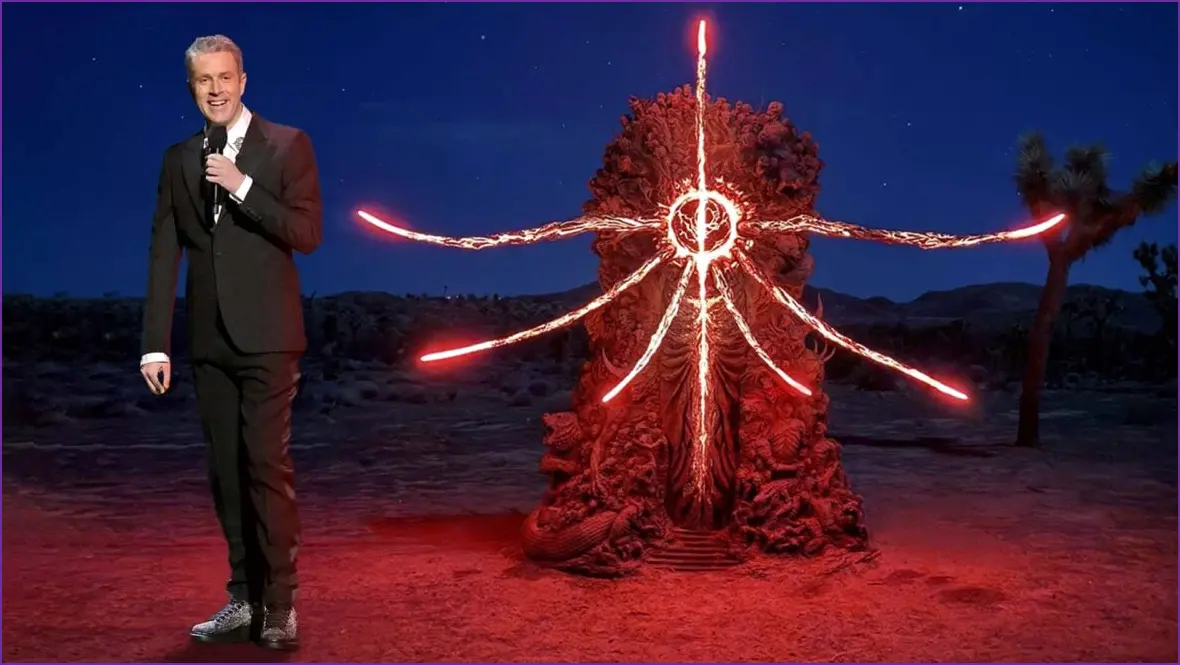
Geoff Keighley, the overseer of The Game Awards, shared a photo of this enigmatic statue accompanied by a geocode leading to Joshua Tree National Park, near Yucca Mesa Road. At night, the statue emits red tendrils of light, casting eerie shadows of screaming skeletons. Visitors to the statue have documented their experiences on social media, noting the presence of a friendly security guards, and the statue itself produces sounds. One visitor mentioned knocking on the door, claiming something responds in kind.
TautSexyElfKing, a visitor, described the sounds as “ambient and hellish,” akin to a gateway to a cavern filled with lurking demons, complemented by low growls that weren’t distinctly identifiable. To the average onlooker, the statue resembles something from Burning Man or a devil-worship altar. However, Keighley’s post serves as a clue for gamers, hinting that it’s an Easter egg—a marketing tactic driving interest not towards a specific game or console, but towards Keighley’s own year-end celebration.
The ambiguous design of the statue allows spectators to interpret it as a teaser for various high-profile games like Half-Life 3, Diablo 4, or even Doom. Some have humorously speculated that it might even symbolize Keighley opening a literal portal to hell, resulting in widespread destruction.
According to journalist Jason Schreier from Bloomberg, there’s more to the story; it’s neither for Diablo 4 nor Elder Scrolls 6, but it’s sure to generate buzz regardless. The anticipation surrounding the statue will likely draw viewers to The Game Awards, regardless of the identity of its linked game.
The New AAA Reality
While companies have historically invested in similar promotional endeavors for blockbuster games like Overwatch or God of War, the current trend underscores a shift in marketing approaches. This statue’s vagueness raises concerns that audiences may end up disappointed by whatever game it ultimately reveals.
Events like The Game Awards have evolved to showcase AAA titles, often overshadowing smaller indie games that can capture the public’s attention organically. There’s an increasing sentiment that the traditional AAA gaming model may be facing a reckoning as expectations and marketing strategies continue to shift. Yet, Keighley seems unfazed, knowing that whether or not the statue lives up to its hype, people will tune in to discover more at The Game Awards.
