


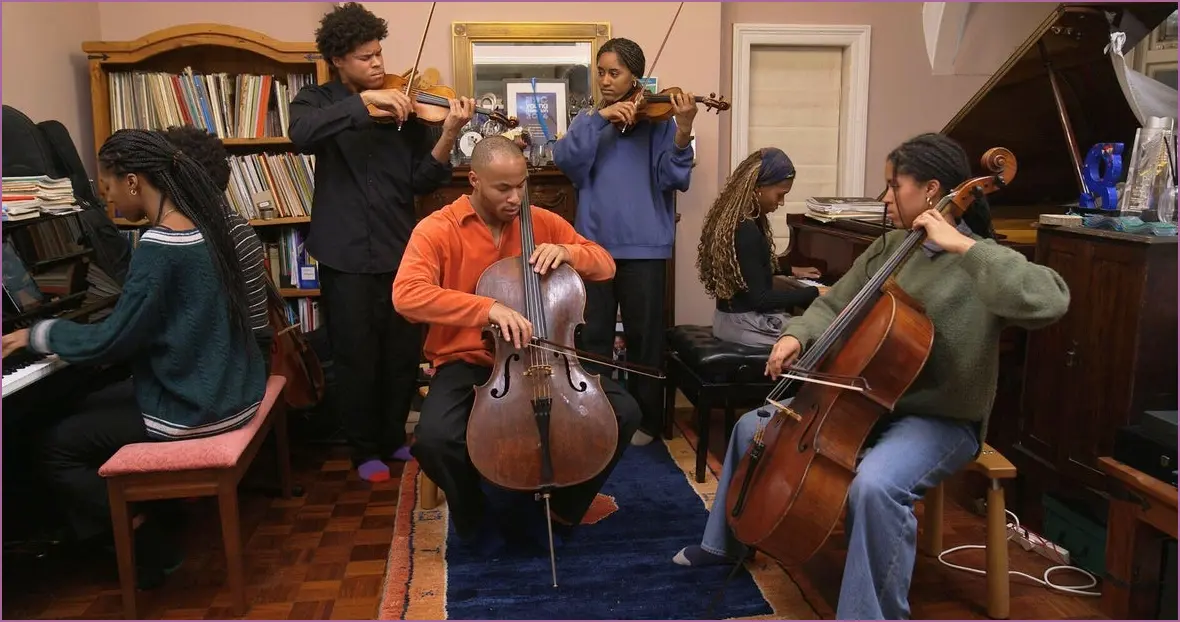
The Remarkable Kanneh-Mason Family
The most prominent music conservatory might not be in Paris, Vienna, or Berlin, but rather in a modest home on a tree-lined street in Nottingham, England. This is where seven extraordinarily talented siblings honed their skills on various instruments before performing in prestigious concert halls worldwide, often as soloists with leading orchestras. Each sibling is still under 30, representing a fresh wave of crossover stars that the classical music scene desperately needs. Introducing the Kanneh-Masons.
Childhood Home and Musical Atmosphere
While it’s uncommon for all seven Kanneh-Mason siblings to gather under one roof these days, when they reunite at their childhood home in Nottingham, old habits quickly resurface. The lively atmosphere makes it difficult to concentrate, as the siblings practice pieces by Bach, Beethoven, and Brahms in every room.
The Statistics of Talent
This environment fostered what may be the most statistically improbable story in classical music: seven siblings, each considered a virtuoso. Here’s the lineup: Jeneba (23), Aminata (20), Sheku (26), Braimah (27), Isata (29), Konya (25), and Mariatu (16). The Kanneh-Masons have toured internationally, produced top-selling albums, and garnered numerous esteemed awards, showcasing a musical chemistry that feels almost conversational on stage.
Unspoken Connection Among Siblings
When asked about their unique connection while performing, Jeneba Kanneh-Mason expressed that their close relationship allows for rapid, almost instinctive communication. Growing up surrounded by music made them intimately familiar with each other’s playing styles, which has helped them cultivate a diverse and youthful fan base, essential for broadening classical music’s appeal.
The Role of Nurture in Their Success
The Kanneh-Mason parents, Kadie and Stuart, never intended to raise a family of musicians; instead, music was simply one activity among many. However, as their eldest, Isata, began playing piano at six, the younger siblings followed suit, inspired by their older siblings. This growth wasn’t driven by pressure but stemmed from a supportive and musical home environment.
Musical Education and Family Dynamics
As they grew, the family transformed their home into an informal music school, holding Sunday concerts where everyone performed while the others provided feedback. This atmosphere helped the siblings adapt to the pressures of performance early on. While their parents were not overly demanding, the competition among siblings served as strong motivation. Each sibling pushed the others to reach higher standards, balancing familial support with the autonomy of choosing their own musical paths.
Individual Journeys and Collective Identity
Even though the Kanneh-Masons occasionally perform as a group, each sibling is carving out their unique identity in the music world. Sheku gained widespread recognition after performing at Prince Harry and Meghan Markle’s wedding, becoming the first cellist to appear in the UK top 10 album charts. Yet, amidst their individual accomplishments, they remain competitive only in lighthearted family activities, emphasizing the importance of mutual support in their artistic endeavors.
