


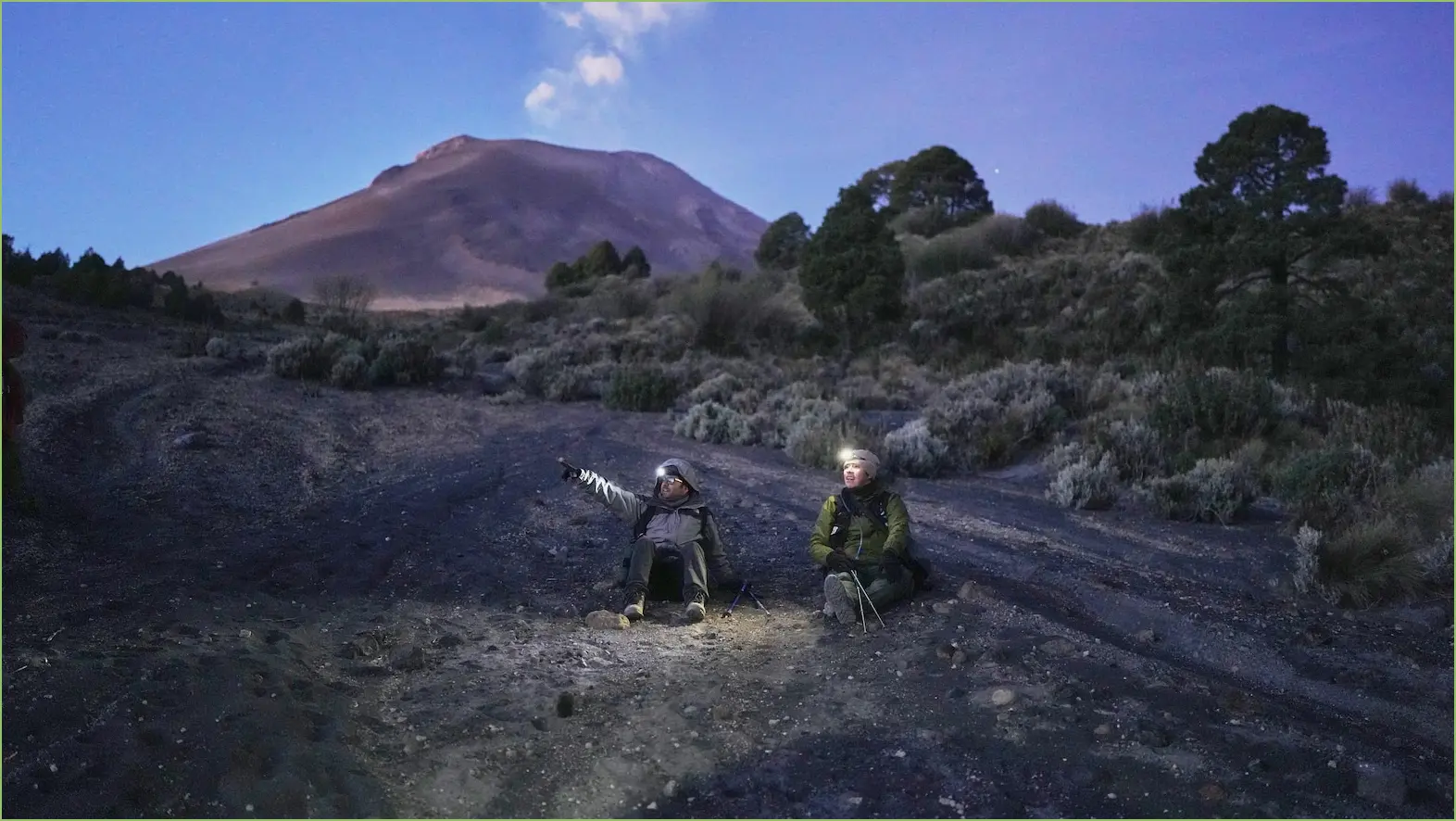
Scientists Ascend Popocatépetl Volcano
POPOCATÉPETL VOLCANO, Mexico — A group of scientists embarks on a journey up Mexico’s Popocatépetl volcano, renowned for its high activity and potential to impact millions. Their goal is to investigate the activity occurring beneath the crater.
Mission Overview
For five years, the team from Mexico’s National Autonomous University has scaled the volcano, carrying extensive equipment while navigating risks such as adverse weather and volcanic eruptions. Using artificial intelligence, they have produced the first 3D image of the volcano’s interior, revealing magma accumulation and enhancing their understanding of its behavior, which could aid in emergency responses.
Collaborative Research Efforts
Marco Calò, a professor leading the project at the UNAM’s Geophysics Institute, invited The Associated Press to join their latest expedition, the final one before publishing their findings. Inside the volcano, various elements such as rocks and gases contribute to seismic signals.
Mapping the Interior
While many hazardous volcanoes have detailed interior maps, Popocatépetl has not—despite its location within a densely populated region of around 25 million people. Previous attempts to image the volcano yielded conflicting and low-resolution results, failing to accurately depict magma locations.
Technological Advancements
The research team expanded its number of seismographs from 12 to 22 to better capture seismic activity. These devices can detect ground vibrations at a high frequency, allowing doctoral student Karina Bernal to utilize AI to classify different seismic tremors.
Visualizing Complexity
The resulting 3D model is significantly more intricate than traditional representations, showcasing various magma pools beneath the surface. Popocatépetl, which has been active since 1994, regularly releases ash and gas, leading to periodic eruptions.
Future Explorations
Calò passionately describes the volcano’s dynamic nature and the urgency for detailed geological data that can guide local authorities. Despite challenges, the team’s adventures aim to ensure better, fact-based responses during future eruptions. As they reflect on their findings, they embrace the drive to continue exploring ongoing questions about the volcano’s behavior.
