


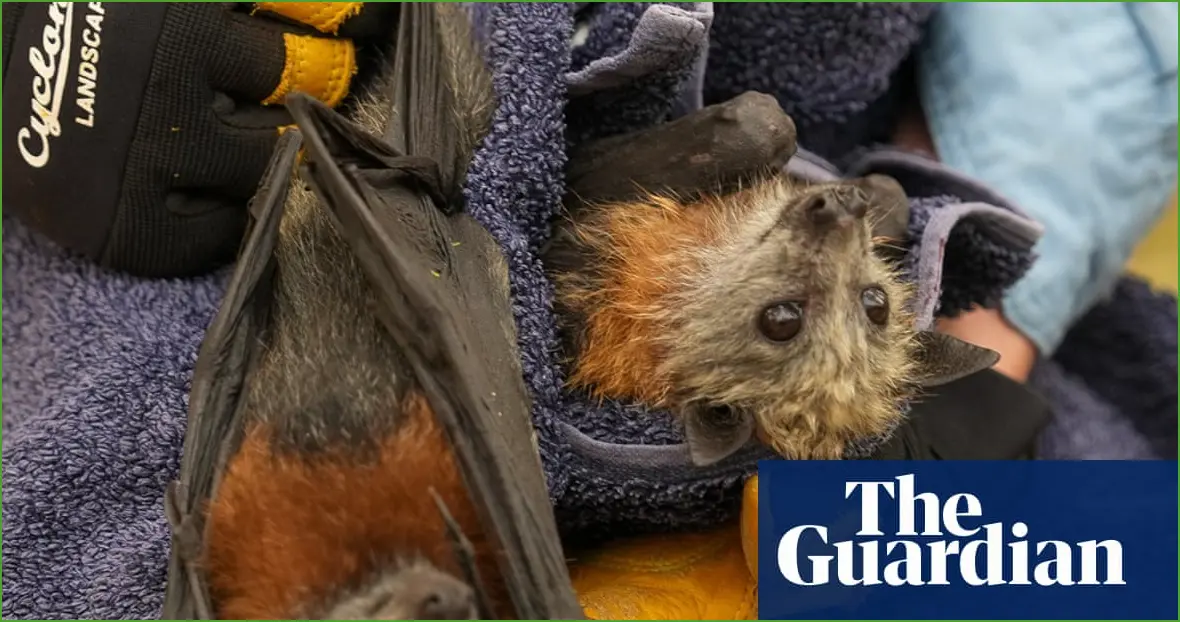
Mass Fatality of Flying Foxes in Southeast Australia
Last week, a severe heatwave devastated thousands of flying foxes in southeast Australia, marking the largest recorded mass mortality event since the infamous Black Summer fires.
Widespread Impact Across Regions
Extreme weather conditions led to fatalities in colonies across South Australia, Victoria, and New South Wales, with the grey-headed flying foxes, classified as vulnerable under national environmental legislation, being the most severely impacted.
Volunteers’ Efforts in Rescue Operations
Tamsyn Hogarth, director of the Fly by Night bat clinic in Melbourne, reported that volunteers discovered thousands of deceased bats at Brimbank Park, along with numerous others in Yarra Bend and Tatura.
Challenges Faced by Rescue Volunteers
Despite their dedicated efforts, rescuers encountered significant challenges, including elderly bats succumbing to extreme temperatures in less shaded areas. Hogarth expressed concern for orphaned pups left behind, stating that without intervention, these young bats are likely to face death from heat stress, starvation, or predation.
Estimates of Death Toll
Researchers are still documenting the full extent of the disaster, but early estimates suggest that at least 1,000 to 2,000 flying foxes perished in South Australia alone, with significant numbers also reported in Victoria and New South Wales.
Implications of Rising Temperatures
According to Professor Justin Welbergen from Western Sydney University, temperatures exceeding 42 degrees Celsius are known to cause lethal outcomes for flying foxes, likening these events to historical mass die-offs during extreme heatwaves.
Broader Effects on Native Wildlife
Dr. Wayne Boardman, a wildlife veterinarian at the University of Adelaide, noted the behavioral changes in flying foxes under distress patterns. He also emphasized that mothers and pups are particularly vulnerable during these heat events, complicating recovery efforts. Lisa Palma from Wildlife Victoria highlighted the need for coordinated responses as extreme heat negatively impacts numerous wildlife species, suggesting that flying foxes serve as indicators for broader ecological health amid climate change.
