


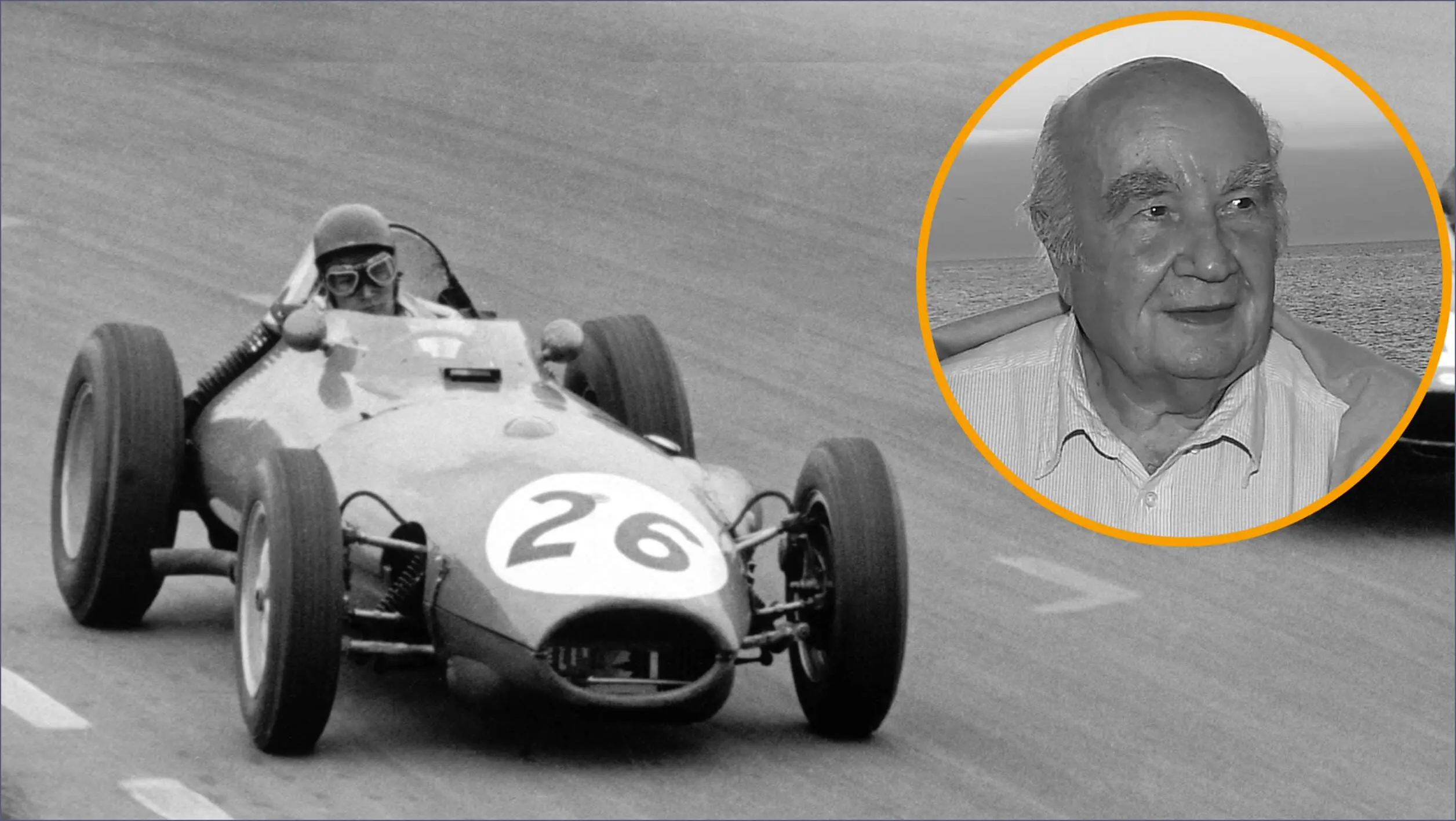
Hans Herrmann passed away on January 9 at the age of 97. Despite the predictability of such news, it still carries emotional weight. Herrmann was more than simply old; he was a revered figure, a direct link to a thrilling yet perilous era of motor racing, when courage was standard and merely surviving was deemed a triumph.
After World War II, Herrmann participated in high-risk events like the Mille Miglia, Targa Florio, and the Carrera Panamericana. Remarkably, he continued racing for two more decades, mastering the rapid, newly designed endurance vehicles of the early 1970s. Renowned as a great survivor, his longevity served as a contrast to the sport’s acceptance of danger. In 1970, he won the Le Mans in a Porsche 917, the brand’s first victory there, solidifying his legacy when most of his fellow racers from the 1950s had already retired.
With Herrmann’s passing, a significant milestone was reached: there are now no surviving individuals who finished in the top three of a Formula 1 grand prix during the 1950s. Herrmann achieved this in 1954 at Bremgarten, Switzerland, driving a Mercedes-Benz W196. Even then, Bremgarten was recognized as a treacherous course, particularly in challenging weather conditions. The legends who once graced those early podiums, often with sweat and grime, have all disappeared. Herrmann was the last to proclaim he raced alongside racing legends like Giuseppe Farina and Juan Manuel Fangio during Formula 1’s formative years.
Although all top-three finishers from F1’s first decade have passed on, four drivers who participated in those championship grand prix events during the 1950s are still alive. They are Hermano da Silva Ramos, André Milhoux, David Piper, and Peter Ashdown. Each of these individuals brings a different story from a time when competition was fierce, and they remind us that F1’s history is enriched not just by its winners but also by those who contributed in other ways.
Hermano da Silva Ramos, now a centenarian at 100, remains a living link to F1’s early years. Born in 1925, he participated in seven world championship F1 races during the mid-1950s, a significant number in an era marked by limited opportunities. With a French mother and Brazilian father, his journey in racing began with a modest entry in an MG TC during the 1947 Grande Premio de Interlagos. Ramos raced against legends like Achille Varzi, still alive in his memories as a custodian of early F1 history.
André Milhoux, born in 1928, has a unique place in racing lore. Despite starting just one championship F1 grand prix in 1956, he contributed far more to racing history. A Belgian who preferred the thrill of competition to climbing the racing ladder, Milhoux drove a variety of vehicles, including a Gordini in his sole F1 outing, showing remarkable bravery racing at the infamous ‘Green Hell’ of Nürburgring.
David Piper, born in 1930, represents the quintessential British privateer. Although his F1 record reflects just two starts, Piper made a mark in sports cars, becoming well-known through his bright green Ferraris and Porsches. An unforgettable accident in 1970 during the filming of the movie Le Mans resulted in the loss of his right leg, yet he continued to race, demonstrating unyielding spirit. Lastly, Peter Ashdown, born in 1934, may have also only started one world championship F1 race, yet his journey through motorsport embodies the era’s passion and tenacity.
