


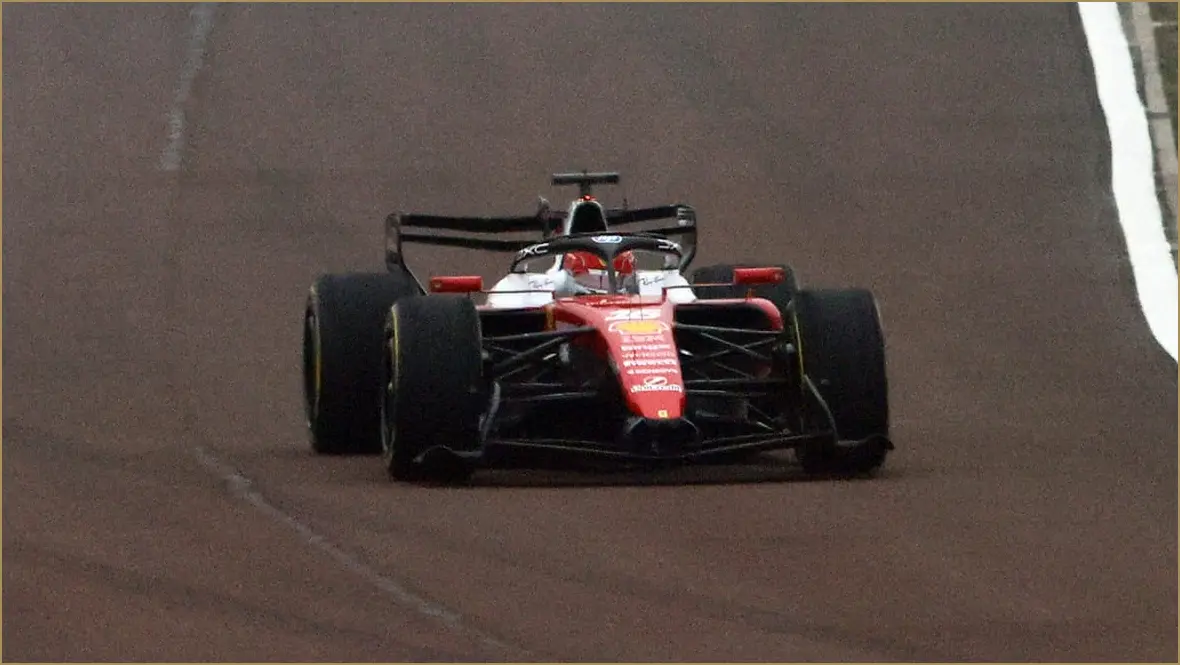
So far, Formula 1 teams have been somewhat secretive about their new cars, but hints about what to expect have emerged from discussions rather than visual reveals.
Some teams have assigned technical personnel to answer inquiries, revealing key features and demands of the cars prior to pre-season testing. They’ve also acknowledged that certain aspects will only be clarified through actual track performance and racing.
Here’s what we’ve learned about crucial components of the new vehicles.
The Resurgence of High Rake
The previous generation of cars favored a low, stiff configuration. This year, however, ride heights are elevated, marking a comeback of the rake style, where the rear is raised to align the car towards the track. This adjustment can enhance wing angle, thereby increasing downforce.
It is expected that the rear ride heights will range between last year’s levels and the last season of the previous rules, where high rake gained popularity (not universally, since Mercedes thrived with a low rake configuration). As teams adapt and develop under the current regulations, it’s possible the rake will increase while maintaining floor efficacy at elevated ride heights, although this balance will require further scrutiny.
Impact of Active Aero on Design
Ferrari has unveiled the first example of active aerodynamics in action, operating in a straightforward manner. In designated zones, the car will enter straight line mode (SLM), while in corners, it switches to corner mode.
This setup has intriguing implications for drag levels, as it enables reduced drag in corners while maximizing cornering performance. “The rear wing has become a significant aerodynamic element,” noted Audi’s technical director, James Key. “It’s essential to ensure we maximize the flow over the wing while keeping performance balanced.”
Energy Management’s Effect on Drivers
There are discussions regarding the driver’s need to manage battery charge effectively. With a total of 8.5MJ available per lap (or 9MJ in override mode) but with a battery capacity limited to 4MJ, drivers face considerable energy management challenges.
This has led to questions about whether drivers will be constrained in their styles by the demands of energy usage. While cars may allow a broader range of driving techniques, optimal energy-harvesting strategies might necessitate specific driving methods, which could limit personal expression on track.
Pushrod vs. Pullrod Suspension
The choice between pushrod and pullrod suspension remains a focal point due to its visual significance. In simple terms, a pushrod features higher inboard parts on the chassis and lower outboard components, while the reverse is true for pullrods. This decision impacts not only packaging and center of gravity but is primarily driven by aerodynamic considerations.
