


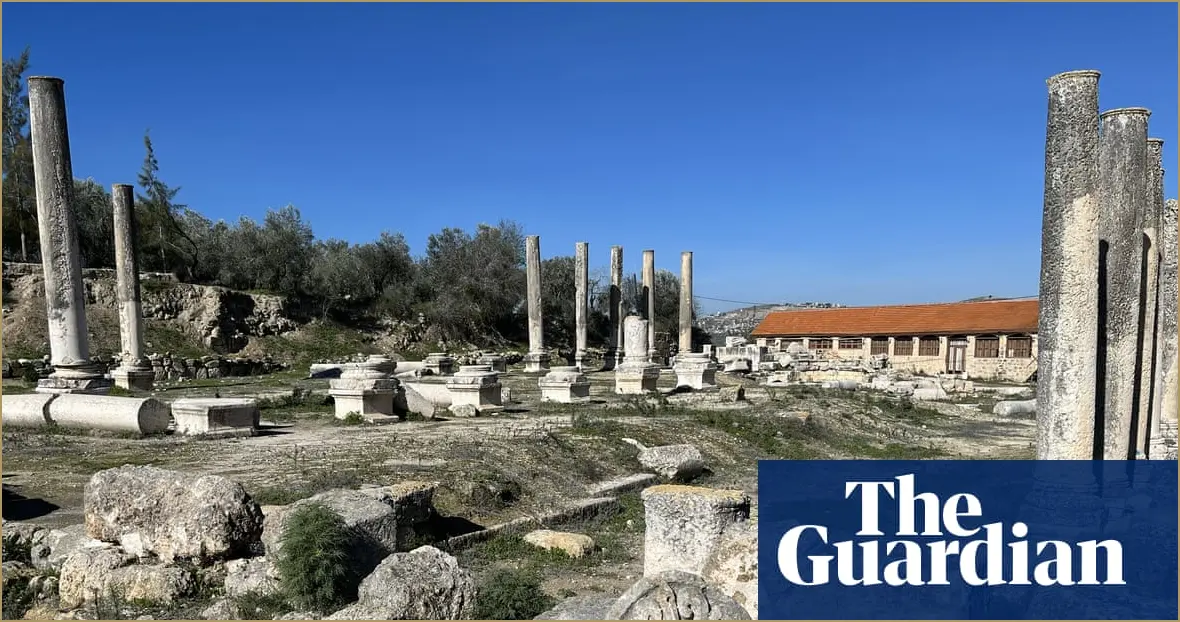
Shadows of History in Sebastia
The Byzantine church is partially concealed by shade, with Roman columns emerging from the surrounding olive trees, while even older ruins associated with Israelite kings lie overrun. Just beyond, the Mediterranean is faintly visible, with the hills of the occupied West Bank rising to the north and south.
Concerns in the Community
In the small town of Sebastia, located less than a hundred meters east of the archaeological site, residents are deeply concerned.
Announcement of Land Seizure
This past November, Mayor Mahmud Azem received shocking news from Israeli authorities regarding the seizure of the entire extensive archaeological site neighboring the town. Despite previous reports suggesting plans to develop the area, the official notice alarmed many, given that most of the 3,500 Palestinian inhabitants rely on tourism and olive farming for their livelihood.
Impacts of Development Plans
Plans for the development include creating a visitors’ center, a parking area, and a fence that would separate the ruins from the town, effectively isolating residents from their historical site and any remaining orchards. Azem expressed that this development signifies “aggression against Palestinian landowners, against olive trees, against tourist sites,” emphasizing it as a violation of the area’s history and heritage.
The Largest Archaeological Land Seizure
The appropriation of 182 hectares (450 acres) at Sebastia marks the largest seizure of land for archaeological purposes since Israel’s occupation of the West Bank commenced in 1967. Supporters argue that the site has seen little development over the years and holds historical significance as the capital of the northern Israeli kingdom of Samaria during the 9th and 8th centuries BC.
Criticism and Controversy
Critics assert that the heritage project reflects a broader pattern of Jewish settlement expansion in the West Bank, driven by Israel’s current ruling coalition. Many of the lands earmarked for appropriation are privately owned, setting a troubling precedent. Alon Arad from Emek Shaveh, an Israeli non-profit aimed at preserving ancient sites as communal assets, called the actions a “weaponization” of archaeology.
Future of Sebastia and its Heritage
The ambitious redevelopment project is spearheaded by members of the far-right ultranationalist Otzma Yehudit party, part of Israel’s most right-wing government to date. Plans include a new access road, bypassing Sebastia, allowing tourists to reach the site directly from Israel. Meanwhile, the Israeli minister of heritage, Amichai Eliyahu, a supporter of annexation, indicated aspirations to see Sebastia transformed into a vast attraction for future visitors, strengthening ties between the people and their historical legacy.
