


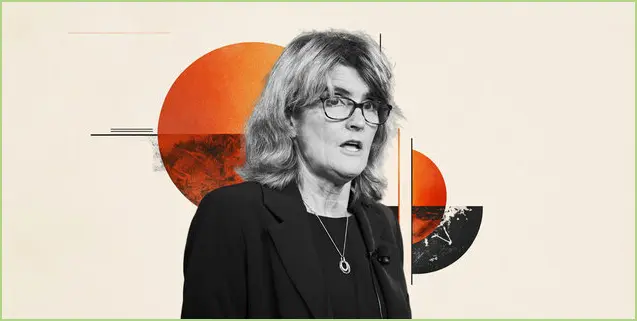
Reserve Bank of Australia (RBA) Governor Michele Bullock is holding a press conference to discuss the rationale behind the decision to increase the benchmark interest rate by 25 basis points (bps) to 3.85% following the February monetary policy meeting.
Bullock is responding to questions from the media as part of a new reporting structure implemented by the RBA last year.
Important Statements from the RBA Press Conference
Inflation trends are too robust.
We must prevent inflation from spiraling out of control again.
The board did not consider a 50 bps rate increase.
The Board will approach rates with caution.
We’re observing some tightening in financial conditions through the A$.
An increasing A$ is beneficial to some extent.
Uncertainty exists regarding whether this will be a tightening cycle.
All options remain on the table.
The Board will closely monitor data.
This section was released at 03:30 GMT to provide updates on the Reserve Bank of Australia’s monetary policy changes and the immediate market response.
The RBA’s board convened on Tuesday and voted unanimously to raise the Official Cash Rate (OCR) by 25 basis points to 3.85% from 3.6%, following the February monetary policy meeting. This decision was largely anticipated by the market.
Overview of the RBA Monetary Policy Statement
The policy decision taken today was unanimous.
The board will remain vigilant regarding data and the evolving outlook to inform its decisions.
While inflation has significantly decreased since its peak in 2022, it has rebounded considerably in the latter half of 2025.
The Board believes inflation will likely stay above the target for some time, justifying the increase in the cash rate.
Diverse data from recent months indicate that inflationary pressures have intensified during the second half of 2025.
Some inflation growth stems from increased capacity pressures.
Inflation is expected to remain elevated for a while.
While some recent inflation increases may be temporary, there’s clear evidence of stronger-than-expected private demand and mounting capacity pressures.
Labor market conditions are currently a bit tight, although they have stabilized recently.
The Board is committed to achieving price stability and full employment and will take necessary actions toward that goal.
Uncertainties regarding domestic economic activity and inflation persist, as does the degree of monetary policy restriction.
Forecasts suggest a cash rate of 3.9% by June and 4.2% by December.
Inflation predictions have been raised through the end of 2027.
The anticipated increase in cash rates is expected to restore a balance between demand and supply.
The economy is assessed to be further from balance than anticipated, exhibiting growth above potential.
Some indicators imply financial conditions might now be “somewhat accommodative.”
The growth of private demand exceeded expectations in the latter half of 2025.
Inflation in Q4 was significantly higher than projected, influenced partially by transient factors.
Overall credit growth has surged, with the cash rate falling below certain neutral measures.
The RBA projects significant business investment increases through 2026, partly due to data centers.
Expectations for government spending and residential investment have also been raised.
This demand growth is somewhat sector-specific and may not be lasting.
The GDP growth projections are set at 2.3% for Q4 2025, 1.8% for Q4 2026, and 1.6% for Q4 2027.
CPI inflation is forecasted at 4.2% for Q2, 3.6% for Q4, 2.7% for Q4 2027, and 2.6% for Q2 2028.
Trimmed mean inflation rates are projected at 3.7% for Q2, 3.2% for Q4, 2.7% for Q4 2027, and 2.6% for Q2 2028.
Global economic growth is anticipated to outpace expectations in 2025, and downside risks have diminished.
The unemployment rate is projected to reach 4.3% by Q4 2026, 4.5% by Q4 2027, and 4.6% by Q2 2028.
AUD/USD Market Response to RBA’s Interest Rate Decision
The Australian Dollar received fresh bids immediately after the RBA’s announcement. The AUD/USD pair regained the 0.7000 mark, rising by 0.75% on the day.
