


Victory for Japan’s Prime Minister Sanae Takaichi
Japan’s conservative Prime Minister Sanae Takaichi has secured a decisive victory after calling a high-stakes snap election.
Election Results
After being elected leader of the ruling Liberal Democratic Party (LDP) in October, Takaichi exceeded the 310-seat threshold required for a supermajority in the 465-seat lower house, according to reports from Japanese public broadcaster NHK. This supermajority will enable her coalition to override decisions made by the upper house, which lacks a majority.
Exit Poll Projections
NHK’s exit poll projected that the LDP would win between 274 and 326 seats. Together with their coalition partner Ishin, they were expected to secure between 302 and 366 seats, despite frigid temperatures influencing voter turnout during this unusual winter election.
Far-Right Party Gains
The far-right Sanseito party, which advocates for a “Japanese first” policy, was anticipated to increase its seats from previous elections, with expectations of winning up to 14 seats—far below their target of 30.
Takaichi’s Agenda
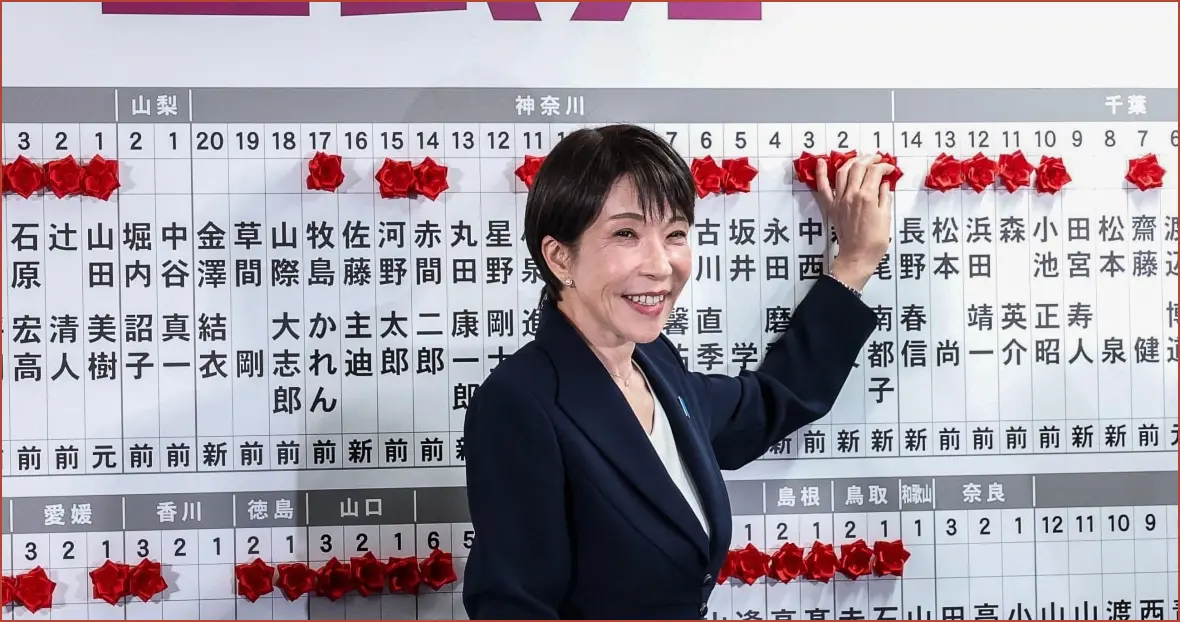
Addressing supporters at LDP headquarters, Takaichi affirmed the continued partnership with Ishin and emphasized her focus on fiscal sustainability without plans for a significant cabinet reshuffle. Symbolically, in Japanese tradition, wins are celebrated with a paper flower, as evidenced by the numerous red paper roses displayed for LDP candidates.
International Reactions
Foreign leaders such as Taiwan’s President Lai Ching-te quickly congratulated Takaichi, expressing optimism over peace and prosperity in the Indo-Pacific region. Takaichi’s assertive stance on Taiwan has previously created tension with China, especially after she suggested that a potential Chinese attack on Taiwan could provoke a Japanese military response.
Popularity and Style
Takaichi’s unexpected snap election surprised many, including both her party and the opposition. Her bold persona, along with a surge of support from younger voters, has fueled her popularity. As Japan’s first female prime minister, she aims to strengthen Japan’s defense and elevate its global influence, amidst increasing security concerns from China and North Korea. Despite public skepticism regarding her party, her relatable approach and engaging social media presence have drawn significant backing, especially from younger demographics.
