



Gold and silver prices plummeted significantly on Thursday, causing anxiety in markets already troubled by escalating financial issues in the U.S.
The price of spot gold fell over 3%, while silver dropped more than 10%, reversing part of their recent gains.
Negative Outlook for Gold and Silver Amid Record U.S. Debt and Rising Bankruptcies
As of this update, gold was priced at $4,956, marking a 3.97% decline, while silver was at $76.74 after a 10.65% drop in the last 24 hours.
Sponsored
This abrupt sell-off has led analysts and investors to ponder whether a larger recalibration of tangible assets is underway.
The decline in metal prices coincides with rising economic pressures. In the past three weeks alone, 18 U.S. companies with debts exceeding $50 million have declared bankruptcy.
This rate of bankruptcies is the fastest observed since the pandemic and is approaching figures not seen since the 2009 financial crisis.
The New York Fed recently announced that total household debt has surged to a record $18.8 trillion, with mortgages, auto loans, credit card debts, and student loans all reaching historical highs.
Furthermore, serious delinquency rates for credit cards rose to 12.7% in Q4 2025, the highest level since 2011, with younger households experiencing heightened financial pressure.
Such trends often manifest late in an economic cycle, typically preceding policy actions such as interest rate reductions or liquidity boosts.
Bitcoin has also felt the pressure, declining to the $65,000 range, as it trails both traditional safe-haven assets and equities in recent months.
Although digital currencies are typically seen as hedges against economic instability, current patterns suggest they have not yet fulfilled that role in this context.
Analysts are divided regarding the significance of the metals’ retreat. Some assert that it represents short-lived volatility in a broader context of hard asset repricing.
Sponsored
“Gold was adjusted to $5,000 by the U.S., and markets have caught up,” noted macro analyst Marty Party, indicating that authorities may be aligning precious metals to support sovereign debt alongside digital currencies like Bitcoin.
Nevertheless, others warn that tight liquidity conditions persist, and further declines could occur if financial pressures continue to escalate.
Observers are keenly watching how the Federal Reserve responds to these developments. Economists at Citi anticipate weaker job growth in the spring and summer following January’s payroll numbers falling short of expectations, potentially paving the way for three rate cuts later in 2026.
Historically, increases in corporate bankruptcies and consumer delinquencies signify imminent monetary easing, hinting that official support might be forthcoming as economic strains start to appear in the data.
The combination of unprecedented household debt, rising bankruptcies, and falling hard asset prices indicates that the market is at a pivotal moment.
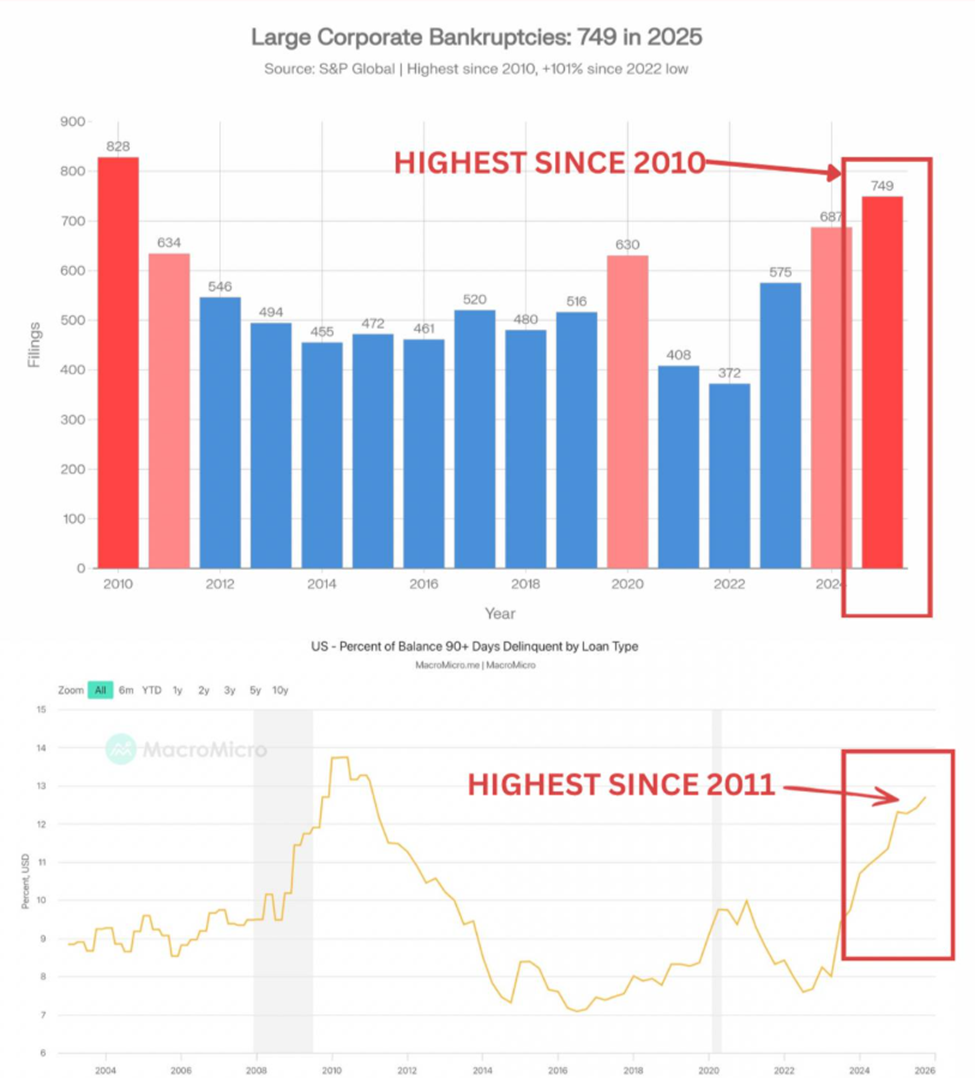
“This economic downturn, reflecting indicators from 2008, is not an exception but a direct result of the existing administration’s policies, favoring inflationary fiscal strategies and social reform over solid economic foundations,” commented Jade Kotonono, an influential figure on X.
Is the current downturn in precious metals a fleeting correction, or a sign of a prolonged repricing? Some optimistic analysts expect that once gold stabilizes around $5,000, investment may shift back towards digital assets.
Nevertheless, the current climate encompasses both opportunities and challenges, prompting investors to undertake thorough research.
As markets grapple with exceptional financial pressures, gold, silver, and Bitcoin might continue to decline. Conversely, a stabilizing policy response could initiate the next phase of asset repricing.
