


MotoGP’s Director of Technology, Corrado Cecchinelli, has stated that data indicates the sport’s new Stability Control system is fulfilling its intended purpose.
Launched during the previous season via the standard ECU, Stability Control, or slide control, is designed to mitigate a specific type of highside accident.
Though not every intervention guarantees a crash prevention, Cecchinelli believes the system is indeed lowering risks. He mentioned, “Manufacturers are pleased to have it; everyone is utilizing it, and the data confirms it works, meaning it’s actively functioning rather than being merely a hidden feature in the software.”
Despite this, he noted that it’s impossible to ascertain whether a rider would have crashed without the Stability Control’s intervention. “Is it saving lives? I can’t say for certain. However, I find it difficult to believe it could be less safe than before. It likely reduces crash rates but cannot worsen the situation,” he added.
Differences Between Control Systems
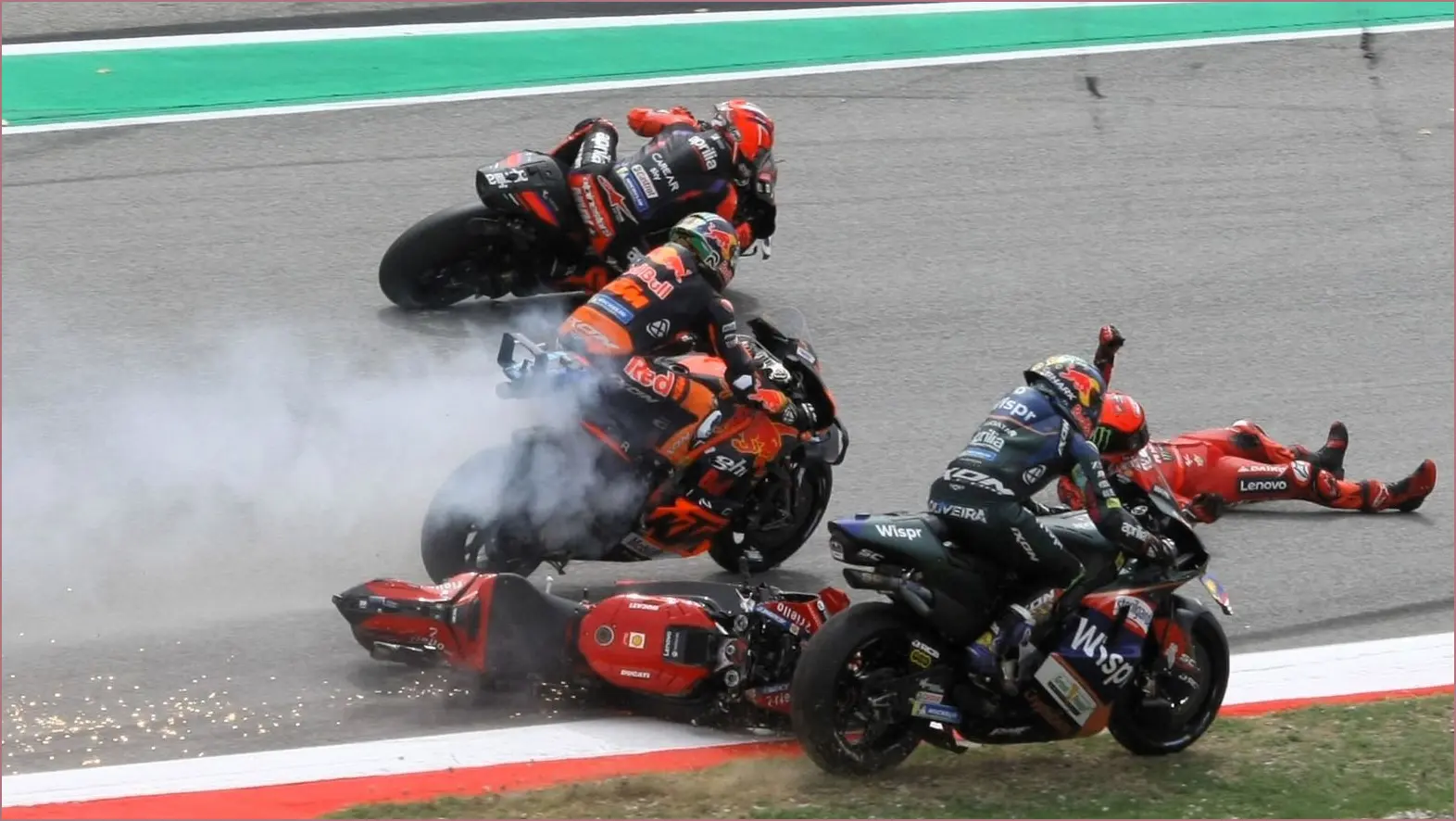
Many wonder why MotoGP introduced Stability Control when Traction Control already existed. Stability Control was specifically developed to address aggressive highsides, like the one experienced by Francesco Bagnaia during the 2023 Barcelona round.
Cecchinelli clarified that the two systems tackle different issues. “Traction Control manages spinning, while Stability Control, also known as slide control, addresses sliding. Although they often occur concurrently, they target distinct phenomena.” He further explained that while excessive spin usually leads to sliding, there can also be cases of significant slides without spinning—something Stability Control aims to manage.
Understanding the Mechanics
The intricacies of Stability Control involve regulating what is known as yaw rate, or the bike’s angular velocity around its vertical axis. Its primary function is to manage rapid sideways movements, which makes it more complex than Traction Control. Ultimately, all electronic control strategies request a reduction in engine torque.
“All these strategies, including Wheelie Control, ask for a torque reduction to the torque controller. In scenarios where multiple systems activate simultaneously, the strongest request will dominate,” Cecchinelli explained. He also noted that the method for torque reduction varies: slower actions typically involve throttle adjustments, while faster dynamics like sudden spins require ignition intervention.
Real Limitations and Insights
Even with combined efforts from both Traction and Stability Control, some highside accidents remain unavoidable. For instance, after a crash during a wet qualifying session at Sachsenring, rider Maverick Vinales remarked that Stability Control likely wouldn’t have mitigated his crash, which was a result of an off-throttle slide. Similarly, Jorge Martin experienced a highside during testing due to a similar off-throttle situation.
