


Charlie and Emma’s Wedding Toast
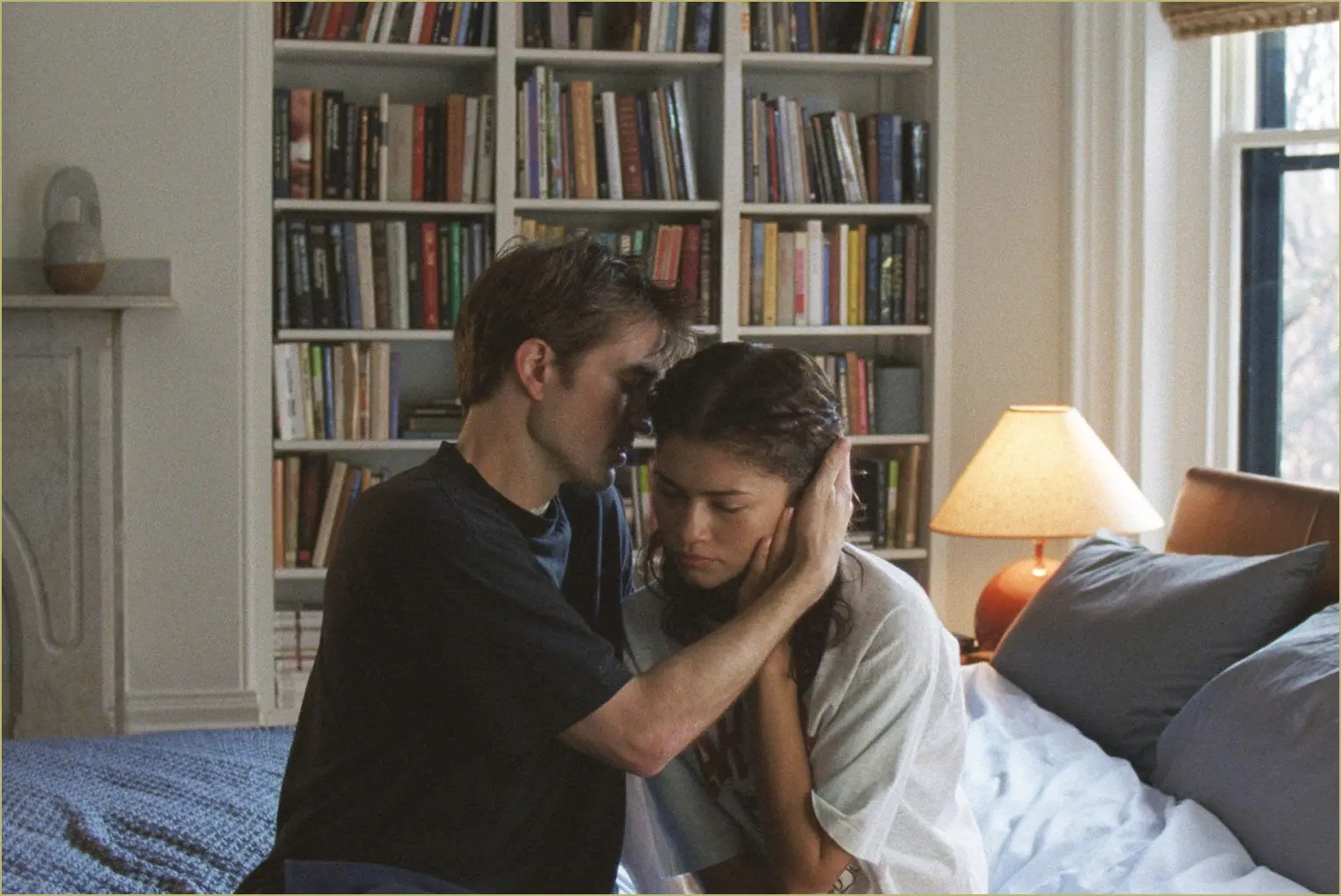
Charlie (Robert Pattinson) prepares his wedding toast at the kitchen table in his stylish Boston apartment, with his best man Mike (Mamoudou Athie) offering support. As Charlie recounts his charming first encounter with Emma (Zendaya) at a coffee shop, a flashback casts doubt on its charm. Charlie nervously approaches Emma, who’s engrossed in a book, and pretends to have read it, a deceit he struggles to maintain during their first date. This coffee-shop scene, marked by jittery editing and an unsettling woodwind-heavy score by Daniel Pemberton, hints that something is amiss in their seemingly ideal relationship, initially suggesting Charlie’s insecurities are the primary source of discomfort rather than Emma’s sunny demeanor.
A Revelation Before the Big Day
As their wedding approaches, an unexpected disclosure from Emma creates tension between the well-to-do couple—Charlie as a museum curator and Emma as an editor at a prestigious publishing house. During a private dinner to finalize the reception menu, Mike’s wife Rachel (Alana Haim), who is also Emma’s maid of honor, proposes a game: each person should confess the worst thing they’ve ever done to help Charlie and Emma enter their marriage with a clear understanding of each other’s flaws. While Mike and Rachel are aware of each other’s shortcomings, Charlie struggles to articulate his own and ultimately chooses a vague instance of “cyberbullying” from high school.
The Shocking Admission
Emma abruptly halts the evening by admitting to a troubling phase during her teenage years when she considered but did not go through with committing an act of violence. While the film’s promotional material has kept this “twist” under wraps, it serves as a pivotal moment in the narrative. Given that this revelation occurs early on, significant discourse about the film necessitates addressing Emma’s dark history. Spoiler alert: Emma, affected by the online glamorization of gun violence, once fantasized about carrying out a school shooting. Flashbacks depict her teenage self (played by Jordyn Curet) bringing her father’s shotgun to school but ultimately abandoning the plan, opting instead to engage in anti-gun-violence activism.
The Impact of Emma’s Past
Uncovering such a disturbing secret just days before their wedding is indeed unsettling. However, Charlie and the other characters don’t respond to it realistically. Instead of confronting Emma’s past after the tense dinner—culminating in projectile vomiting—the couple awkwardly decides to act as if everything is fine during the last pre-wedding week. Their interactions with the wedding photographer (Zoë Winters) display forced smiles and stiff poses, further emphasizing the strain in their relationship.
Unraveling Lives
As their home life deteriorates, their once-passionate intimacy wanes. Charlie struggles with performance issues, and minor irritations, like a coffee mug reading “Coffee or I’ll Shoot,” lead to significant arguments that jeopardize their upcoming marriage. Both characters begin to act out at work—Emma sabotaging a project with Rachel, while Charlie shares an offbeat confession with a colleague (Hailey Benton Gates). As their wedding day nears, both Charlie and Emma are engulfed in anxiety and self-doubt, raising further concerns about the stability of their relationship.
A Critique of Gun Violence and Character Depth
Like Kristoffer Borgli’s earlier film, Dream Scenario, The Drama grapples with high-concept themes but fails to deeply explore them. The film’s focus on provocative ideas overshadows its characters’ inner lives, particularly Emma, who is central to the plot but remains underdeveloped. While her past suggests profound alienation tied to her mixed-race background at an elite school, audiences lack insight into how she has reconciled this chapter of her life. Charlie’s bewilderment reflects audience confusion, leaving Emma as a mere plot device—a “manic pixie school shooter.”
Conclusion: The Lack of Meaningful Exploration
Ultimately, Emma’s troubling past could have been any number of mistakes, as the film’s goal is not a critique of gun violence but rather an exploration of the awkwardness stemming from her revelation. Although Pattinson’s performance brings a self-deprecating charm to his character, both protagonists lack fully fleshed-out narratives. Borgli’s attempts at humor through discomfort do not yield a satisfying or cohesive commentary on societal issues, raising questions about audience investment in their journey.
