


3D printers are a dream for DIY enthusiasts, not just for their ability to enhance everything from home offices to garages, but also because they are highly customizable themselves. The range of accessories available for 3D printers is extensive. Interestingly, they can even print their own components, resembling an Ouroboros—the mythical serpent that consumes its own tail. Yes, 3D printers can produce other 3D printers and parts for themselves.
This topic could easily fill a book, but to keep it manageable, here are five practical 3D printer accessories you can create. These projects are typically straightforward and won’t require complex, multi-run prints, yet they greatly enhance your existing printer’s functionality. While the designs may not be universally applicable to all 3D printers, you can likely find models suited to your specific printer or even design your own.
Bed Scraper
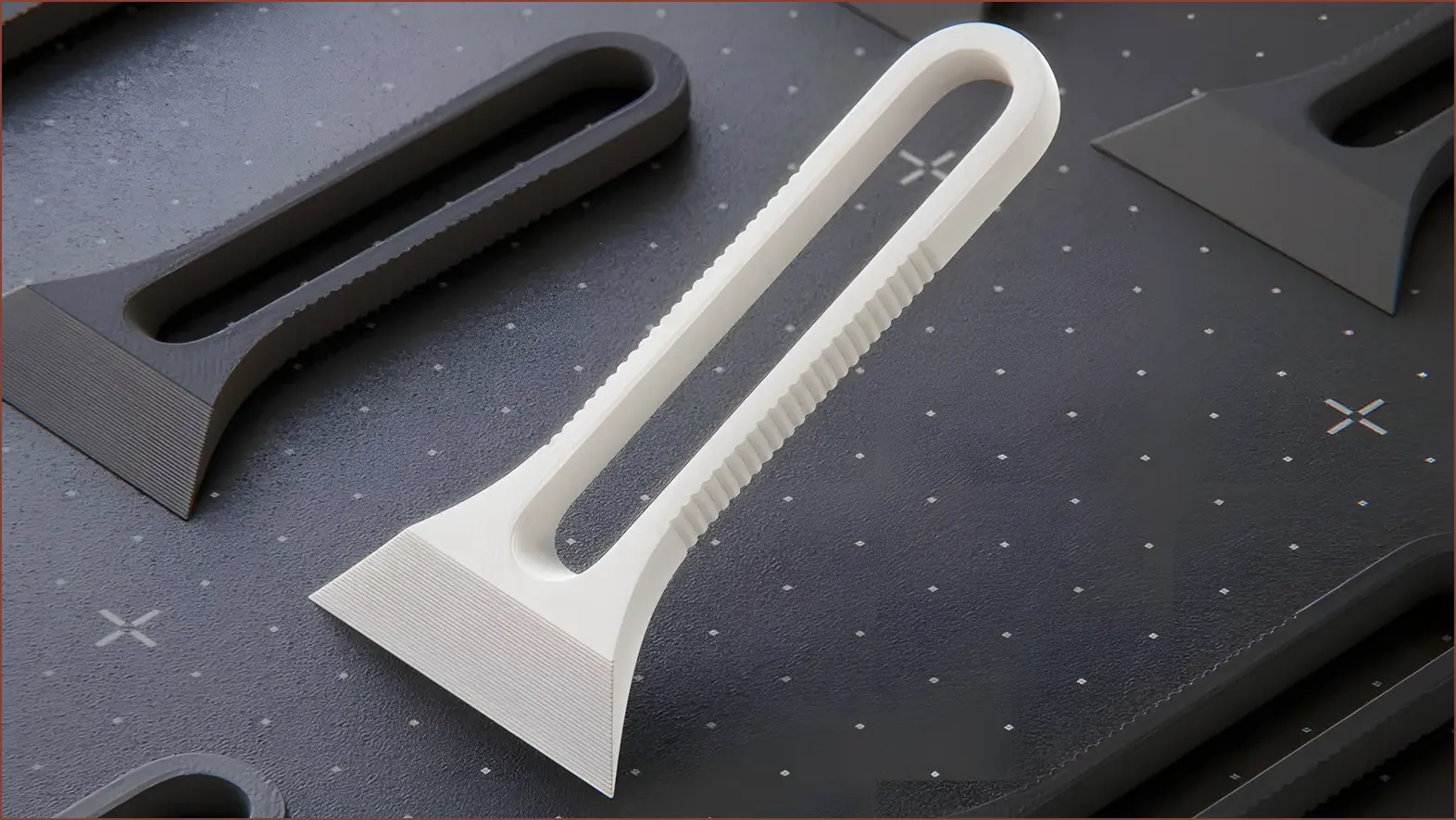
Extracting a 3D print from a sticky bed can be quite tricky. You might find yourself cutting at the base or applying pressure until it finally releases, risking damage to delicate designs. Instead, consider using a specialized tool with flexible plastic blades, such as the Bambu Lab Scraper. This scraper features an interchangeable blade design and is easy to assemble using just two screws, although the blades themselves need to be sourced separately.
If this scraper doesn’t meet your needs, alternatives are readily available. For example, Jonas Daehnert’s Mini Bed Scraper may not have replaceable blades, but printing replacements when worn is quick and resource-efficient. If you opt for metal blades, consider a protective cover, like the Bambu Lab Scraper Cap.
Filament Respooler/Winder
Filament spools can unravel or require transfer from one spool to another. A filament respooler or winder becomes essential in such scenarios. The Simple Filament Respooler For Drill by timon.nabholz is an effective solution requiring minimal parts and a cordless drill for operation. However, it’s advisable to pair this with a spool roller like the one by Jakub Lattenberg, which assists in holding and rotating the second spool for convenience.
If you seek something more sophisticated, the Pastamatic Filament Spool Winder by GekoPrime offers a comprehensive gear assembly that handles both spools, needing only one power drill. Although more intricate and requiring assembly, this design promises durability for those frequently respooling.
Junk Chute and Bin
During 3D printing, a process called “purging” ejects melted filament to clean the nozzle, often resulting in a mess if not managed properly. Consider building a chute or bin to collect this waste material. The X1C/P1S/P2S Junk Chute Tube by ImBadAtCad effectively directs discarded filament into a collection container below, such as a waste bin. For less purging from smaller prints, you might prefer the simple Flashforge Adventurer 5X Junk Bin by Molodos that is easy to remove for disposal.
For those limited on space, the X1C P1P P1S Junk Chute Bin serves as a combined chute and bin for more accessible cleaning. For larger projects, consider a substantial bin like the Anycubic Kobra X Printer Junk Bin by Spezi, reducing the frequency of emptying.
Swatch Holder
Swatches are crucial for those utilizing a variety of filaments and colors. Comparable to paint samples from stores, they allow users to judge how colors will look once printed. Many enthusiasts create swatch catalogs to quickly find suitable filament for their projects. To streamline this organization, several users have designed swatch holders.
One appealing choice is the spinning filament swatch box by TheChrisgamer, featuring individual slots for each swatch organized by color. Alternatively, if a carousel isn’t preferred, the Linear Filament Swatch Holder V2 offers a more linear, space-efficient design. For those wanting a palette-style layout, consider the Modular Filament Swatch Palette by Valera Perinski, which can be adapted to accommodate varying numbers of swatches.
Lube Helper
To ensure smooth operation, 3D printers’ moving parts require lubrication. However, applying lube can be messy. A “lube helper” simplifies the maintenance process. This handy tool features a half-circle notch for applying lubricant cleanly along lead screws and linear rails.
We recommend the P & X Series lube helper by SavageLau for its effectiveness in maintenance. Additionally, they offer another model specifically designed to access hard-to-reach areas. Remember, you may need to clean the screws beforehand—use the Bambu Lead Screw Cleaning Tool by WileyWicks, which clamps an alcohol prep pad against the screw to remove debris. Together, these tools will significantly ease your maintenance routine.
