


Things started out so well.
Introduction to Sigma Star Saga
Do you, dear reader, recall the 2005 WayForward GBA title, Sigma Star Saga? Though it had faded from my memory over the years, the moment I laid eyes on the cover art, I knew exactly what it was. I hadn’t played it back in the day, but I distinctly remember reading about it in magazines like EGM and Game Informer, as well as on a certain website over two decades ago. Sigma Star Saga is a peculiar game that eludes easy categorization, blending elements from 2D Zelda games, side-scrolling shooters, a surprisingly deep storyline, and the distinct charm of WayForward. The end result is a unique experience filled with character but also some rough edges.
Plot Overview
The story centers on Ian Recker, a fighter pilot for the Allied Earth Federation, who embarks on an undercover mission to infiltrate the Krill, an alien race that has attacked Earth. Equipped with a bizarre parasite suit, Recker encounters a charming Krill girl named Psyme and soon realizes that the invasion holds deeper complexities. The narrative is compelling, albeit sometimes convoluted, and I appreciated the quality of the writing and the espionage elements all the way through.
Gameplay Mechanics
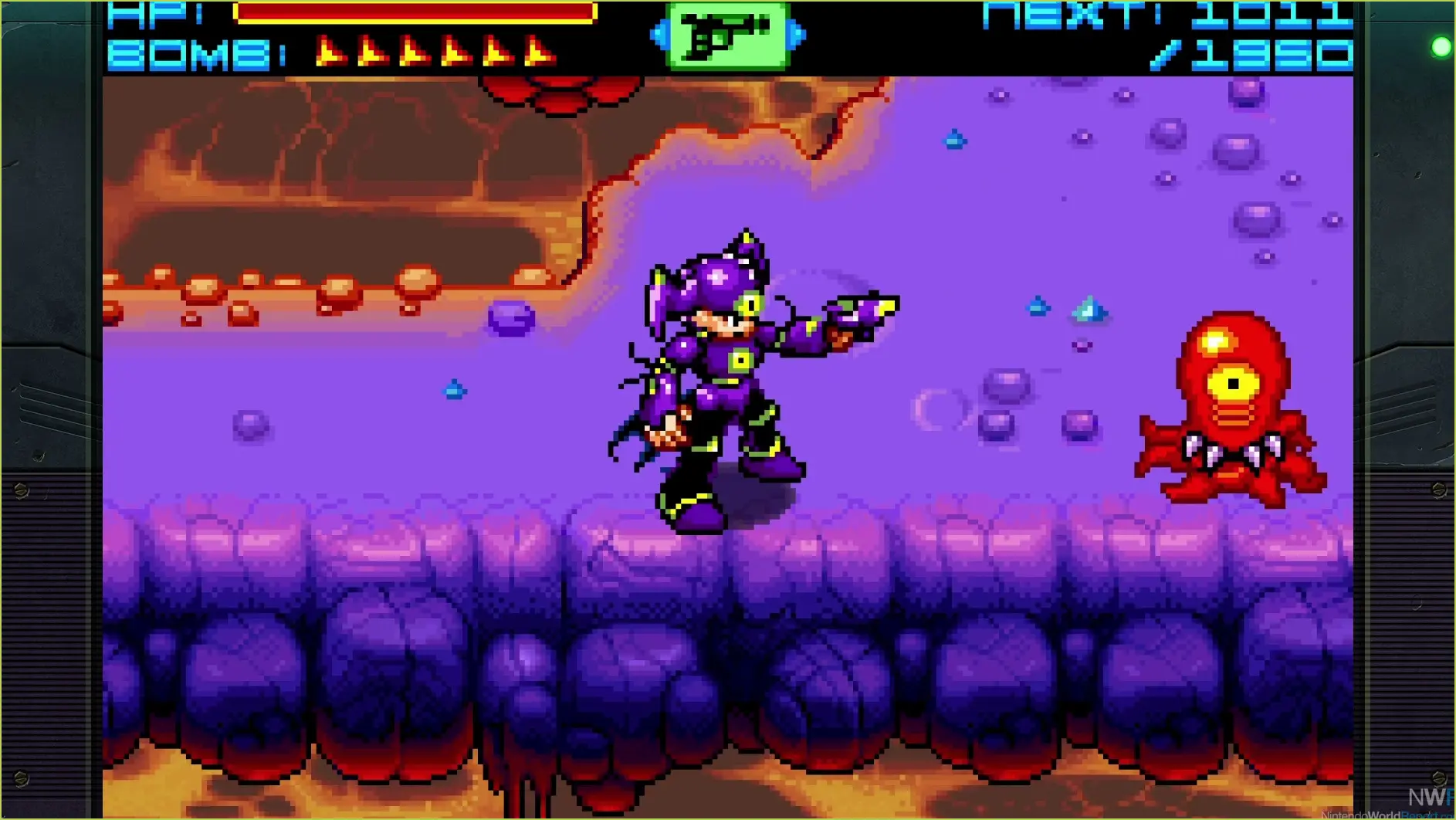
Sigma Star Saga primarily unfolds in a top-down, 2D Zelda-like perspective, yet the unique dimensions of the GBA screen and impressive sprite design restrict your view of the area. Initially frustrating, this limitation persisted as a minor annoyance even after I adapted. There were moments when I inadvertently walked into unseen enemies or was struck by projectiles from off-screen. Fortunately, numerous pickups, particularly health items, abound in every region. Gameplay divides into two halves: overworld exploration and randomized SHMUP stages, which I will discuss individually.
Exploration and Combat
In the overworld segments, you guide Recker through various space stations and planets. Your main objectives are usually to locate your commanding officer and the communications room. Many of the space stations present navigation challenges, especially since only one has a map available, which left me perplexed at times. Conversely, exploring planets is more enjoyable, thanks to a basic map system. Recker starts with a close-range laser gun and can acquire new items like a stronger melee attack and an underground scanner as the game advances.
SHMUP Battles
As Recker explores planets, he is frequently pulled into random SHMUP encounters that replace typical RPG battles. Although initially fun, these segments become repetitive, especially given the reports of a reduced encounter rate in this DX re-release. Since SHMUP segments seem disconnected from overworld exploration, I questioned their prevalence. Though Recker may acquire power bombs useful in SHMUP battles, these have no impact on his capabilities in the overhead segments.
Art and Music
Despite these shortcomings, Sigma Star Saga captivates with stunning spritework characteristic of WayForward, though character portraits can appear inconsistent, particularly with the Krill, who resemble humans in odd headwear. While the music can be overly repetitive in the space stations and SHMUP sequences, the planetary tracks are generally pleasant yet not particularly memorable. The writing exhibits a clear sci-fi anime influence, evoking the style of Johji Manabe’s *Outlanders*.
Conclusion and Final Thoughts
Sigma Star Saga DX is an intriguing gem—a long-lost title from WayForward that I’m delighted to revisit in 2026, flaws and all. I’ve never encountered anything quite like it, and while no gameplay aspect is free from frustration, the overworld offers interesting explorations, despite a zoomed-in camera and respawning foes. A particular late-game planet introduces a fog filter and a ticking timer that requires multiple attempts to navigate. While I grew weary of the repetitive SHMUP sequences, the concept of Gun Data is promising, albeit poorly executed. All things considered, I believe this game has strong foundations and would welcome a sequel to address its shortcomings.
