


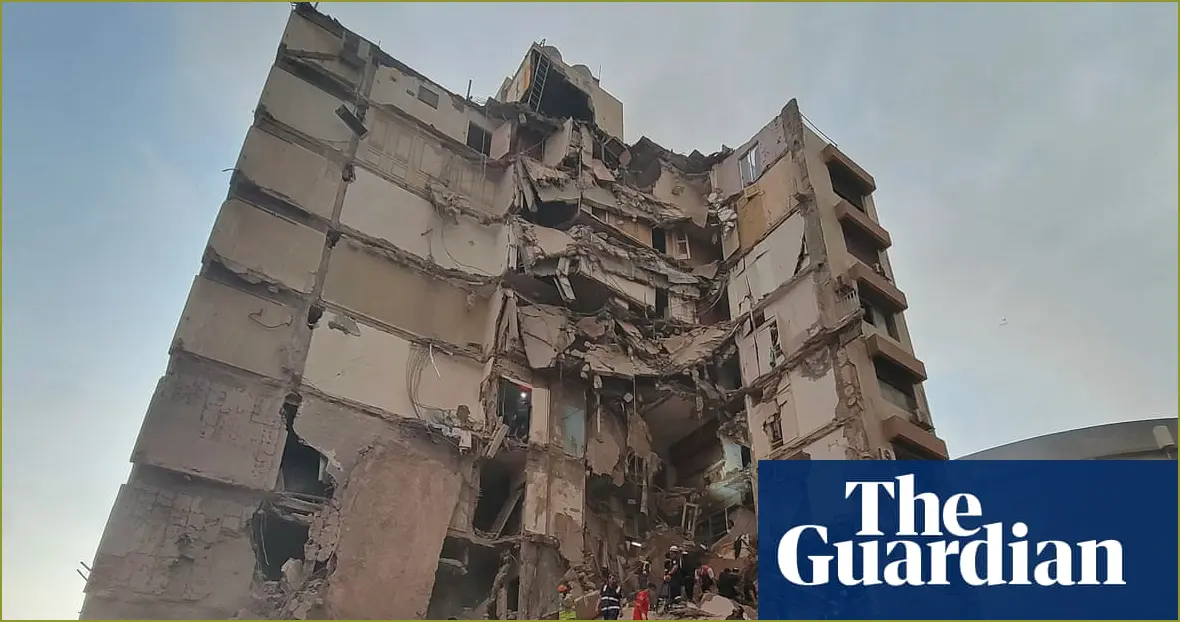
Mass Casualties in Beirut After Israeli Airstrikes
In a shocking display of violence, it took Israel just 10 minutes to inflict one of the deadliest mass killings in Lebanon since the civil war concluded in 1990.
Omar Rakha experienced the sound of warplanes but was unaware of the destruction until he regained consciousness lying face down on the road, bleeding. He discovered that two Israeli bombs had obliterated the building next to his in the Barbour district of central Beirut, prompting him to run through the flames in search of his sister.
Shaden Fakih, a 24-year-old calisthenics trainer, rushed toward the impact area after learning that his friend Mahmoud was trapped inside the damaged building, now reduced to a pile of rubble. Despite his efforts to assist, he could only bring an elderly woman trapped nearby to safety, while Mahmoud remained missing amidst the chaos.
Dr. Ghassan Abu-Sittah, working in the emergency room, reported an influx of casualties, including children pulled from beneath the debris. Many arrived without their parents, their identities lost; the youngest victim was just 11 months old. Abu-Sittah had to perform urgent surgery to relieve pressure in the child’s head.
Israel’s bombardment targeted more than 100 locations in Lebanon, resulting in over 300 deaths and 1,165 injuries, according to initial reports from Lebanon’s civil defense. This death toll surpasses that of the catastrophic Beirut port explosion in 2020.
The Israeli military justified its actions by claiming to target Hezbollah “command and control centers,” labeling the assault “Operation Eternal Darkness.” However, Lebanese officials and residents condemned these strikes, stating they primarily harmed civilians, with calls to hold Israel accountable for breaching international law.
As nighttime descended, the realities of a devastating day became more apparent. Residents scoured the rubble for missing loved ones, sharing heart-wrenching images of dust-covered children on social media. As Barbour residents faced an uncertain future, eyewitnesses like Fakih lamented the destruction of their beloved city, expressing a yearning for peace amidst the violence.
