


UK Government Negotiates EU Airport E-Gate Access for Passport Holders
The UK government is actively pursuing an agreement that would permit British passport holders to utilize EU airport e-gates, according to a government minister.
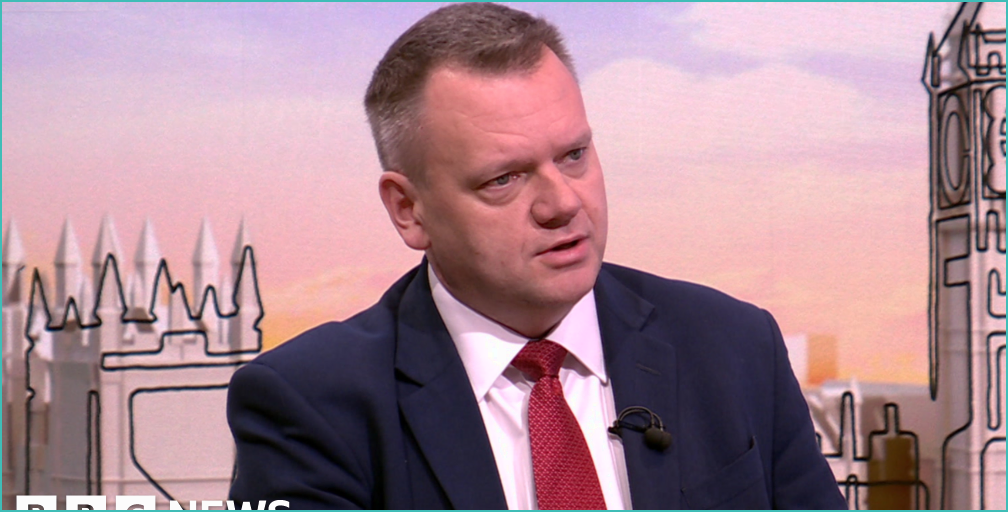
Nick Thomas-Symonds mentioned that talks are in their “final hours” in anticipation of a UK-EU summit in London, emphasizing that minimizing border delays is a “very sensible goal.”
When questioned about whether the UK might have to adhere to more EU regulations as part of any arrangement, the Minister for European Relations highlighted that it would involve making a sovereign decision regarding “the common standards for alignment.”
Conservative MP Alex Burghart expressed concerns that the negotiations could turn the UK into a “rule taker,” a situation that many had hoped to avoid when leaving the EU.
Significant UK-EU Summit Approaches
The first bilateral summit between the UK and the EU post-Brexit is set to take place on Monday, with Prime Minister Sir Keir Starmer calling it a “very significant moment.” An agreement is expected as he meets with European Commission President Ursula von der Leyen and European Council President Antonio Costa.
Proposed announcements may revolve around trade, security, and potentially British access to a substantial €150 billion (£125 billion) EU defense fund, which could benefit UK defense companies.
Focus on Reducing Bureaucracy
Reports suggest that additional agreements could simplify processes for British travelers using e-gates at European airports, ease food export and import regulations, and create a youth mobility scheme between the UK and the EU. Thomas-Symonds, leading the discussions, stated his priority is “ruthless pragmatism” with a focus on enhancing jobs, lowering living costs, and fortifying borders.
He also mentioned that the government would review contributions to EU projects individually, evaluating each on its own merits. When asked about his confidence in securing e-gate access for British travelers, Thomas-Symonds replied affirmatively, highlighting the importance of reduced queuing times for travelers.
Concerns Over Regulatory Alignment
Burghart reiterated his concerns over the potential for the government to align with EU standards, which he believes would result in the UK becoming a “rule taker.” He emphasized that “dynamic alignment” remains a possibility, wherein the UK and EU would keep regulatory standards consistent without the UK having direct involvement in future decisions.
He asserted that if this occurs, it would compromise Britain’s sovereignty. On discussions regarding young people’s mobility between the UK and EU, Thomas-Symonds maintained that they are working towards a “smart and controlled scheme,” firmly stating that it would not equate to freedom of movement, a key sticking point for the government.
Opposition Views on EU Relations
Liberal Democrat MP Calum Miller expressed his disappointment with the government’s approach, urging a more ambitious stance on EU relations. He argued that pursuing a customs union could offer stability for British businesses and potentially unlock significant economic benefits.
On the other hand, Nigel Farage, leader of Reform UK, warned that any deal containing a youth mobility scheme or expanded fishing rights for the EU would be perceived as a betrayal of Brexit. He argued that agreements leading to “free movement of people under 30” would favor inbound migration to the UK.
