



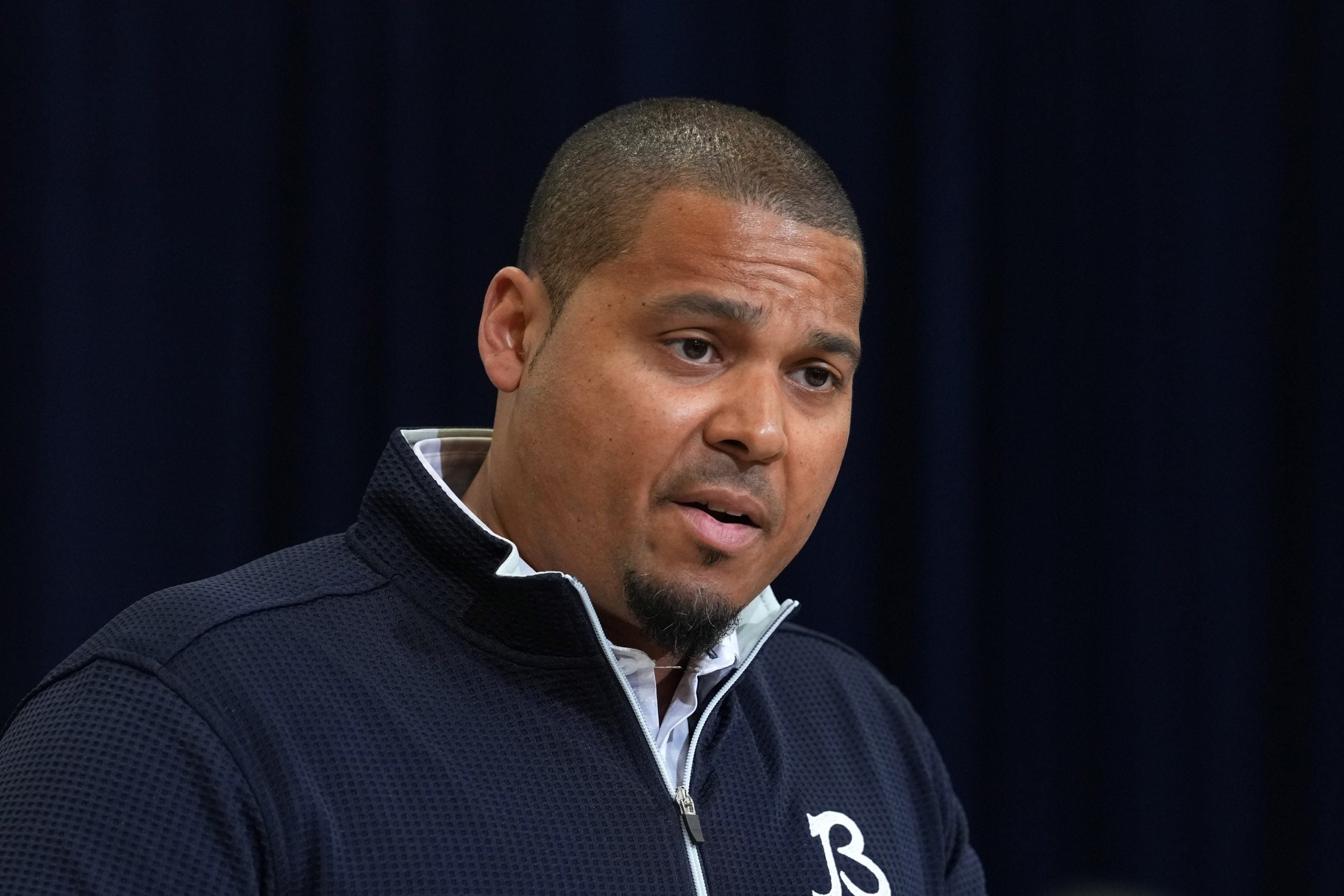
On Tuesday, Chicago Bears general manager Ryan Poles addressed the media for the first time since early January. With the scouting combine approaching, the team has a lot of groundwork ahead, focusing on gathering insights through drills and player interviews. Although he discussed various subjects, including D.J. Moore’s trading situation and Caleb Williams’ development, the central question remains: what are his plans to enhance the defense?
The Bears’ defense finished 29th in the NFL last season. Without their league-leading takeaways, the scrutiny from fans and analysts would have been even harsher. Poles acknowledges the need to improve this unit to align with the team’s offense. Complicating matters, each position group requires attention. Currently, there are no starting safeties under contract, linebacker Tremaine Edmunds is expected to be released for salary cap reasons, and the defensive line requires significant upgrades. What intentions does Poles have for reforming this defense?
Ryan Poles Observed His Team Outpaced by Swift Offenses
Teams like Detroit, Cincinnati, and San Francisco handed the Bears over 40 points with little effort. Even the Baltimore Ravens, playing without Lamar Jackson, managed to score 30 points. In all matchups against the Green Bay Packers, Christian Watson repeatedly exploited the Bears’ defense. Given these circumstances, it’s logical for Poles to seek more speed within the defense. Last year’s draft already hinted at this shift, evident when the Bears selected fast linebacker Ruben Hyppolite in the 4th round.
The upcoming 40-yard dash at the combine could significantly influence the Bears’ draft strategy. The team will likely prioritize players demonstrating impressive speed, ensuring that this quickness is also visible in game footage. Relying solely on turnovers cannot be the franchise’s strategy if they aspire to win a championship. Moreover, Poles hinted at intriguing plans regarding the structure of the 2026 draft class that may impact their first-round choices.
Poles Has a Track Record of Targeting Deeper Positions in the Draft
An example of this was last year when running back was deemed the second-deepest position in the 2025 draft class. The Bears waited until the 7th round to select a back, ultimately garnering a solid rookie contributor in Kyle Monangai. If Poles believes a position has depth, he might opt to wait until later rounds to select from it, prioritizing more limited positions in earlier rounds. His recent comments on defensive tackles and edge rushers indicate this approach. In fact, there are seven defensive tackles and 13 edge rushers in the top 100 prospects for the 2026 draft.
| Rank | Player | Position | College | Key Traits/Notes |
|---|---|---|---|---|
| 3 | Arvell Reese | EDGE | Ohio State | Explosive, physical defender with elite closing speed. |
| 4 | David Bailey | EDGE | Texas Tech | Ultra-explosive; led nation with 20.2% pressure rate in 2025. |
| 5 | Rueben Bain Jr. | EDGE | Miami | Powerful, technical rusher widely seen as a top-10 lock. |
| 16 | Peter Woods | DT | Clemson | Elite 3-technique with strong pass-rush potential. |
| 17 | Keldric Faulk | EDGE | Auburn | Versatile 6’6″ hybrid with significant developmental upside. |
| 21 | Akheem Mesidor | EDGE | Miami | High motor; recorded 12.5 sacks in 2025. |
Consider this: which strategy is more advantageous? Selecting the top edge rusher with the 25th pick while hoping a reliable defensive tackle falls to them in the second round, or opting for the best defensive tackle immediately and addressing the edge rusher position later? The latter approach is much more prudent. Chicago requires both a nose tackle and an interior pass rusher, and selecting one in the first round is nearly guaranteed. The chances of securing quality players diminish significantly afterward. While predicting the first 24 picks is challenging, it seems Poles intends to prioritize the interior first, aiming to find edge rush aid in later rounds.
