



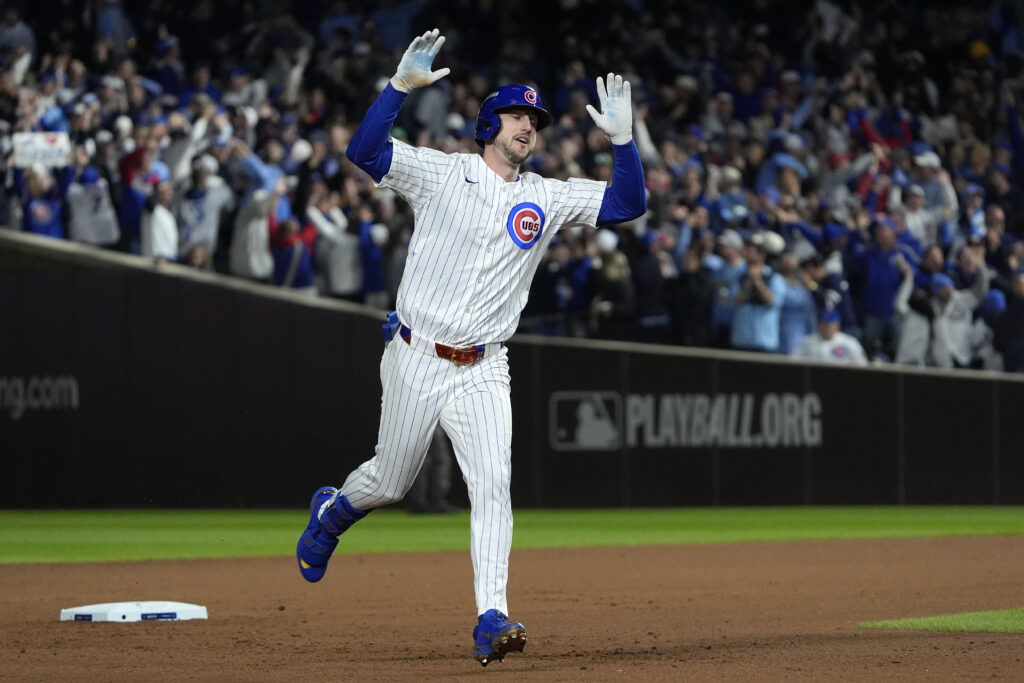
Kyle Tucker has signed a four-year, $240 million deal with the Dodgers, concluding a fascinating free agency journey. Tucker opted for a shorter contract that includes a high average annual value and flexible opt-out options after the 2027 and 2028 seasons, rather than a longer agreement. Reports indicate that the only substantial long-term offer he received was from the Blue Jays, who reportedly proposed $350 million over ten years.
This offer aligns with MLB Trade Rumors’ earlier projection of an 11-year, $400 million deal for Tucker at the beginning of the offseason. The high price likely deterred many teams, and even larger-market clubs seemed hesitant to commit long-term to Tucker—possibly due to his past injuries and a subpar second half with the Cubs last season. The Mets made a bid for Tucker but were only ready to provide a front-loaded four-year contract worth $220 million, which also included opt-out clauses.
A $350 million deal would have ranked as the seventh highest in baseball history, with only 15 contracts exceeding a $35 million average annual value. While it would have set a record for the largest free agent contract in Blue Jays history, it would still fall short of the largest contract in the franchise, which is Vladimir Guerrero Jr.’s 14-year, $500 million extension from last spring. The Blue Jays have previously made larger offers, such as a heavily-deferred, ten-year, $700 million contract extended to Shohei Ohtani during the 2023-24 offseason.
This marks the fourth instance in three offseasons that the Blue Jays have aggressively pursued a player who ultimately signed with the Dodgers, following Tucker, Ohtani, Yoshinobu Yamamoto, and Roki Sasaki. Given that these players significantly impacted Los Angeles’ World Series win against Toronto last fall, Tucker’s decision adds to the Blue Jays’ frustration. They also recently missed out on longtime shortstop Bo Bichette, who signed a three-year, $126 million deal with the Mets, leaving Toronto without their top two position-player targets for the offseason.
Nevertheless, the signing of Kazuma Okamoto addressed a need in the Blue Jays’ infield, suggesting that targeting Tucker for the outfield may have been a higher priority than re-signing Bichette. Moreover, Toronto has had ample time to negotiate long-term extensions with Bichette during his years of team control, and the addition of Andres Gimenez from the Guardians seems to indicate a shift towards a post-Bichette era at shortstop.
If Tucker had accepted the Blue Jays’ offer, he would have joined Guerrero as a key figure in the team’s lineup for the next decade. He would also have strengthened an outfield that faces uncertainty with George Springer and Daulton Varsho both potentially hitting free agency next winter. Toronto hopes that Anthony Santander, their marquee signing from last offseason, can bounce back after a challenging 2025, and Okamoto’s acquisition implies that breakout star Addison Barger might play more right field than third base.
Currently, Toronto’s outfield setup mirrors their 2025 strategy, with Varsho in center field and Springer and Santander possibly sharing DH and corner roles, along with a mix of Barger, Nathan Lukes, and Davis Schneider alternating in the other corner. Barger is likely to play some third base, and Schneider can cover second base, offering flexibility for manager John Schneider in managing playing time.
