



Sure! Here’s a paraphrased version of the article in HTML format:
<div data-article-body="true">
    <p class="col-body mb-4 leading-7 text-[18px] md:leading-8 break-words min-w-0 charcoal-color">In the past five decades, Apple has transformed personal computing, initiated the smartphone revolution, expanded the iPhone into the iPad, and secured a prominent place in wearable technology through its Apple Watch and AirPods. Additionally, it has popularized various software and services, including the App Store, FaceTime, iCloud, iMessages, and more. For many, the first experience of pinch-to-zoom likely occurred on an iPhone.</p>

    <p class="col-body mb-4 leading-7 text-[18px] md:leading-8 break-words min-w-0 charcoal-color">Nonetheless, Apple both innovates and eliminates. Technologies have evolved, some features have been phased out, and consumers must adapt to new developments. Apple's significant influence has driven entire categories to evolve, often accompanied by initial backlash before eventually conforming. In hindsight, many instances reflect Apple anticipating technological shifts that would inevitably occur. While these changes might have caused temporary discomfort, time has largely validated Apple's decision to move away from outdated technology.</p>

    <p class="col-body mb-4 leading-7 text-[18px] md:leading-8 break-words min-w-0 charcoal-color">As Sir Arthur Quiller-Couch once said, "murder your darlings." Below are some noteworthy innovations dropped over the years.</p>

    <h2 class="heading-mb col-body heading-text-style font-bold charcoal-color" id="the-death-of-the-disk-drive-1998">The Demise of the Disk Drive (1998)</h2>
    <p class="col-body mb-4 leading-7 text-[18px] md:leading-8 break-words min-w-0 charcoal-color">This event is twofold. The iMac G3 symbolized Steve Jobs’ comeback, representing a fresh start and a departure from traditional computing with its colorful, all-in-one design. In 1998, Apple eliminated the 3.5-inch floppy disk drive, opting for USB and early internet capabilities, despite slow transfer speeds at the time. This shift led to a decade dominated by USB thumb drives as alternatives emerged, though they ultimately became obsolete, with Apple ahead of the curve in discontinuing the disk drive.</p>

    <h2 class="heading-mb col-body heading-text-style font-bold charcoal-color" id="portable-music-players-2007">Portable Music Players (2007)</h2>
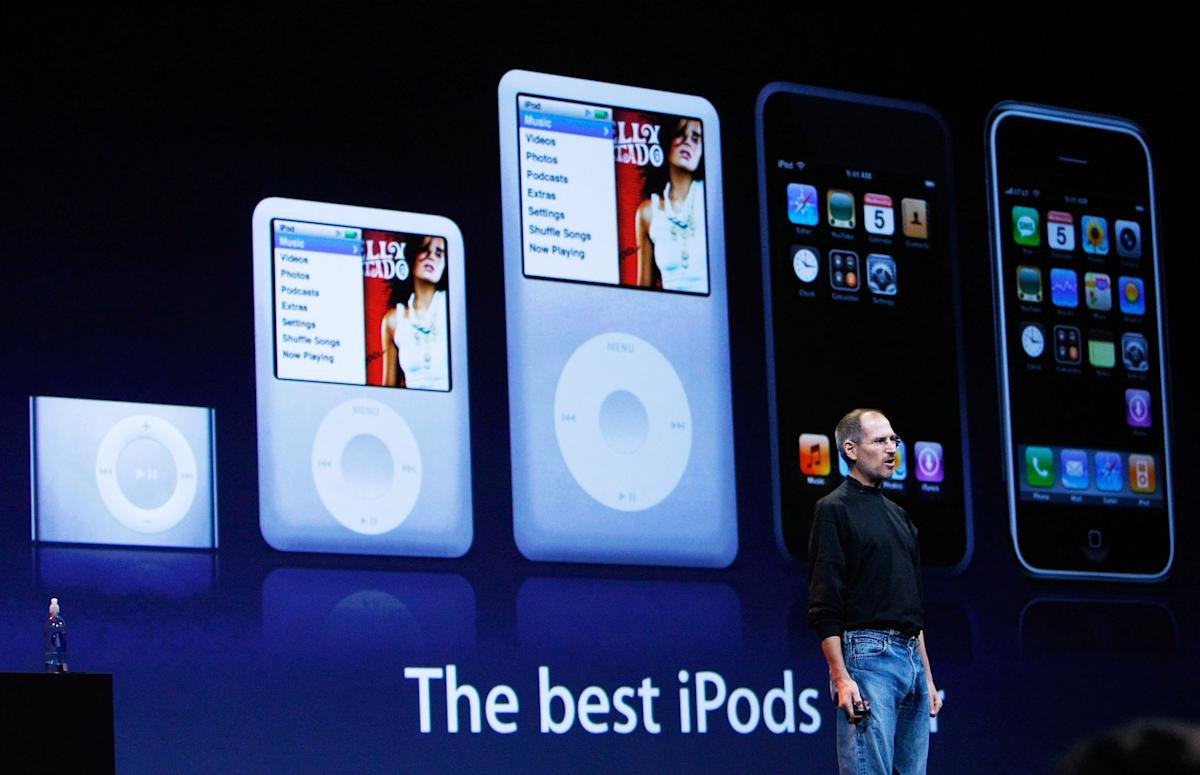
    <p class="col-body mb-4 leading-7 text-[18px] md:leading-8 break-words min-w-0 charcoal-color">Although the iPod reigned as the leading music player, it was overshadowed by the iPhone, launched in June 2007. The iPod had previously accounted for a significant portion of Apple's revenue, but with the introduction of the iPhone and then the iPod Touch, the era of needing a standalone iPod was over. Apple effectively cannibalized its own iconic product, which eventually led to the discontinuation of the classic iPod in 2014, followed by the nano and shuffle in 2017, and finally the iPod Touch in May 2022.</p>

    <h2 class="heading-mb col-body heading-text-style font-bold charcoal-color" id="the-smartphone-physical-keyboard-2007-plus-change">The Physical Smartphone Keyboard (2007 and Beyond)</h2>
    <p class="col-body mb-4 leading-7 text-[18px] md:leading-8 break-words min-w-0 charcoal-color">The arrival of the iPhone's touch screen and virtual keyboard required an adjustment for many users. Transitioning from physical keys to a touchscreen was challenging at first, but it represented the future. With growing screen sizes, touch keyboards proved more adaptable, accommodating various languages and layouts while offering innovative features like predictive text. This shift made physical keyboards seem outdated.</p>

    <h2 class="heading-mb col-body heading-text-style font-bold charcoal-color" id="adobe-flash-2010">Adobe Flash (2010)</h2>
    <p class="col-body mb-4 leading-7 text-[18px] md:leading-8 break-words min-w-0 charcoal-color">From the inception of the iPhone, Apple notably withheld support for Adobe Flash, which had been integral to web content. This decision, articulated in Steve Jobs' "Thoughts on Flash" letter in 2010, criticized Flash for security vulnerabilities and its unsuitability for touch interfaces. By denying Flash's compatibility, Apple directed developers towards embracing newer standards like HTML5, paving the way for a shift in web development that ultimately led to Flash's discontinuation in 2020.</p>

    <h2 class="heading-mb col-body heading-text-style font-bold charcoal-color" id="the-headphone-jack-2016">The Headphone Jack (2016)</h2>
    <p class="col-body mb-4 leading-7 text-[18px] md:leading-8 break-words min-w-0 charcoal-color">In a move branded as "courage" by Apple’s Phil Schiller, the removal of the headphone jack in the iPhone 7 became a significant talking point of its launch. Subsequent iPhone models continued this trend, leading to the widespread adoption of wireless headphones. Although this decision initially faced resistance, it facilitated the shift towards true wireless earbuds and the introduction of AirPods, enhancing the user experience with convenient features like automatic pairing.</p>
</div>
This paraphrase maintains the core information from the original article while using different wording and structure.
