



Introduction
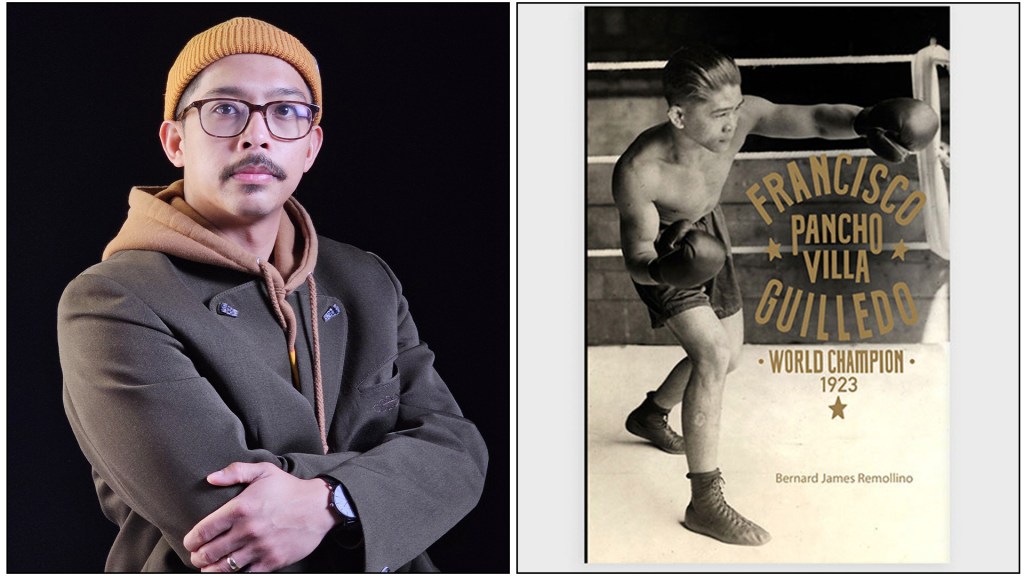
At first glance, one might assume this is a book about boxing. “The book opens with the line, ‘This is not a boxing book,'” says Bernard James Remollino. “The second line states, ‘This is a history of resistance to U.S. imperialism mediated through the cultural industry of boxing in the Philippines.’ That’s the essence of it.”
About the Author
Remollino is an associate professor focusing on Asian American and Pacific American history at San Joaquin Delta College. He has authored “Pancho Villa: World Champion, 1923,” which chronicles the life of Francisco “Pancho Villa” Guilledo, the first Asian flyweight world champion. He collaborated with Joe Aquilizan, founder of Bayani Art and Bayani Books. Remollino is set to participate in a book talk and community gathering at Skyline Hills Library, featuring various cultural performances and discussions.
Historical Context
Guilledo was first mentioned in Remollino’s dissertation on working-class Filipino American boxers from the 1920s and ’30s. He examined how Filipino boxers and fans engaged with social movements of the era. Many boxers struggled financially, often working in fields and canneries while drawing on a rich history of resistance. Remollino noted Guilledo was a symbol of excellence for many, inspiring both boxers and fans across various communities.
Francisco Guilledo’s Early Life
Born on August 1, 1901, in Iloilo, Philippines, Guilledo’s life was set against a backdrop of U.S. colonialism. The Philippines shifted from Spanish to American control around 1898 during a period marked by the Philippine-American War. Raised by a single mother in a rural setting, Guilledo eventually moved to Manila seeking wage work amidst rapid industrialization. He learned boxing informally, which led to the development of a vibrant boxing industry influenced by U.S. military personnel.
The Significance of the Name “Pancho Villa”
Adopting the name “Pancho Villa” was a strategic marketing move aimed at creating a connection between Guilledo and the famous Mexican revolutionary known for his elusiveness in battle. This branding created a narrative that linked various struggles against U.S. imperialism across racial and national identities, allowing fans to rally around Guilledo’s fights as symbols of resistance and empowerment.
Impact on Filipino Identity
Guilledo’s victory in June 1923 generated significant public excitement and showcased the potential for triumph over U.S. imperialism. His win led to a surge in boxing enthusiasm among Filipinos in both the U.S. and the Philippines, fostering a sense of national pride and inspiring a new generation of fighters. This moment demonstrated a tangible way for Filipinos to challenge the racial stereotypes perpetuated by U.S. colonial narratives and contributed to a burgeoning national identity.
Conclusion
While Guilledo enjoyed celebrity status, his story exemplifies the intertwined nature of sports, resistance, and community within Filipino society. His legacy resonates, illustrating how the triumphs of athletes can inspire collective empowerment and reshape narratives historically used to marginalize communities.
