



Recovery Timeline for Elite Athletes
Clinical guidance indicates that healing from emotional trauma can span weeks or even months, with some suffering lingering pain for years. However, elite cricketers are often required to compress this recovery time into mere days.
Mitchell Santner’s Challenge
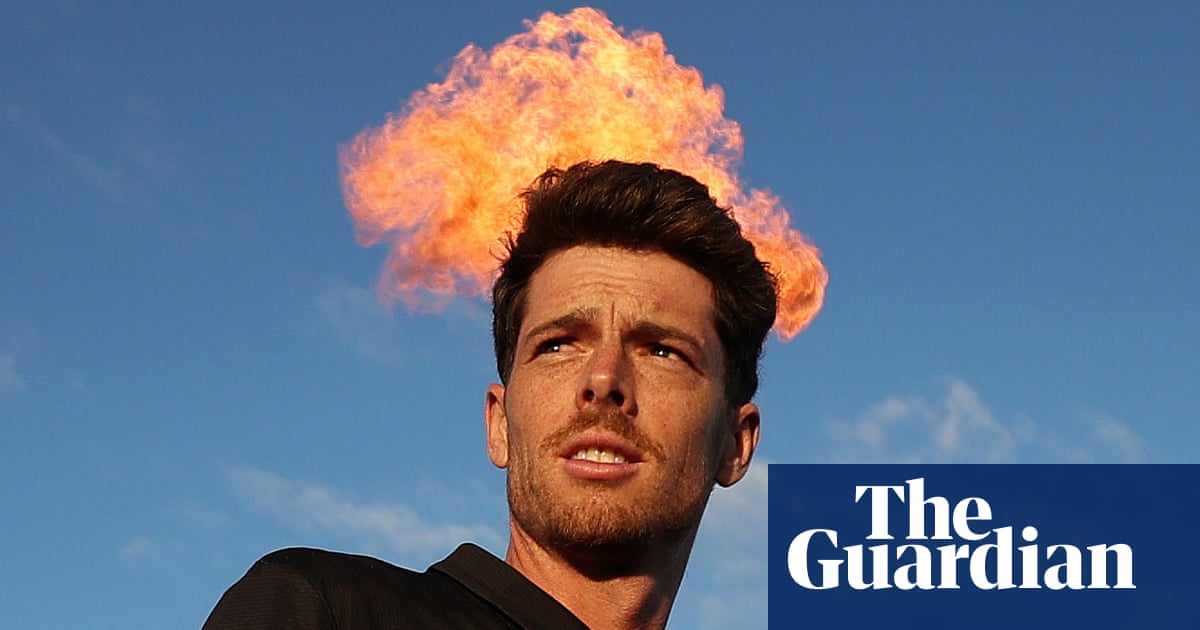
Consider Mitchell Santner, the captain of New Zealand. He faced a devastating 96-run defeat to India in the T20 World Cup final on March 8. This marked the Black Caps’ fourth loss in an ICC final since 2019, making his team’s previous semi-final victory over South Africa even more bittersweet. After that defeat, Santner spent his flight home reflecting, only to don his kit again just a week later for a T20 international against South Africa at Mount Maunganui.
Shared Experience Among Teammates
He wasn’t alone in this struggle; teammates Jimmy Neesham, Cole McConchie, and Kyle Jamieson also shared the burden of the World Cup loss, alongside South Africa’s Keshav Maharaj, George Linde, and Jason Smith, who arrived in New Zealand on March 12 without returning home.
The Overlooked T20 Series
Let’s be honest, dear Spin readers: how many were aware of the ongoing T20 series between South Africa and New Zealand? Did Connor Esterhuizen’s 57 off 36 balls in Wellington even register with you? What about Ben Sears’ impressive three for 14 in Hamilton?
The Modern Cricket Landscape
The lack of recognition for these achievements is not the players’ fault. Bilateral international cricket, especially in its shorter format, has become both constant and light, wedged between major tournaments that define careers. The current cricket calendar resembles a disorganized game of Tetris.
The Psychological Aspect of Performance
“It’s relentless,” notes Maurice Duffy, a leading mental skills coach who worked with Steve Smith around the 2018 ball-tampering scandal. With Duffy’s guidance, Smith processed the shame of losing the captaincy and made a remarkable return in the 2019 Ashes, scoring 774 runs at an average of 110.57. Duffy stresses that athletes need time to reset; without that, burnout can occur—not from overplay, but from lack of meaning.
The Challenge of Emotional Recovery
Andy Hooton, head of school health, sport, and rehabilitation at the University of Derby, highlights that emotional processing in the wake of failure is a significant hurdle for players. If everything hinges on long-term goals like a World Cup, the impact of disappointment can be profound. Rohit Sharma, after India’s unexpected loss in the 2023 World Cup, admitted to feeling paralyzed and unwilling to leave his room for days. Yet, just a month later, he was on the field again in a Test series against South Africa.
The Endless Cycle of Cricket
For most cricketers, taking a moment to pause is a luxury. The Indian Premier League kicks off just three weeks after the T20 World Cup, and while that may seem quick, it pales in comparison to the 10-day gap seen in 2015. Although momentum can aid in processing trauma, Duffy warns that this only holds true if there is still meaning in what follows. Players need to understand the ‘why’ behind their efforts to find fulfillment.
Ultimately, while some athletes might excel in the face of adversity, not everyone possesses the same resilience. The relentless demands of modern cricket—whether in franchise leagues or the County Championship—place immense pressure on those who entertain us. And as fans, we are expected to stay engaged with bilateral series that often go unnoticed, requiring us to invest in teams with billionaire owners in a game that never seems to pause.
