



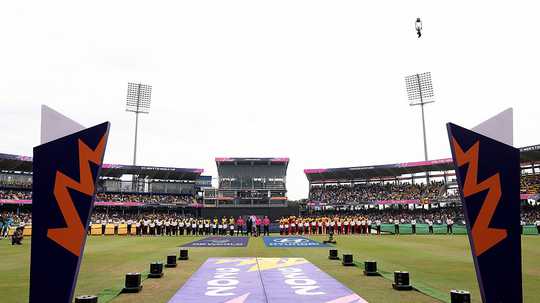
R. Premadasa Stadium: An Underrated Venue
R. Premadasa Stadium is located in an area of Sri Lanka that isn’t often depicted in postcards.
Unique Location and Atmosphere
Situated along Khettarama Temple Road in a predominantly Muslim neighborhood of a Buddhist-majority nation, the stadium was constructed on former swampland next to a monastery. The call to prayer from a nearby mosque often overshadows the papare bands in the stands, sometimes twice in one T20 match. Approaching the stadium, narrow lanes and bustling, unpolished markets create a stark contrast to the grand, tree-lined entrances of other nearby Test venues, like SSC, P. Sara Oval, and the Colombo Cricket Club Ground, which unmistakably represent Colombo.
A Historic Ground with Multifaceted Identity
Established by Ranasinghe Premadasa, Sri Lanka’s first “commoner” Prime Minister and later President, the stadium was meant to serve as a floodlit alternative to the more exclusive SSC. It embodies various identities, reflecting the city’s complexities within its less than 22-acre area. The pitches during this T20 World Cup have mirrored these intricate layers across 22 yards.
The Pitch Dilemma
In the initial four matches of the tournament, the pitch often slowed down in the second half, favoring teams that batted first with four consecutive victories. Zimbabwe’s successful chase of 179 revived the notion of the venue as a chasing ground, contradicting earlier trends where the last eight matches leading to the T20 World Cup were won by the chasing side.
The Captains’ Conundrum
Captains, even those with deep ties to Colombo, have been left to speculate publicly. For instance, Dasun Shanaka decided to chase against New Zealand in a must-win match, banking on early pitch conditions and anticipated settling later. However, the ball continued to turn unexpectedly. In hindsight, both captains faced challenges in reading the pitch accurately during their matches.
Bowling Strategies and Expectations
While spinners have dominated the bowling charts with the most wickets taken at the venue, matches have illustrated a mixture of strategies. Players must continuously adapt their plans based on the pitch dynamics and match situations. The uneven boundaries and varied pitch conditions add to the unpredictability that keeps players on their toes.
Cricket as a Cultural Experience
The atmosphere at the Premadasa Stadium goes beyond cricket; it embodies the vibrancy of the surrounding community. The lively crowd energy, camaraderie, and the soundscape of drums and prayers enrich the experience for all who attend. The fans, who have shown incredible support, have endured disappointments alongside their team, desiring a more stable performance. Ultimately, the stadium has maintained a unique charm that elevates the essence of T20 cricket, reminding everyone that the story is never truly over until the last moment.
