



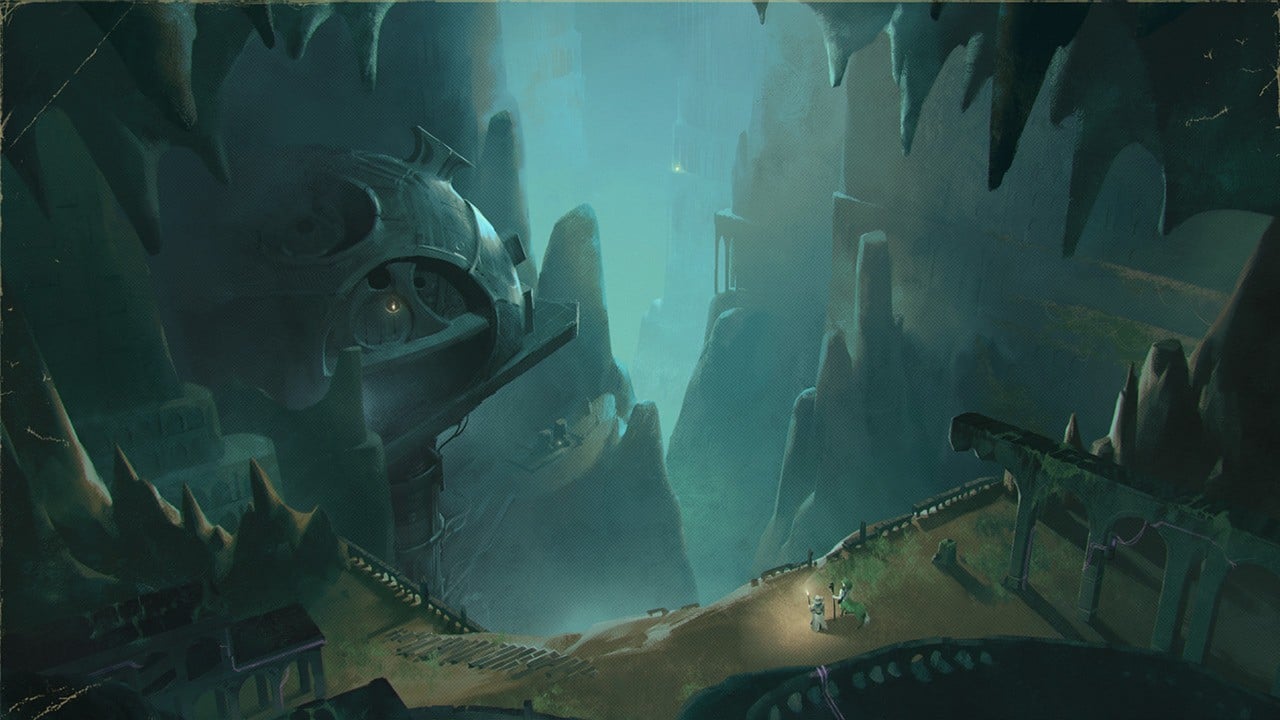
The tale of Caves of Qud has its roots in history, dating back to 2007 when Freehold Games began crafting this ambitious roguelike RPG. After a lengthy 17-year journey to its 1.0 release in 2024, which built a strong PC following, this challenging and intricate cult classic has now debuted on the Switch.
Set in the post-apocalyptic, science-fantasy realm of Qud, the game features factions with various alliances and rivalries, diverse ecosystems where creatures can either coexist or pose a threat, and a backdrop rich in both spiritual depth and technological advancement. The game’s mechanics hinge on these dualities, recalibrating upon each new run. Your primary objective, as an explorer, is to navigate this vividly immersive open world and ensure your survival.
You begin by selecting between two character types: mutants or true kin. Mutants exhibit biological peculiarities, like beaks or slime glands, while true kin are humans augmented with cybernetic enhancements such as night vision. Initially, mutants may seem fragile but unleash potent abilities as they progress, while true kin start strong but grow increasingly reliant on technology. Each choice offers distinct gameplay experiences.
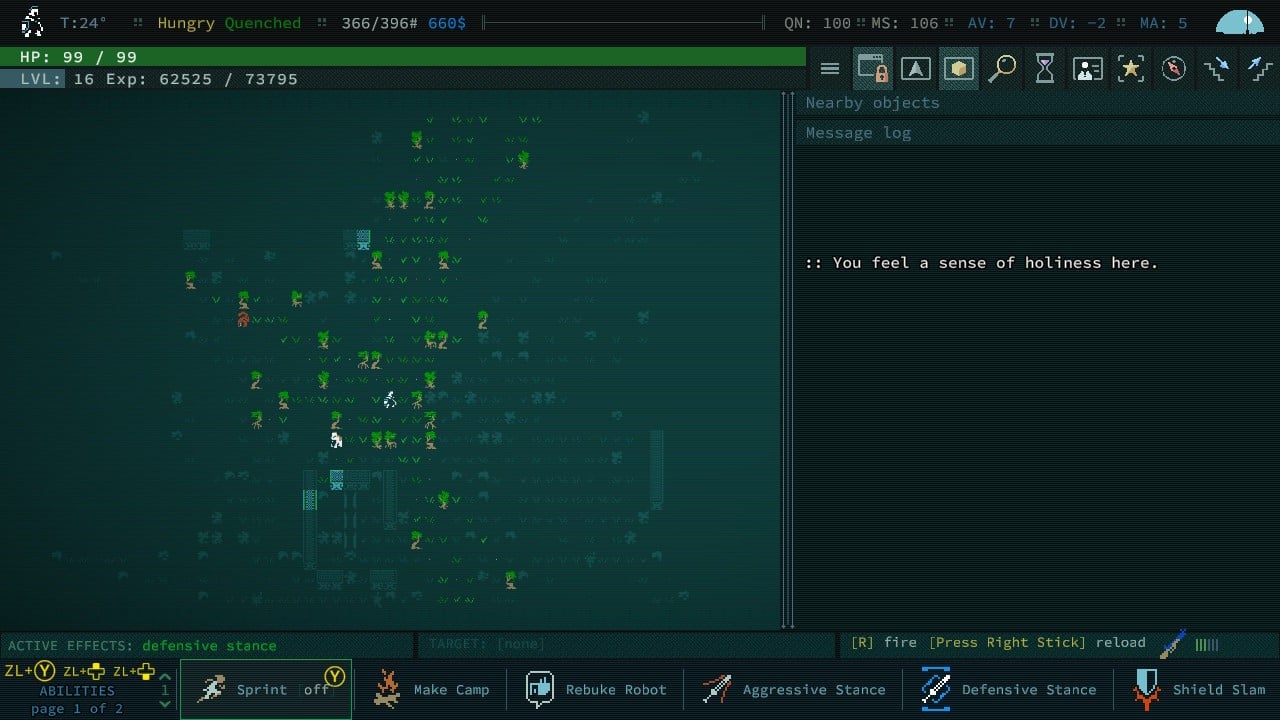
However, it’s essential to maintain perspective. While the game boasts unique features like three-armed mutants and winged cyborgs, early impressions can be deceiving. The daunting visuals may recall an era of overly imaginative art and basic graphics, but you quickly realize the game’s charm. The minimal tutorial thrusts you into the deep end, where the engaging visuals and humorous narrative swiftly captivate your attention, animating what initially seem like static pixel designs to life.
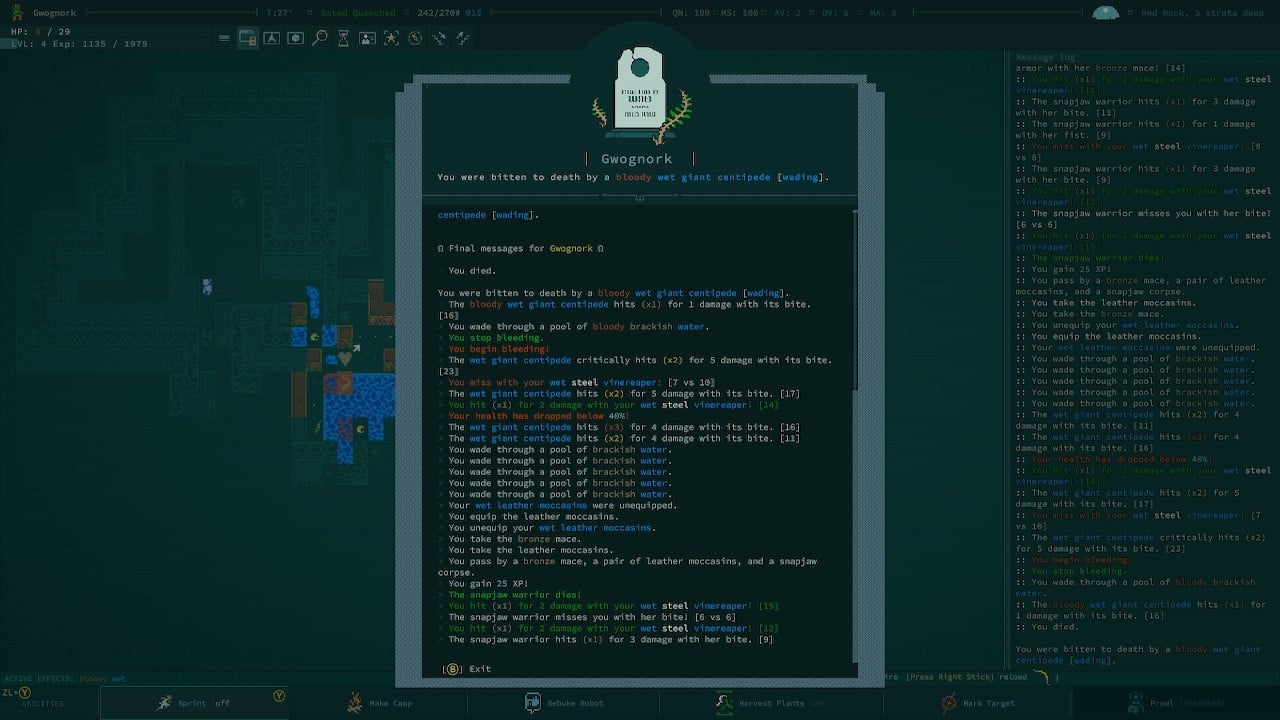
Within the realm of Qud, players experience freedom in gameplay, gifted the autonomy to survive and dynamically create their own narratives. However, survival can prove difficult. My first milestone was achieved through death, aptly named “Welcome to Qud”. In true roguelike fashion, once you die, it’s back to the beginning with no save points. While facing the loss of your leveled character after hours of gameplay is disheartening, it emphasizes the storytelling aspect inherent in Qud.
Yet, Caves of Qud offers more than just a cycle of lore and maps. The foundational geography remains constant, allowing players to track progress with each character restart. Additionally, a well-crafted quest line guides players through a variety of environments while seeking artifacts and tackling rescue missions. However, the challenge lies in balancing gameplay with danger, as trying to pursue the main quest can lead to significant frustrations, especially when a steep difficulty spike can abruptly end your journey.
Conclusion
Caves of Qud garners a loyal fanbase for good reason. Despite its graphical limitations, the world is vibrant, aided by its impressive soundtrack, and the fast-paced turn-based mechanics are addictive. While the challenging roguelike elements can be punishing, they enrich each adventure. Nevertheless, this clashes with the RPG elements that necessitate consistent objectives across runs. This tension creates a unique dynamic that players find hard to resist. Although the game is a bit cramped on Switch, it manages to adapt well.
While it may not reach legendary status on this platform, it certainly delivers a tale worthy of sharing with future console gamers.
