



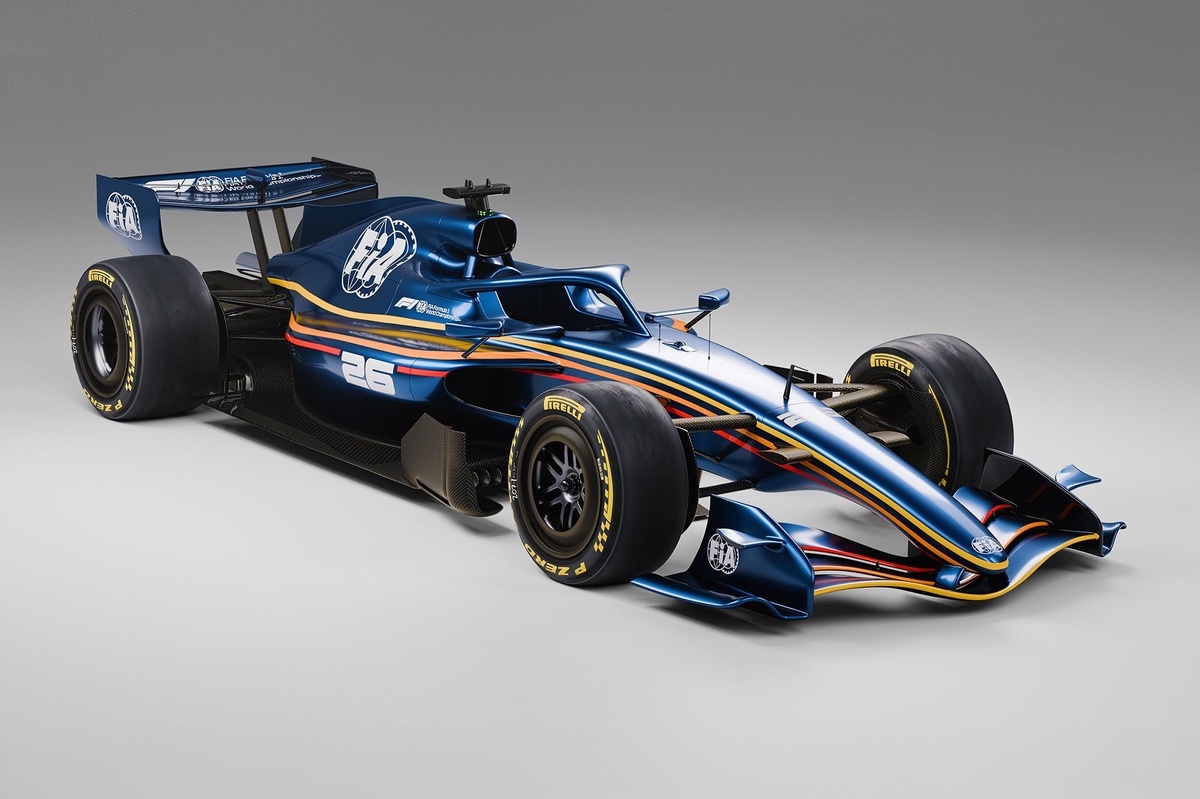
Just over a month prior to the first closed-door test for 2026 in Barcelona, Formula 1 and the FIA have unveiled a new vision for the future of their cars.
The FIA has released visual representations based on the recently revised technical regulations. The upcoming cars for 2026 will incorporate active aerodynamics, a slightly reduced size with a wheelbase that is 200mm shorter and a chassis that is 100mm narrower, alongside a slightly lighter minimum weight of 770kg. However, many in the paddock are skeptical about the feasibility of reaching this weight in the initial year of the cycle.
Recent FIA designs introduce minor modifications to the sidepods and in-wash boards, addressing the goal of minimizing dirty air. Overall drag is expected to decrease by around 40%, while the new cars are likely to produce 15% to 30% less downforce compared to their predecessors.
The updated visuals also showcase the new Pirelli branding for the 2026 tyres, which all teams tested after the Abu Dhabi Grand Prix. Although there was initial interest in shifting to 16-inch tyres, the decision has been made to keep the 18-inch size but with slightly reduced width to assist in weight reduction.
Overtake, Boost, and Recharge Terminology
Nikolas Tombazis mentioned during a media session in Abu Dhabi that the official terminology has seen significant changes. Originally introduced at last year’s Canadian Grand Prix, the terms X-mode and Z-mode for active aerodynamics are now streamlined to simplify the understanding for fans. ‘Manual Override Mode’ will now be referred to simply as ‘Overtake’, enabling drivers to utilize it when within one second of a car ahead at specific points while relying on additional electric power instead of the rear wing adjustment used previously.
The FIA has also defined two new terms regarding electric power: ‘Boost’ and ‘Recharge’. Boost Mode allows drivers to choose when to deploy energy from the Energy Recovery System (ERS) strategically, enhancing tactical gameplay. Recharge, conversely, focuses on using energy to replenish the vehicle’s battery.
Simplified Active Aerodynamics
Furthermore, the FIA has eliminated the differentiation between X-mode and Z-mode for active aerodynamics as all drivers will utilize similar configurations on the track. They will refer to these modes as Straight Mode, which optimizes speed on straights, and Corner Mode, which enhances downforce in corners. The terminology changes were validated through feedback from ‘fan focus groups’, comprising a mix of new and existing F1 fans.
