



Perilous Journey to Freedom
The most critical moments arose when hope for rescue appeared within reach. Thousands of miles from the shore, the tiny fishing skiff carrying Venezuelan opposition leader and Nobel laureate María Corina Machado had been adrift for hours, buffeted by turbulent winds and towering waves. Additionally, there was a constant danger of an unintended airstrike from US warplanes targeting supposed drug traffickers.
After three long hours in the dark, the fragile vessel finally connected with a larger ship designed to transport Machado to Curaçao, a Dutch territory that is still part of the Netherlands. From there, the 58-year-old politician would proceed via private jet, stopping in the US, on her way to Oslo, where she was to receive her Nobel prize shortly. The feeling of relief was overwhelming.
A Spiritual Experience
“There was a moment when my life felt genuinely at risk,” Machado recounted to the Guardian in Oslo. “Yet, it turned into a profoundly spiritual experience. Ultimately, I felt encompassed by God’s presence, as it was His will that I be here, embracing my family and the families of political prisoners.”
The covert 5,500-mile (8,850km) trek from Venezuela to Norway was orchestrated by Bryan Stern, a US special forces veteran and head of the Grey Bull Rescue Foundation, a Florida-based NGO focused on rescuing Americans and allies from war-torn or disaster-impacted areas.
The Challenges of Escape
Stern discussed the challenges of coordinating Machado’s escape, noting, “She has a significant target on her back. This isn’t about rescuing just anyone; this is like liberating a celebrity.” Venezuela has been in turmoil since Nicolás Maduro’s rise to power in 2013, plagued by hyperinflation, hunger, and repressive governance. Following allegations of electoral fraud, Machado was compelled to go into hiding.
Reports indicate that Machado utilized a disguise to flee a safe house in a Caracas suburb, successfully navigating 10 roadblocks before reaching a secluded fishing port where a small fishing skiff awaited her. The dilapidated boat was chosen because of its stark contrast to the sleek vessels commonly used by drug traffickers. Yet, the phantom of a US airstrike loomed; the fear was that the meeting in open waters might be misinterpreted as a drug transaction.
Arrival in Norway
Despite the risks, Stern briefed US defense officials about part of their planned route. A series of complications arose, including a GPS failure due to rough seas. “It was terrifying; everything could have gone wrong,” Stern noted. Ultimately, the two boats successfully joined forces, allowing Machado to reach Curaçao by Tuesday afternoon.
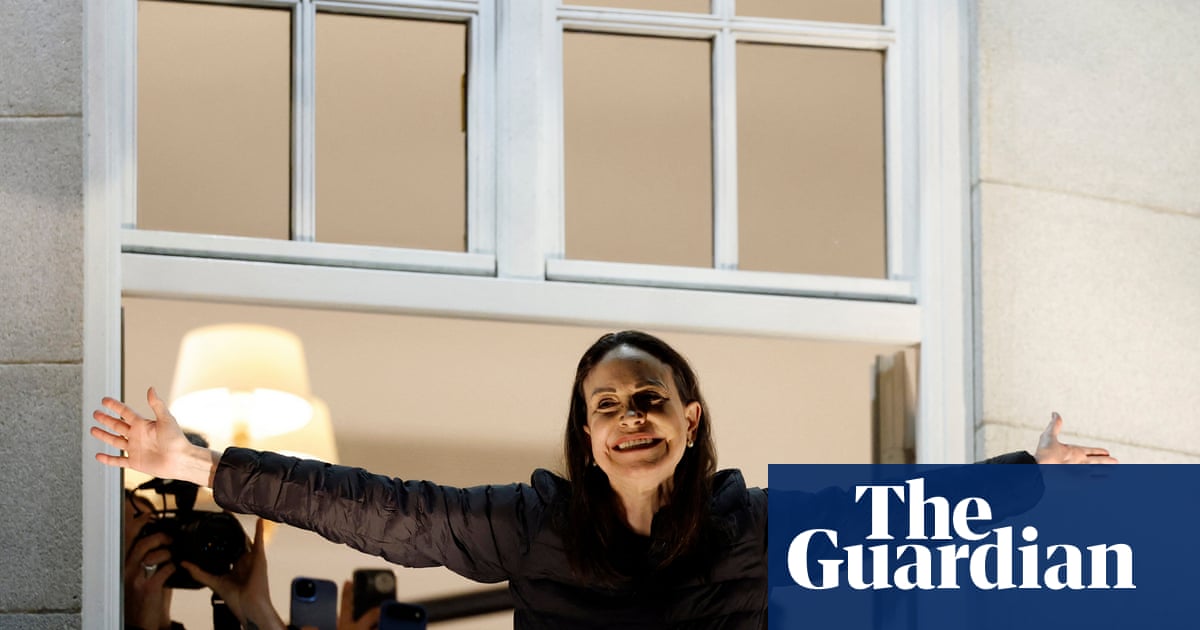
On Wednesday morning, she took off for Norway, with a stop in the US, but arrived too late for Wednesday’s awards ceremony. However, she did make an appearance from a balcony at the Grand Hotel in Oslo on Thursday, greeting enthusiastic supporters who rallied for “freedom.” Analysts emphasize the significant risks she faces if she returns to Venezuela, highlighting the potential for arrest despite the government displaying some restraint toward her.
Addressing Injustice
In her acceptance speech, read on her behalf by one of her daughters, Machado condemned the human rights abuses occurring under Maduro’s regime, labeling them “state terrorism.” She expressed conviction about returning to Venezuela, stating, “Certainly, the risk might be greater, but it’s always worth it. I have no doubt I will return.”
