



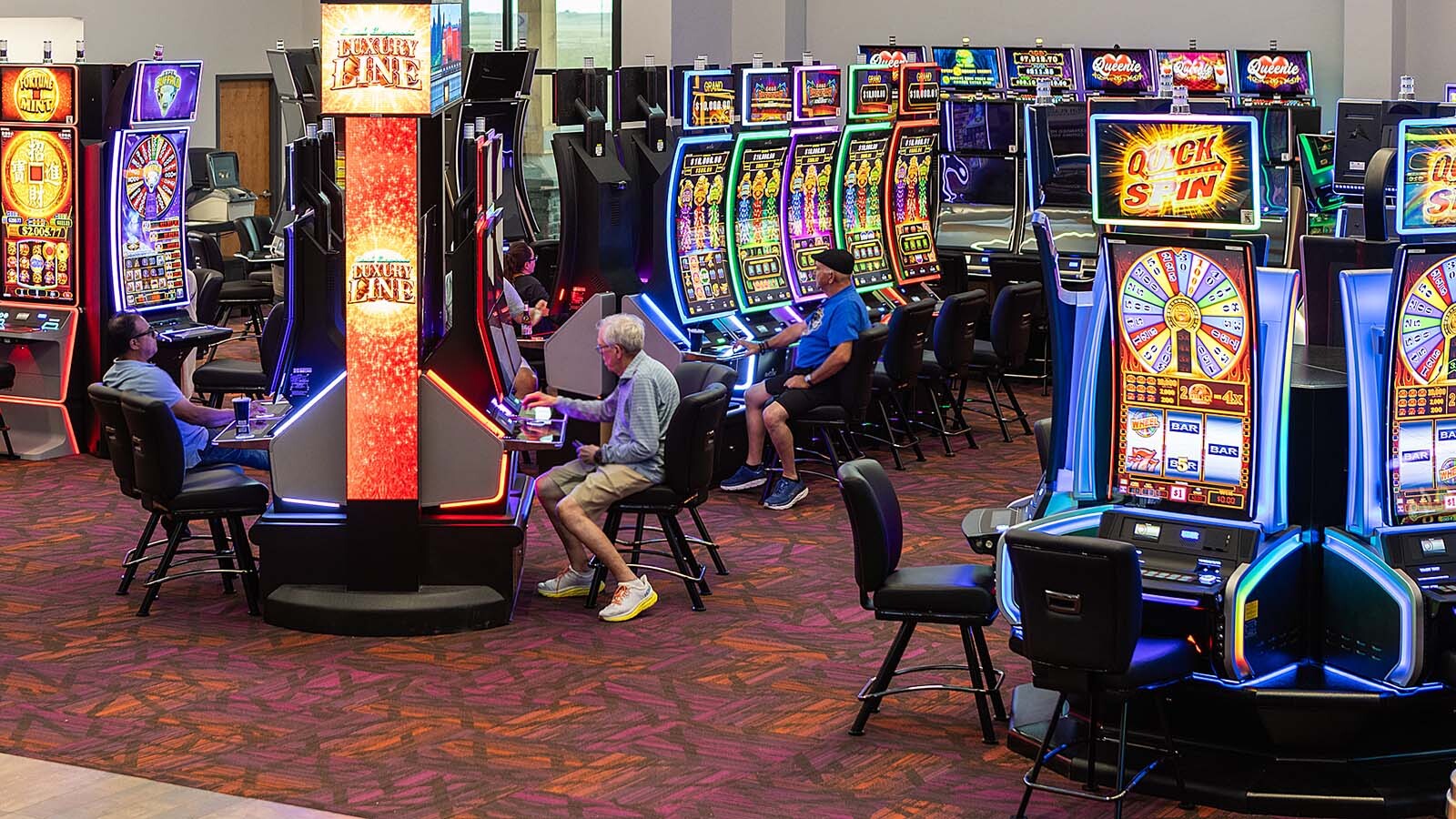
Visitors to Montana frequently notice the abundance of casinos.
With 1,247 licensed gambling venues—roughly one for every 900 residents—it might seem that gambling is a major industry in the Big Sky State.
However, the number of establishments has decreased by 7.4% over the past decade, as reported by the Department of Justice.
While trying your luck is easy—Billings has over 130 licensed gambling operations—Montana “casinos” are restricted to just 20 video gambling machines each, with many having even fewer.
This situation leads to claims that Montana could become the next Las Vegas to appear quite “silly,” according to John Iverson, a government affairs consultant for the Montana Tavern Association.
Iverson remarked, “Many visitors come to Montana and think, ‘Wow, casino, casino, casino,’ but the truth is these businesses need to derive revenue from more than just gaming.”
Comparing Montana and Wyoming
Despite its prominence, Montana’s gaming industry isn’t as massive as it appears, especially when compared to its smaller southern neighbor.
During Montana’s 2024 fiscal year, statewide expenditures on video gaming approached $2.8 billion, whereas Wyoming’s slot-like machines saw wagers exceed $2.1 billion in 2024.
Both states are grappling with the question of how much gambling is “just right” given the potential tax revenues involved.
Montana levies a 15% tax on video game machine expenditures, resulting in $83.1 million in revenue in 2024, while Wyoming imposes a 1.5% tax on the total wagered on historic horse racing machines, generating $19.1 million for cities and towns in the same year.
Montana’s Low-Stakes Gambling Environment
Entering one of Montana’s numerous “casinos” reveals another reality: all video bingo, keno, poker, and line games outside reservations have a maximum bet limit of $2 and a cap of $800 on winnings.
Many regions in Montana don’t rake in significant tax revenue, with most counties reporting under $100,000 in quarterly gaming taxes, except for a few that are more gaming-friendly.
In various small towns, gaming acts as one leg of a “three-legged stool,” along with food and alcohol, according to Iverson. Statewide, video gaming machines average just $96 in gross daily income.
Unique Characteristics of Gaming Machines
Similar to Wyoming, Montana’s gaming machines have distinctive traits.
All gaming machines in Montana utilize random-number generators, ensuring that the results are only determined when the button is pressed. Additionally, the state boasts a larger selection of unique keno games than other states.
Much of Montana’s gaming industry is supported by local companies, with game development still occurring in the state. Each approved machine must pass tests to meet state rules and ensure fairness for players.
