



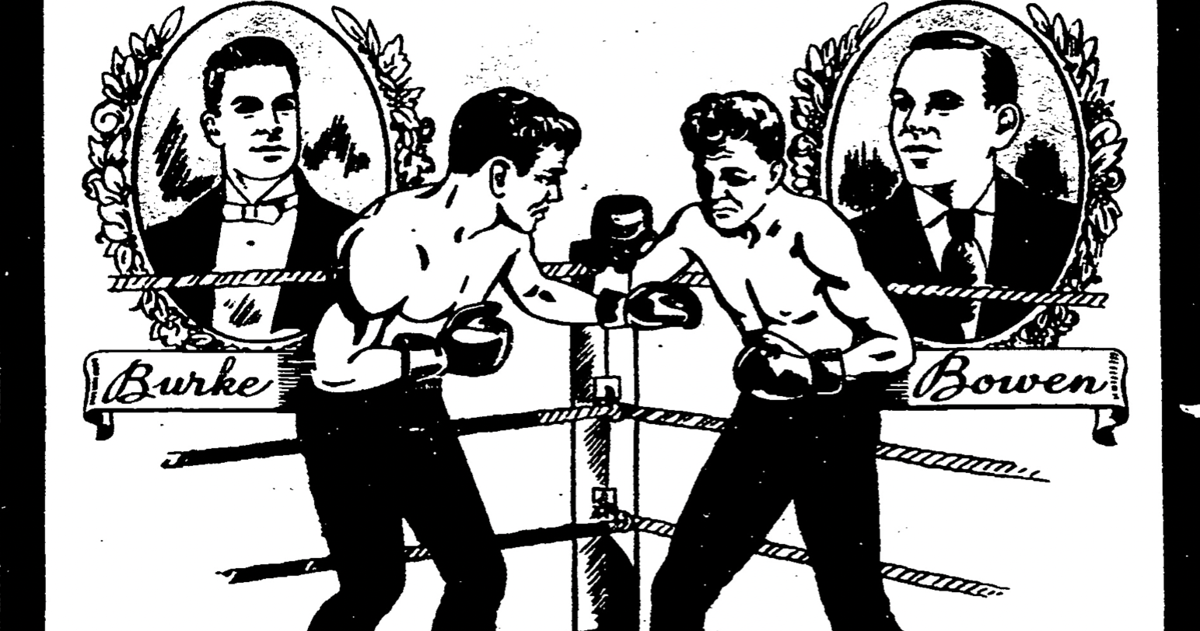
The Legendary Bout of Bowen and Burke
After an exhausting seven hours in the ring, Andy Bowen and Jack Burke were unable to lift their arms. As the fight progressed to 110 rounds at the Olympic Club in New Orleans, the audience began to dwindle. By the halfway point, Burke had fractured both hands and focused on evasion through head movement, footwork, and angles to dodge Bowen’s hits.
The Stopping of the Fight
In the 108th round, referee John Duffy indicated that the match would be stopped if a clear winner did not emerge in the following two rounds. After those rounds elapsed, both fighters were too disoriented to continue. “Gentlemen, this fight is off,” Duffy announced, declaring it a no contest. This April 1893 match, billed as “one of the greatest scientific events of the times,” lasted from 9:15 p.m. until 4:41 a.m. the next day, setting a record for the longest gloved boxing match ever documented, according to Guinness World Records.
A Legacy of Athletic Feats
The New Orleans States-Item, a now-defunct newspaper, aptly captured this legacy in a 1938 piece: “The New Orleans of today holds no more fame than the New Orleans of yesteryear. For it was here that some of the world’s sport celebrities performed.” In the years following the bout, the Olympic Club continued hosting fights until it burned down in the late 1800s. New Orleans produced several boxing champions, including Pete Herman and Tony Canzoneri, and more recently, Regis Prograis and Tiffany Junot.
The Aftermath for Bowen
Bowen, nicknamed the “Louisiana Tornado,” continued to be a dominant fighter after his match with Burke. A month later, he triumphed over Jack Everhardt in an 85-round bout. Tragically, Bowen died at the age of 27 after being knocked out by Kid Lavigne at the Olympic Club. Subsequent reports suggested his death was linked to injuries from the lengthy fight. This happened long before chronic traumatic encephalopathy (CTE) was recognized, a condition first identified as “punch-drunk syndrome” in a 1928 study.
Modern Boxing Regulations
Today, the World Boxing Council limits professional bouts to 12 rounds, a stark contrast to 1883, when no such restrictions existed. Bowen and Burke pushed the limits of human endurance, becoming pivotal figures in the discussion of safety regulations, while their fight marked a significant chapter in boxing history for New Orleans.
The Anticipation Before the Fight
In January 1883, the Olympic Club president invited Burke, the Texas lightweight champion, to face Bowen in a match at 133 pounds, offering $2,000 to the winner and $500 to the loser. Burke quickly accepted. By February, he was in Bay St. Louis training and made frequent predictions of victory against Bowen, who was preparing in Mississippi City and Covington. A few days before the fight, a newspaper report noted both fighters were in “tip-top condition,” and that a thrilling contest could be expected.
A Controversial Finish
While local newspapers provided limited coverage of the fight, a spectator later wrote that the no-contest decision was met with disappointment from the audience, many of whom believed Bowen should have won since Burke had suggested a draw during the 41st round. Both Bowen and Duffy denied that request. “Have no fear, gentlemen,” said Duffy, “This fight will finish, no matter how long it takes.” The spectator downplayed the violence of the match, commenting on its lack of brutality. After 7 hours and 19 minutes, the fighters agreed to a draw and divided the $2,500 purse. Burke later explained his perseverance was driven by loyalty to friends who had bet on him.
