



Commemorating International Holocaust Remembrance Day
WARSAW, Poland (AP) — On Tuesday, Holocaust survivors, politicians, and members of the public gathered at somber events across Europe and beyond to honor International Holocaust Remembrance Day, reflecting on the atrocities committed by Nazi Germany, which resulted in the deaths of millions.
International Holocaust Remembrance Day is observed annually on January 27, marking the liberation of Auschwitz-Birkenau, the most infamous Nazi death camp. The U.N. General Assembly designated this day as a commemorative occasion in a resolution passed in 2005.
Italian President Sergio Mattarella, addressing survivors in Rome, remarked on the horrific attempts by Nazi Germany to eradicate Jews from Europe. He emphasized how such actions exemplify the depths of human cruelty fueled by superficiality, indifference, and hatred.
Remembering at Auschwitz
In Auschwitz, Polish President Karol Nawrocki participated in a remembrance ceremony, which included prayers led by Jewish and Christian clergy. Bernard Offen, a 96-year-old survivor, expressed his concern over the resurgence of hatred and justified violence in contemporary society, urging that indifference can lead to devastating consequences.
Auschwitz was responsible for the deaths of approximately 1.1 million individuals, predominantly Jews, along with Poles, Roma, and others. The Soviet Army liberated the camp on January 27, 1945. Overall, around six million Jews perished during the Holocaust across various regions.
Personal Testimonies and Calls to Action
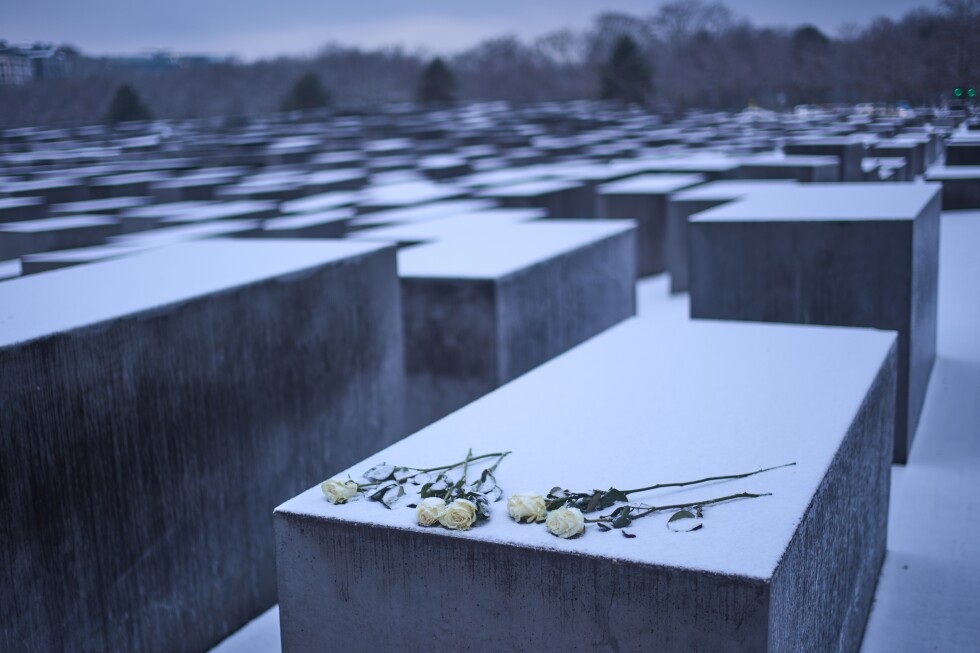
In Berlin, candles were lit at the Memorial to the Murdered Jews of Europe, symbolizing Germany’s acknowledgment of its past. Italian President Mattarella criticized the complicity of ordinary Italians during the era of fascism. In the Czech Parliament, survivor Pavel Jelinek, 90, noted he was the last living member of the 37 Jews who returned to Liberec after the war.
Though the number of Jewish Holocaust survivors globally is declining, with an estimated 196,600 still alive, some continue to share their stories. In the UK, King Charles and Queen Camilla hosted survivors, and 95-year-old Mala Tribich recounted her harrowing experiences during the Nazi invasion of Poland, urging the Cabinet members to combat antisemitism and to remember the past.
Addressing Contemporary Challenges
Kaja Kallas, the EU’s foreign policy chief, raised alarms about the rise of antisemitism and the misuse of AI to distort historical facts. Ukrainian President Volodymyr Zelenskyy called for global unity in the face of hatred and war, stressing the need for collective action akin to that which defeated the Nazis in 1945.
