



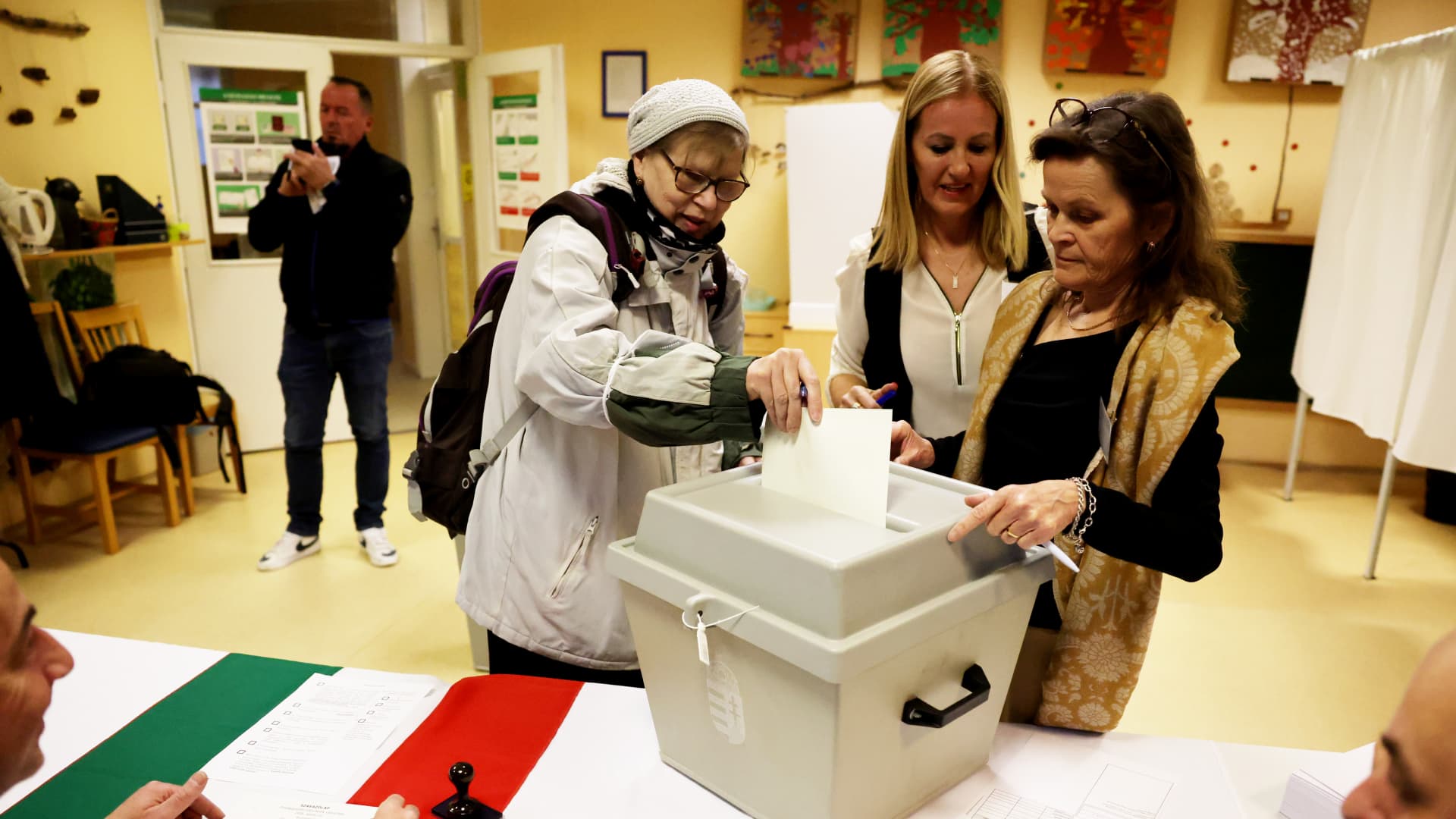
BUDAPEST, HUNGARY – APRIL 12: Voters arrive at polling stations in Budapest on April 12, 2026, during the parliamentary elections. (Photo by Janos Kummer/Getty Images)
Janos Kummer | Getty Images News | Getty Images
On Sunday, Hungarians began casting their votes in a pivotal election that may bring an end to Prime Minister Viktor Orban’s 16 years in power, causing reverberations in Russia and among right-wing factions in the West, including the Trump administration.
Orban, a nationalist with eurosceptic views, has established an “illiberal democracy” model admired by Trump’s MAGA supporters in Europe.
However, dissatisfaction among Hungarians is rising, particularly after three years of economic stagnation and rising living expenses, as well as reports of government-connected oligarchs accumulating wealth.
Polls indicate Orban’s Fidesz party trailing by 7-9 percentage points behind the upstart Tisza party led by Peter Magyar, who is polling at around 38-41%.
The voting process for the 199-seat parliament commenced at 6 a.m. local time (0400 GMT) and will conclude at 7 p.m.
High Voter Turnout Expected
“The country needs change,” said Mihaly Bacsi, 27, after voting for Tisza in Budapest. “We are experiencing tension on many fronts, and the current government exacerbates these feelings.”
Pollsters predict a record voter turnout.
“It’s crucial to return to our commitment to the West, which is where Fidesz began,” another voter noted.
The election is under scrutiny in Brussels, where many EU leaders criticize Orban for perceived threats to Hungary’s democratic practices, media freedoms, and minority rights.
An Orban defeat could also lead to the unblocking of a €90 billion ($105 billion) EU loan essential for Ukraine, removing a key ally for Russia within the EU.
Orban has framed the election as a choice between “war and peace.” He has campaigned extensively, claiming that Magyar would entangle Hungary in Ukraine’s conflict, a claim that Magyar disputes.
Public Frustration
Despite receiving support from the Trump administration, including a visit by Vice President JD Vance, Orban’s campaign faces challenges due to media claims of collusion with Moscow. Orban denies any wrongdoing, asserting that he aims to safeguard Hungary’s identity and values within the EU.
On the other hand, Magyar has capitalized on public discontent over corruption and declining living standards, particularly among younger voters eager for change.
“I feel both excited and scared,” said 24-year-old Kriszta Tokes, whose future hinges on this election. She noted she may leave Hungary if Orban wins.
While acknowledging some positive initiatives from Orban’s administration, Tokes believes young people are facing challenges that the government fails to recognize.
Orban’s Struggles with Young Voters
With only an 8% approval rating among those under 30, Orban has implemented measures like scrapping income tax for young workers and introducing a subsidized mortgage program. However, Magyar’s vision for change is resonating more strongly.
In a recent rally in Miskolc, Magyar declared: “This will be a referendum on our nation’s identity and future.”
Analysts caution that the election’s outcome is uncertain, with a significant number of undecided voters and a modified electoral map benefiting Fidesz. They note that a Tisza supermajority capable of amending the constitution, or a Fidesz majority, are both possible scenarios.
If Tisza wins, reversing the legal and institutional changes implemented by Orban may present substantial challenges for a new government, even with a simple parliamentary majority.
