



TALLINN, Estonia (AP) — Inna Vnukova, now settled in Estonia, continues to grapple with the haunting memories of her family’s escape from Russian-occupied eastern Ukraine early in the conflict. They spent days hiding in a damp basement in Kudriashivka following the full-scale invasion by Russia in February 2022, facing threats from armed soldiers, checkpoints, and ongoing shelling.
“Everyone was terrified and hesitant to venture outside,” Vnukova recounted to The Associated Press, aware that troops were hunting for Ukrainian supporters like her and her husband, Oleksii Vnukov. In mid-March, she made the tough decision to flee with her 16-year-old son, Zhenya, alongside her brother’s family, temporarily leaving her husband behind. They made a perilous drive to Starobilsk while waving a white sheet amidst mortar attacks.
“We prepared for the worst,” said Vnukova, 42. “For four years, I’ve tried to erase this nightmare, but it’s impossible.” Many Ukrainians, like Vnukova, escaped the invasion, while those who remained risked detention or worse as Russian forces captured about 20% of the nation, affecting an estimated 3 to 5 million people.
A New Life in Occupied Territories
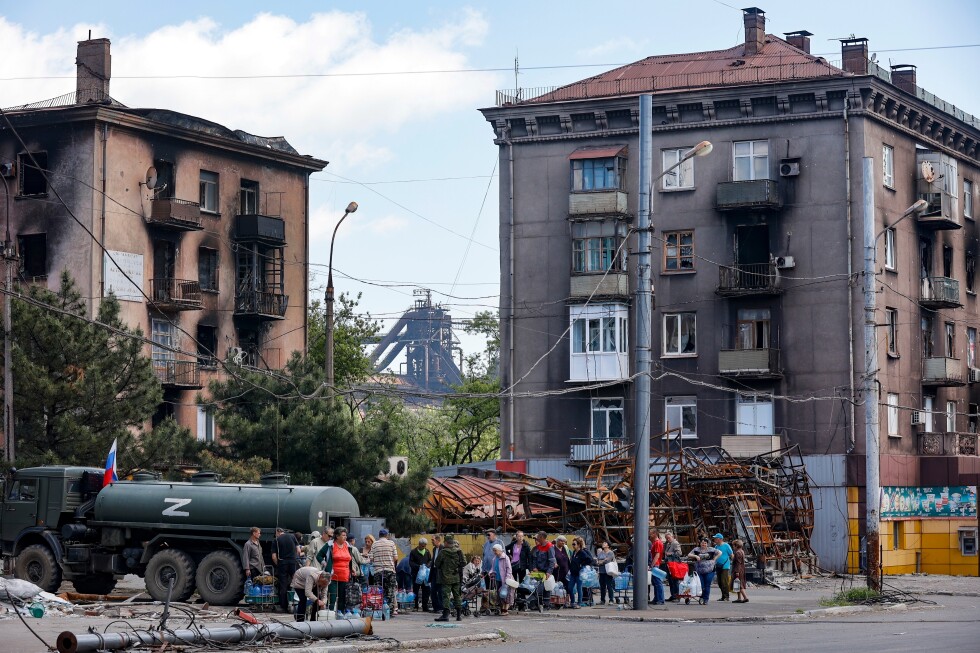
After four years of conflict, life in devastated cities such as Mariupol and Kudriashivka is still grim. Residents struggle with housing, water, electricity, heating, and healthcare challenges. President Vladimir Putin himself has recognized the region’s “numerous urgent problems.” In the illegally annexed areas of Donetsk, Luhansk, Kherson, and Zaporizhzhia, Russian language and culture are imposed on residents, including in schools. By spring 2025, an estimated 3.5 million people in these regions had been issued Russian passports, a necessity to access essential services.
Many residents live in fear of accusations of Ukrainian sympathies, leading to imprisonment, abuse, or even death, as noted by human rights advocates. Oleksii Vnukov, a court security officer, faced threats and harassment while he remained in the village for nearly two weeks before he, too, escaped. The family made their way through Russia to Estonia, where Inna now works in a printing house and Oleksii is an electrician. “Life has abandoned the occupied territories; people are merely surviving,” he stated.
Infrastructural Collapse and Societal Fear
Human rights organizations report that Russian authorities are utilizing “filtration camps” to identify those who may be disloyal, targeting anyone with government ties or military connections. Stanislav Shkuta, who previously lived in Nova Kakhovka, shared that he narrowly avoided arrest multiple times before reaching Ukrainian-controlled areas. “It was terrifying,” he recalled. “People were forced to strip to check for Ukrainian tattoos.” His friends remaining in the region reported increased dangers, including being stopped or inspected unexpectedly.
Devastation in Mariupol
Early in the war, Russian forces besieged Mariupol, culminating in the city’s capture in May 2022. A devastating attack on the Donetsk Academic Regional Drama Theater killed nearly 600 civilians. Most residents fled, but some took refuge in basements and faced constant threats. Those who stayed behind, now required to hold Russian citizenship to access basic services, feel the persistent threat of death. Efforts to Russify the city include changing street names and altering educational curriculums.
Despite their struggles, not all oppose the occupation. Some locals even support the Kremlin, believing Ukraine instigated the conflict. Meanwhile, new housing is being allocated to Russian arrivals instead of displaced residents. Appeals to Putin from those without homes emphasize their dire situations, highlighting the disconnect between promises and reality.
Inna Vnukova is now adapting to life in Estonia with her husband and their young daughter, Alisa. Their son is now 20, and they reflect on memories of a village that once hosted 800 but has dwindled to around 150 residents. “We dream of returning, yet we question what we’d find,” Vnukova expressed, embodying the uncertainty of many displaced residents.
