



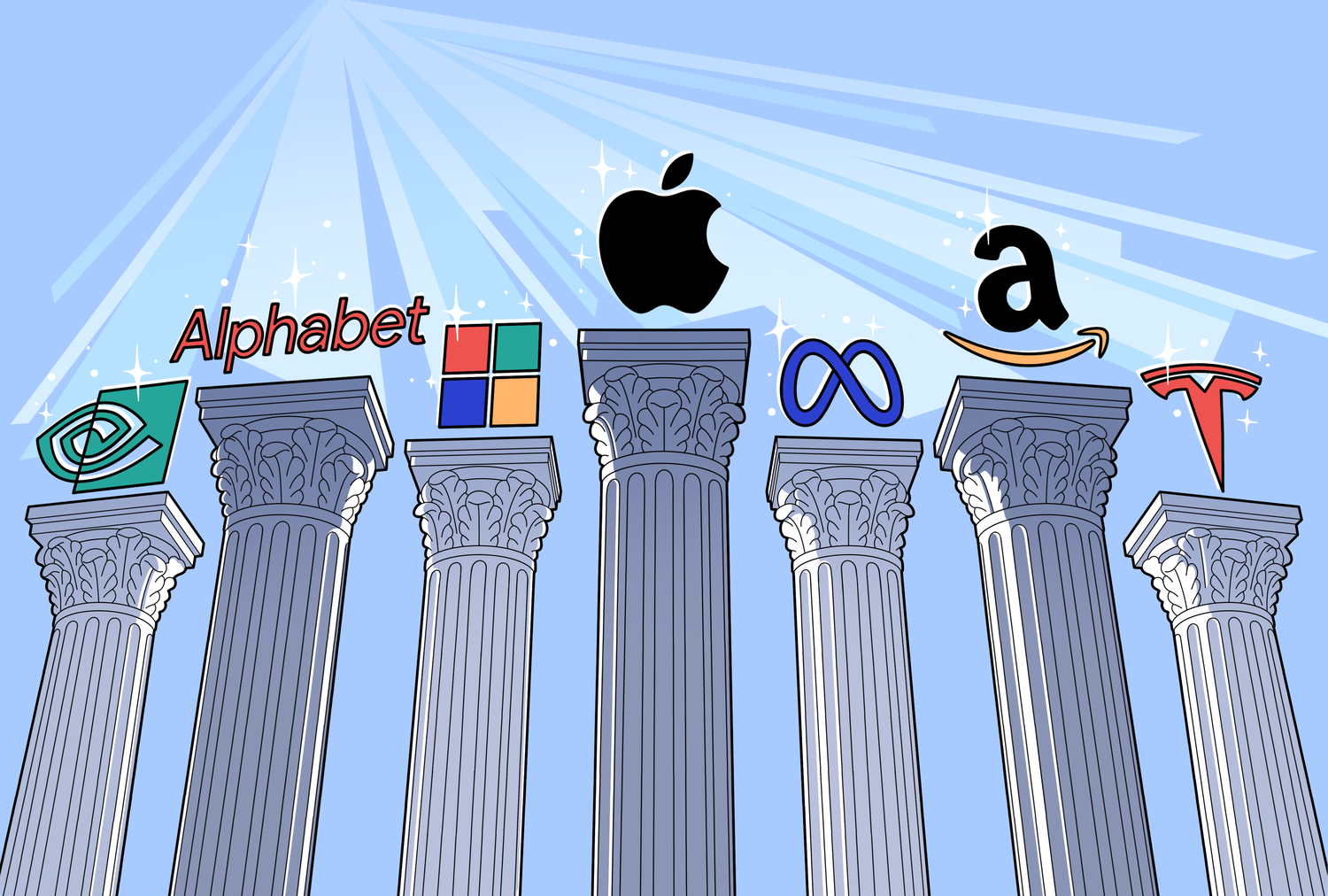
The term “Magnificent Seven” designates a set of tech giants that play a crucial role in the U.S. stock market’s performance, primarily due to their massive size. By October 2025, these companies together boasted a market capitalization over $22 trillion.
This guide elaborates on what investors should know about these firms, including their identity, significance, and the need to weigh their opportunities against inherent risks.
Who Are the Magnificent 7?
The Magnificent Seven consists of seven major companies recognized as key players in the financial markets. According to Marcel Miu, CFA, CFP, founder of Simplify Wealth Planning, “These firms have evolved into the gravitational center of today’s economy.”
Their ranks include:
- Alphabet (GOOG/GOOGL): The parent company of Google, dominating sectors like search, digital advertising, and cloud services.
- Amazon (AMZN): A leader in e-commerce and cloud services.
- Apple (AAPL): A global technology leader in consumer electronics and services.
- Meta Platforms (META): Owner of popular social media platforms and a frontrunner in augmented and virtual reality.
- Microsoft (MSFT): A major provider of software, hardware, and cloud services.
- Nvidia (NVDA): A tech innovator in graphics processing units, essential for AI.
- Tesla (TSLA): A pioneering force in electric and autonomous vehicles.
The dominance of these companies stems from their control over essential digital platforms and tech infrastructure, allowing them to invest heavily in innovations like AI.
Why These Stocks Matter So Much
Major stock market indices—such as the S&P 500—are weighted by market capitalization, which gives larger companies a bigger impact on the indices’ overall performance. The Magnificent Seven comprise about 30% of the S&P 500, which means they can significantly influence market rallies or corrections.
A poor earnings report from any single one of these companies can affect the market as a whole, increasing the risk for investors. Many are holding more exposure to this group than they realize, especially through passive investment vehicles.
How To Invest in the Magnificent 7
Investors can easily gain exposure to the Magnificent Seven through ETFs and mutual funds that hold substantial stakes in these companies, like the Vanguard S&P 500 ETF (VOO) or Invesco QQQ (QQQ). However, caution is advised as these investments can lead to unintentional overexposure to a select few firms.
Investors can also choose to purchase individual stocks to customize their portfolios but must navigate increased concentration risks. Balancing investments to mitigate these risks while focusing on valuations and market trends is essential for long-term success.
Strategy Considerations
Before diving into investments in the Magnificent Seven, investors should review their existing exposure, particularly in retirement accounts. Monitoring and rebalancing portfolios regularly can help maintain the desired asset allocation and manage risks effectively.
The Bottom Line
Given their substantial presence and influence in major stock indices, the Magnificent Seven represent attractive investment opportunities. However, it’s crucial for investors to pursue strategic diversification and regular portfolio rebalancing to avoid overconcentration risks.
