



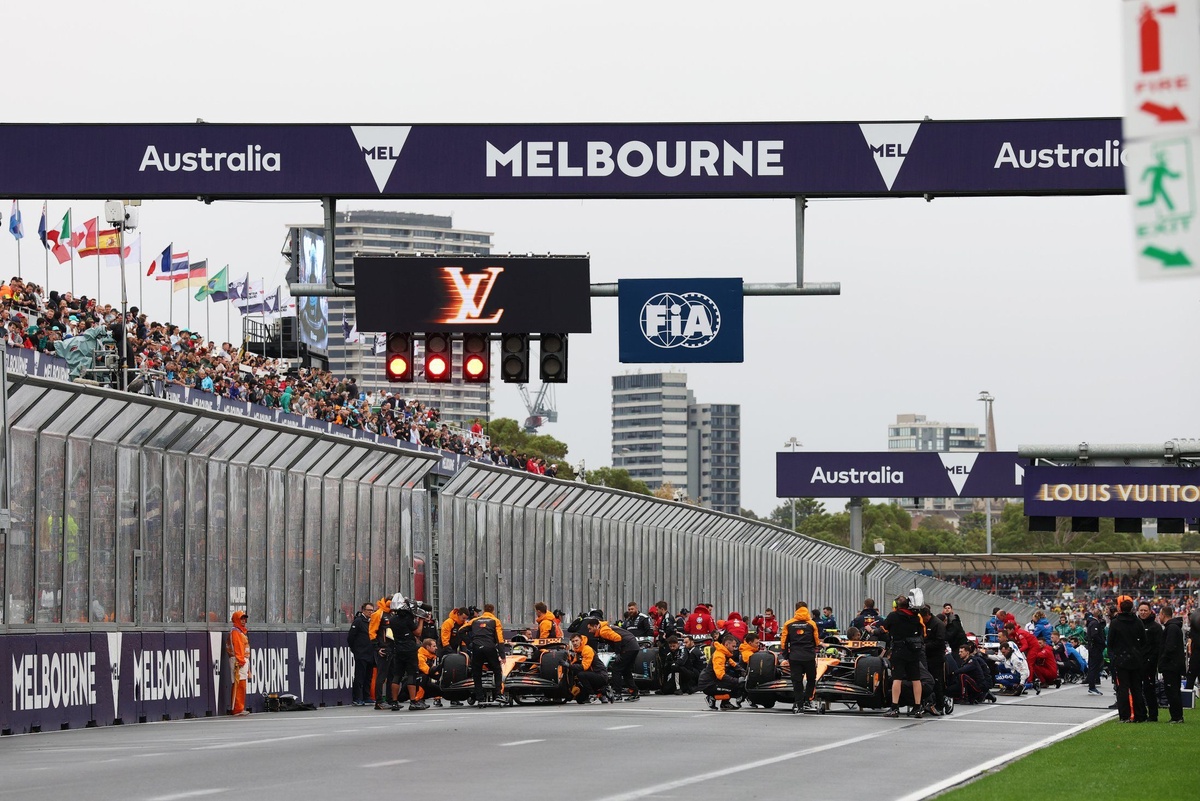
Here’s a paraphrased version of the article, maintaining the core information while using HTML format:
<div>
    <h2>Verstappen Voices Concerns on F1's 2026 Regulations</h2>
    <p>Max Verstappen expressed his worries about the new Formula 1 regulations, stating, “While it's manageable on the Bahrain circuit, in Melbourne, you'll truly see the limitations of energy on the straights.”</p>

    <p>Other drivers, including <a href="https://www.autosport.com/driver/oliver-bearman/876509/" target="_blank">Oliver Bearman</a> and <a href="https://www.autosport.com/driver/oscar-piastri/869530/" target="_blank">Oscar Piastri</a>, have supported his claims, noting that energy management will be significantly more challenging in Australia compared to the tracks used for pre-season testing.</p>

    <p>Bearman explained, “Melbourne is tough because there's less opportunity to harvest energy. This is reflected in our ability to gather seven megajoules per lap here versus 8.5 in Bahrain, marking a considerable difference. Last year's Melbourne circuit was heavily reliant on full throttle, which doesn’t align well with these regulations, making it a definite challenge.”</p>

    <p>Piastri, anticipating his home race, remarked, “The simulator indicates a significant difference. At certain circuits, we’ll face more limitations on energy harvesting compared to Bahrain. Here, depending on how you configure your car, you might avoid excessive lift and coast, but in Melbourne, you’d quickly find yourself running out of energy if you don’t strategize.”</p>

    <h2>Melbourne as a 'Harvest-Poor' Circuit</h2>
    <p>Piastri emphasized that circuit layout plays a critical role. McLaren's Andrea Stella added that there are two types of tracks: harvest-rich and harvest-poor. “Bahrain allowed for ample harvesting during braking, but Melbourne will require more strategic energy recovery,” he noted.</p>

    <p>Stella continued, mentioning that drivers might need to engage in “unconventional driving techniques” to recover energy, which strays from simply driving as fast as possible. Carlos Sainz has echoed the need for the FIA to be open-minded and consider adjusting regulations if necessary, expressing concern that the current requirements might be excessive.</p>

    <h2>FIA's Approach and Possible Solutions</h2>
    <p>Nikolas Tombazis, the FIA's single-seater director, is open to potentially revisiting the rules but emphasized the importance of first gathering data from the initial races. He noted adjustments might be required based on insights from actual driving conditions and on-track battles.</p>

    <p>As for practical solutions, one option could be lowering electrical power limits during races, making it less common for drivers to find themselves energy-depleted. Another possibility involves adjusting the 'super clipping' feature, which allows for energy harvesting while the driver is at full throttle. This adjustment has already been tested and could alleviate excessive lift and coast challenges.</p>
</div>
This format organizes the information clearly while retaining the essence of the original article.
