



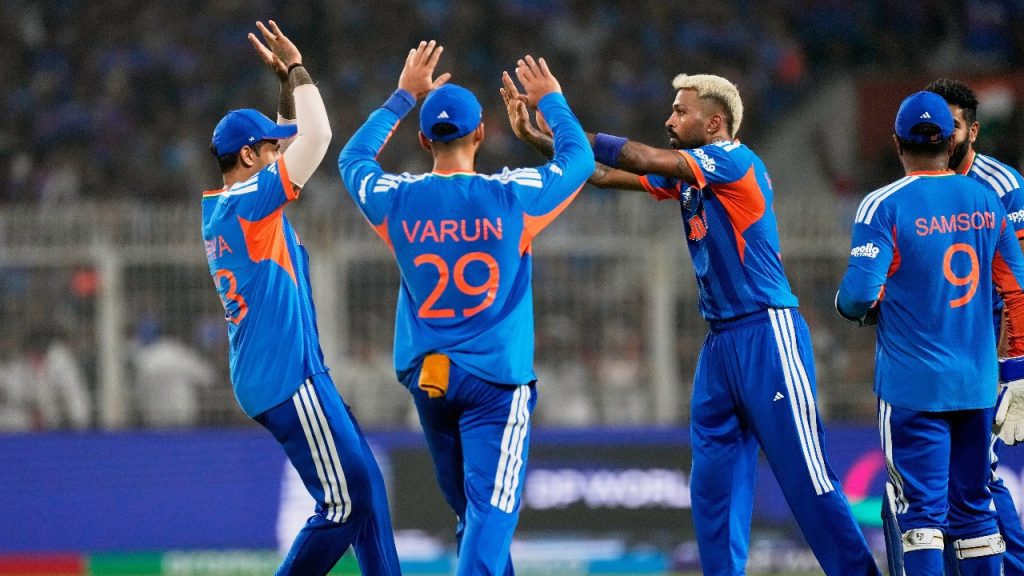
Following his unbeaten 97 against the West Indies on Sunday, Sanju Samson knelt in prayer, expressing gratitude. Others may have joined him, as India’s fate seemed dependent on his performance.
If Samson hadn’t changed the game at Eden Gardens, India could have faced elimination from the T20 World Cup, and criticism would have fallen heavily on him, captain Suryakumar Yadav, Abhishek Sharma, Hardik Pandya, and possibly Varun Chakravarthy.
While India has advanced to the semi-finals, don’t be misled by the results. This team has relied more on individual brilliance than on collective strength. The victories might be accumulating, but visible flaws remain unaddressed. For now, criticism is parked, but the issues persist.
Former Pakistani fast bowler, Mohammad Amir, has a keen perspective. “From a cricketing standpoint, India isn’t playing well overall. Just look at the fielding; they dropped several catches and fumbled. Outside of Bumrah, other bowlers are struggling,” he noted during a cricket analysis show.
The Duck Tales
A well-known tale from India’s 1983-84 tour of the West Indies involves Sunil Gavaskar taking the unexpected No. 4 position to counter the West Indies’ pace. Upon entering, the score was 0 for 2, prompting Viv Richards to quip, “It doesn’t matter where you bat, the score remains zero.” This resonates today as India’s batting order faced similar struggles in the World Cup, with four consecutive matches starting at 0/1.
Samson has returned to form, but Abhishek and Ishan Kishan are faltering. A saying in North India goes, “The old man died, but a child was born. We remained unchanged.” For every stellar performance by Samson, there’s a disappointment from Abhishek. The cycle of fluctuating performances continues across different matches. Against the West Indies, the failures were notable, as the top order struggled, with Samson’s 97 standing out against the collective 55 runs made by the rest.
The One-Man Problem
India’s bowling mainly hinges on Jasprit Bumrah, with others being inconsistent and often expensive. Varun Chakravarthy’s struggles have been particularly concerning, as he experiments too much without success. Axar Patel, meanwhile, has shown steadiness but lacks wicket-taking ability, which is crucial in knockout matches. The bowling lineup is heavily reliant on Bumrah; without his form, the team’s strength diminishes significantly.
The Butter Fingers
During their match against the West Indies, India dropped three catches, including an easy one by Abhishek, who also failed with the bat. Tilak Varma’s misstep contributed further. This trend is alarming; India has dropped 13 catches in the T20 World Cup 2026, the highest among Super 8 teams, maintaining a low catching efficiency of 72 percent.
All Bets Are Off
Combining these factors leads to a concerning outlook: an unreliable top order, a one-man bowling attack, and a brittle fielding unit. Logically, these issues spell trouble. However, the heart hopes for the typical resilient nature of the Indian team, which, despite chaos and doubt, always finds a way to prevail. Perhaps they will correct their dropped catches and batting inconsistencies, saving their best performance for the crucial moments ahead.
Written by Sandipan Sharma, who enjoys exploring connections between cricket, cinema, music, and politics.
