



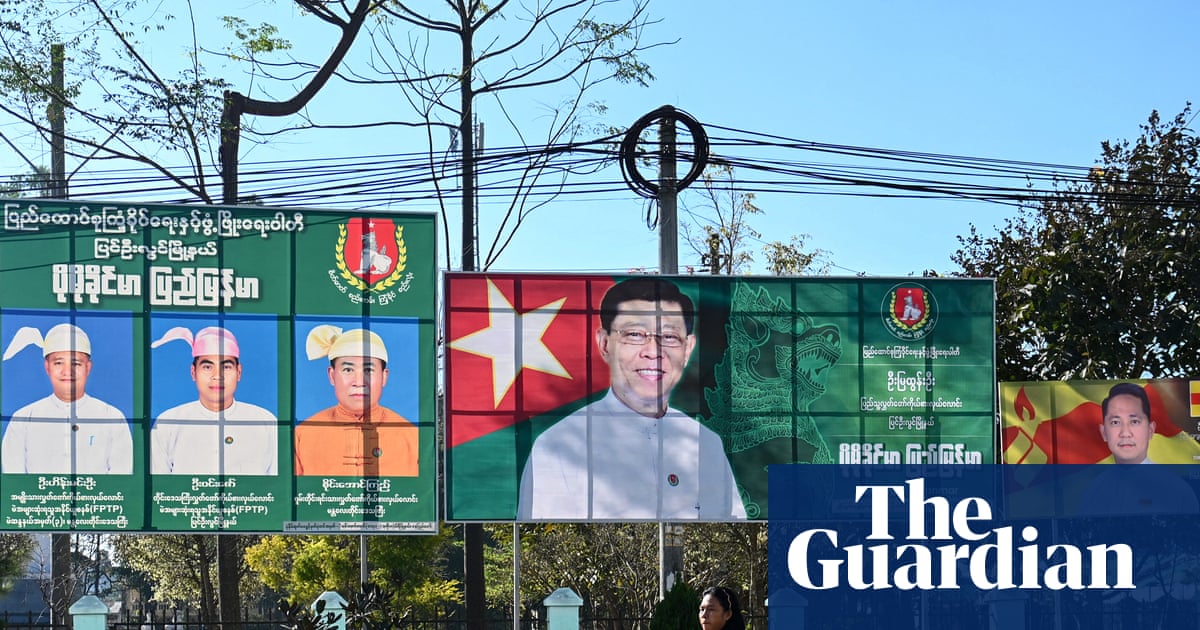
Myanmar is gearing up for its first elections since the military coup in 2021. However, with the former leader incarcerated, the leading political party dissolved, and about one-third of the country contested or held by rebels, skepticism abounds regarding the military’s assertion that the elections on December 28 will be “free and fair.”
“This is not for the people; it’s for their own agenda,” states Pai, a 25-year-old who fled Myanmar post-coup. “The ruling junta is looking for a way to escape their current predicament.”
As voting commences on Sunday, almost five years after the military’s takeover, the generals are hopeful that the election will legitimize their power and rehabilitate their image as international pariahs.
The military has dismissed critiques, claiming the election process is voluntary and enjoys public backing. “The election is for the people of Myanmar, not for the international community,” remarked junta spokesperson Zaw Min Tun, asserting that international approval is irrelevant.
While many Western governments and the United Nations have labeled the election a farce, China—the junta’s key ally—supports the voting process, viewing it as a step toward restoring stability. The elections will unfold in three phases.
Recent analyses indicate that the conflict has escalated over the past year, with military air and drone strikes rising by about 30%. Essential civic structures have been targeted in nearly daily assaults. For instance, a military attack on a hospital in Rakhine state this month resulted in numerous casualties, highlighting the ongoing violence.
‘Sham Elections’
The military’s paranoia has led to new election protection laws that impose severe penalties for criticizing the vote, including lengthy prison terms and even the death penalty. More than 200 people have been arrested since July, including those merely liking critical social media posts. Residents in cities like Yangon report that authorities are conducting door-to-door visits to ensure compliance with voting orders, leaving citizens with little choice but to comply.
On the ballot will be 57 parties, most seen as affiliated with the military, providing merely the illusion of choice. The only significant opposition is from six parties including the military-backed Union Solidarity and Development Party, which is effectively running unopposed in many areas. Aung San Suu Kyi’s National League for Democracy, which gained a landslide victory in 2020, has been disbanded for not complying with military mandates.
The elections will not take place in 56 out of 330 townships, with around a third of the country potentially excluded due to ongoing conflict or opposition control. Intense fighting and military crackdowns have persisted, especially since the coup, culminating in a landscape where opposition groups and civilian defense forces engage actively against the junta.
Support from China has enabled the military to recover tactical ground by restricting supplies to its foes, allowing for adaptations in strategy such as enforced conscription and expedited drone operations. In preparation for the elections, the junta has intensified its attacks, with experts suggesting that violence will continue even after the vote to consolidate its power.
