



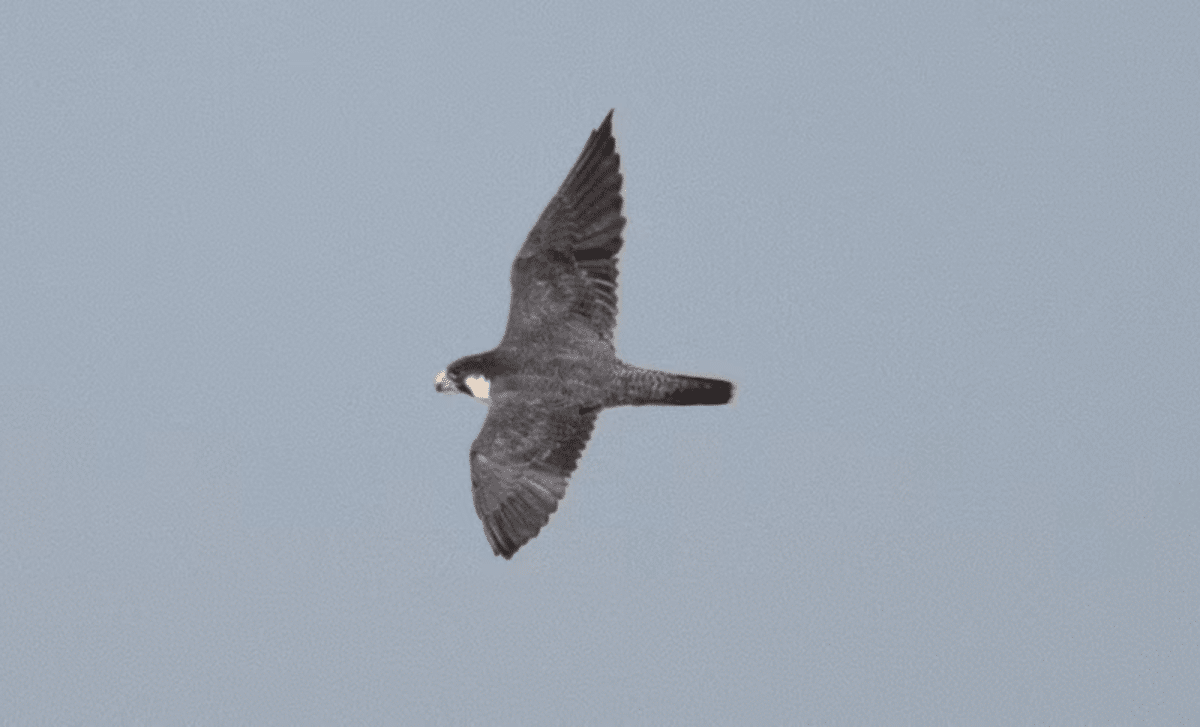
In a unique occurrence, ecologist Dr. Tim Henderson successfully spotted a Siberian peregrine falcon at Newhaven Wildlife Sanctuary in central Australia, marking the first record of this bird in the area. This sighting comes on the heels of unprecedented rainfall in 2024 that flooded wetlands and attracted numerous prey species, thereby inviting predators like the peregrine falcon. Typically found in the Arctic tundra, this rare subspecies has only been seen sporadically in Australia, making its presence inland a significant find for researchers and bird enthusiasts alike.
The Impact of Unusual Rainfall on the Sighting
Dr. Tim Henderson, a prominent ecologist at Newhaven Wildlife Sanctuary, indicates that the extraordinary rainfall in 2024 was pivotal to this sighting. He stated, “We recorded 637 mm of rainfall, the highest since 2001, making it the 5th wettest year on record.” This significant rainfall resulted in flooding of previously dry wetlands and created temporary water sources, attracting large congregations of prey species, such as waterfowl. In turn, these prey species attracted various predators, including falcons and hawks. Dr. Henderson elaborated that this unusual weather phenomenon led to increased diversity among raptors, including the Siberian peregrine falcon, as well as other species like the goshawk, presenting an outstanding opportunity for birdwatching.
The Siberian peregrine falcon, known for its remarkable speed and exceptional hunting skills, typically visits Australia’s coastal areas. However, its recent sighting inland at Newhaven is an unprecedented event that provides valuable insights into the bird’s migratory behaviors and the effects of climate change on wildlife.
Image credit: Kaitlin Formosa/AWC
The Importance of the Siberian Peregrine Falcon Sighting
As per the Australian Wildlife Conservancy, Dr. Henderson emphasized the significance of this sighting: “2025 has been a fantastic year for birdwatching at Newhaven,” he noted. “We recorded 17 species of diurnal raptors, including the rare migrant Siberian peregrine falcon, which typically migrates southward after the northern summer into Asia and Indonesia.” While the Siberian peregrine is usually found along Australia’s coasts, its presence in the country’s interior is exceedingly rare. This documented sighting, both visually and through photographs, establishes a landmark in Australian birdwatching history. The distinct markings of this subspecies, including a thin stripe beneath its eye, aided Dr. Henderson in identifying the bird despite its speed and distance.

Image credit: Tim Henderson/AWC
The Remarkable Speed of the Peregrine Falcon
The photograph taken by Dr. Henderson of the Siberian peregrine falcon is remarkable not only due to its rarity but also because of the bird’s extraordinary speed. As the fastest creature on the planet, the peregrine falcon can reach dive speeds exceeding 200 mph (320 km/h), making it a difficult subject for photography. Dr. Henderson recalled the challenge of capturing the image, laughing, “I was fortunate that the picture didn’t turn out blurry. I was visiting one of the flooded claypans when the peregrine shot by.”
Despite its incredible speed, Dr. Henderson had developed the habit of photographing during fieldwork, a skill that proved vital in allowing him to later confirm the bird’s identity. Although identifying the falcon on the spot was challenging, its distinguishing features, such as the stripe beneath its eye, enabled Dr. Henderson to accurately identify it as the Siberian subspecies.
The Verification Process
Confirming the bird’s identity was an exhilarating experience for Dr. Henderson. After taking the photograph, he shared it with ornithological experts for verification.
“When I returned to the office, I instantly suspected it was one of the rare migratory subspecies because of the thin stripe beneath its eye,” he explained. “I then verified with avian experts that it was indeed the Siberian subspecies.”
Dr. Henderson’s confirmation of this sighting marks a historic milestone, as the Siberian peregrine falcon is seldom observed in central Australia. For researchers and birdwatchers alike, the chance to document and photograph this species in such a unique location deepens understanding of its migratory habits.
