



The AI Job Threat
Almost daily, we receive alarming notifications that artificial intelligence poses a risk to our employment.
Wider Implications of AI
This concern goes beyond just writers and customer service roles, which are often highlighted as prime targets. It touches every area of contemporary life. Those heavily invested in AI, who now exert considerable influence on the global economy, need to continuously promote its potential to maintain the current hype and prevent a collapse. One day, we might all realize that the reality is far less impressive than advertised, facing the consequences long into the future. Those harming communities by purchasing golf courses to erect faceless data centers may never face repercussions, and I genuinely hope they never find solace.
A Cautious Perspective
However, I also acknowledge that my skepticism may stem from naive wishful thinking—rejecting AI’s promise could resemble resisting the shift from candles to electric lights. As long as I’m able to, this newsletter will feature content created by humans, but that doesn’t preclude the emergence of entirely automated golf media. It’s up to you to decide how much authenticity you seek in the art you engage with.
Brian Rolapp and PGA Tour Changes
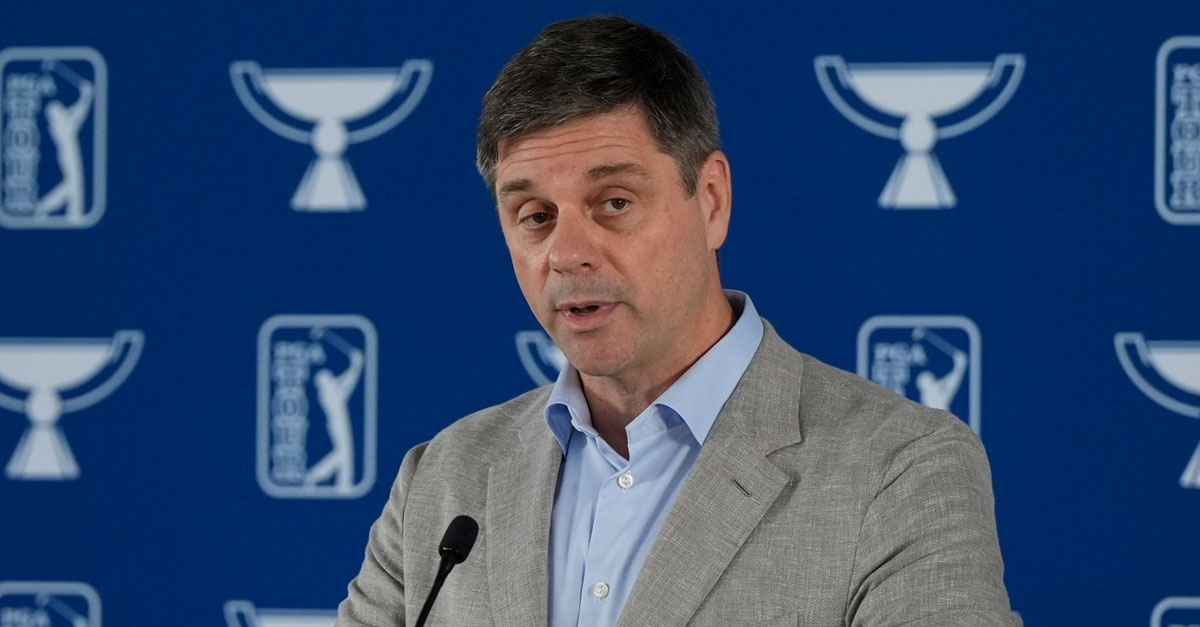
When I consider the intense discussions about AI taking over non-essential jobs, I think of Brian Rolapp, the new CEO of the PGA Tour. He isn’t focused on sentiments as he attempts to revolutionize the PGA Tour; his priority lies in optimizing shareholder value. Eamon Lynch from Golfweek has outlined Rolapp’s strategy, and having covered the NFL for 15 years, I sense a concerning future for the PGA Tour’s workforce.
Replaceability in Sports
The new leadership sees employees as highly expendable. This realization saddens me because there are captivating stories and remarkable characters in professional golf. Some of them, like Jacob Bridgeman, struggle to succeed but occasionally break through. Last week, he won the Genesis Invitational and currently leads the FedEx Cup standings. Yet, the path ahead will be more challenging.
The NFL Comparison
Rolapp’s background in the NFL reveals a culture where players typically have brief careers, often lasting just over three years. Once a player is seen as superfluous, quick replacements are made with little regard for past achievements. In this structured hierarchy, some players receive protection while others are discarded easily, akin to common car parts.
Adjustment for Golfers
The next generation of professional golfers will face similar treatment. The PGA Tour was once more nurturing, allowing players to enjoy fruitful careers well into their 30s and even 40s. In contrast, the sentiment now shifts towards immediate results and performance, leaving some feeling undervalued. Ryan Moore, a veteran, recently expressed concerns that the Tour’s current model caters only to a select few.
Future Prospects
While the environment may appear daunting, there are still pathways to success, as demonstrated by both Bridgeman and Adam Scott, albeit at different career stages. The competition is becoming increasingly ruthless, similar to the discussions surrounding artificial intelligence. Ultimately, while current changes may elevate those who adapt, we must not overlook the human cost for those who fall behind.
