



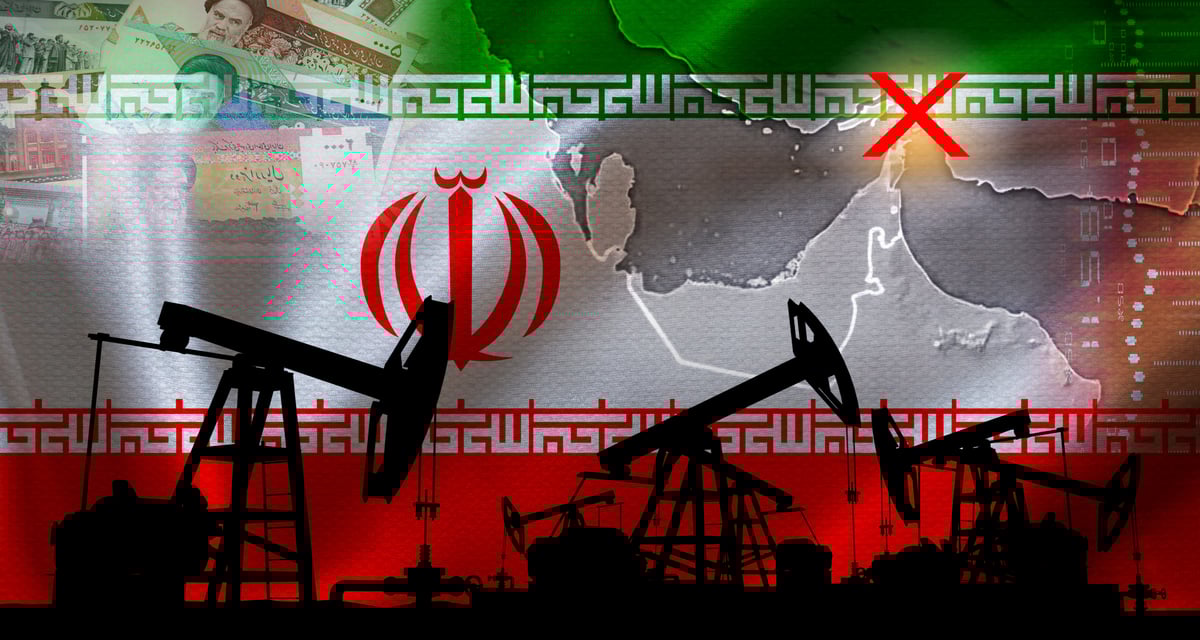
Since the commencement of the U.S. and Israeli strikes against Iran earlier this month, crude oil prices have soared dramatically. The Brent crude benchmark has increased by over 25%, surpassing $93 per barrel, while WTI, the main U.S. benchmark, has risen by 35%, now exceeding $91 a barrel.
Typically, such significant spikes in crude prices would lead to a surge in oil stocks. However, this has not been the case. Shares of major oil companies like ConocoPhillips (COP +0.21%) and Chevron (CVX +0.02%) have only seen modest increases, while ExxonMobil‘s (XOM +0.34%) stock has actually declined slightly.
Why have oil prices surged?
The rise in crude prices following the conflict with Iran can be attributed to two main factors: Iran’s status as a significant oil producer and its retaliatory actions targeting oil.
Iran produces approximately 3.5 million barrels of oil daily, representing about 4% of the global oil supply. A reduction in its production due to the war would considerably affect overall supply.
However, this is minor compared to the oil that passes through the Strait of Hormuz in the Persian Gulf, which is a crucial passage for global oil transport. Around 20% of oil supplies worldwide traverse this route each day. Iran’s attacks on oil-carrying vessels in the Strait have caused shipping rates to skyrocket and have led insurers to rescind policies. Consequently, oil shipments are down nearly 90%. Although the U.S. is working on providing insurance and naval escorts to oil tankers, the issue remains unresolved.
What can we expect in the oil market?
As long as Iran continues to obstruct oil exports from the Persian Gulf, crude prices are likely to keep rising. Goldman Sachs predicts that crude could exceed $100 a barrel this week if the situation doesn’t improve. Barclays anticipates prices might hit $120 per barrel if disruptions last a couple of weeks. Meanwhile, Qatar’s energy minister has warned that prices could soar to $150 if the Strait remains blocked.
Despite the potential for imminent price hikes, the subdued performance of oil giants like Exxon, Chevron, and ConocoPhillips suggests the market doesn’t foresee sustained high prices. There appears to be some optimism about a resolution, as evidenced by the U.S.’s announcement of a $20 billion reinsurance program for tankers in the Strait, which, along with naval escorts, could facilitate a return to normal oil flow. The U.S. may also release oil from its Strategic Petroleum Reserve to bolster supplies, and diplomatic efforts could pressure Iran to permit oil transport through the Strait.
