



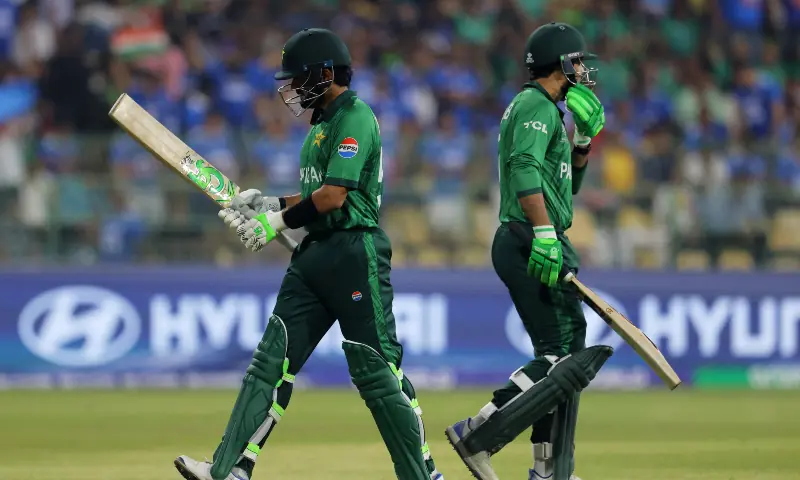
At this stage of the tournament, there are no shortcuts or cheat codes available. Pakistan must perform at its best to remain competitive.
First-time Players?
Pakistan’s performance against India on February 15 was disappointing. While the skill gap between the two teams is not unbridgeable, Pakistan needed to be at their peak to compete effectively, but they fell short.
It isn’t accurate to liken Pakistan to beginners, even against a more skilled opponent. However, their performance against India sometimes resembled that of inexperienced players. When facing an obviously superior side, every move must be executed flawlessly, a fact that eluded Pakistan during the match. Their bowling was inconsistent, including from Abrar Ahmed, who is usually reliable. Although fans expect fragile batting, the performance against India was particularly concerning.
The Team Mix-up
In the match against Namibia, Abrar Ahmed was noticeably absent. Despite a poor outing against India, where he did not take any wickets, he has generally performed well in T20 internationals. Additionally, there was significant discussion around Babar Azam’s batting position; he was moved down the order and didn’t need to bat as Pakistan posted a strong score of 199-3.
Coach Mike Hesson commented on Babar’s strike rate during power plays, indicating that his role needed adjustment based on the team’s situation. Pakistan’s first Super 8 match against New Zealand was canceled due to rain, which has plagued much of Pakistan’s cricket journey.
Decision-Making Challenges
Abrar’s omission raises concerns regarding management decisions, suggesting an overreaction to a single bad match from an otherwise dependable bowler. The introduction of Fakhar Zaman for Khawaja Nafay, who had a disappointing debut, also drew criticism. Under the leadership of Salman Ali Agha and Hesson, this team is more tactically proactive, yet the uncertainty in their choices could erode player confidence.
Moreover, Pakistan opted to bat first after winning the toss, a questionable decision given potential weather disruptions. Fortunately, the match was washed out, sparing them from the repercussions of any strategic blunders.
Uncertainty Looms
As Pakistan prepares to face England, the uncertainty surrounding team selections is unsettling. Speculation about player replacements is rife, with questions about Babar’s position and the unutilized talent of Naseem Shah. Such indecision contributes to doubts about the team’s strategy in upcoming matches, emphasizing the need for coherence.
As Pakistan approaches their next match against a modern British team, they must recognize that there are no shortcuts at this level of the tournament. With the pressure mounting following a recent washout and the need for must-win situations, Pakistan’s ability to adapt will be critical. While the analogy of a village untrained in the sport feels exaggerated, in a way, it may require collective effort to aim for World Cup success.
