



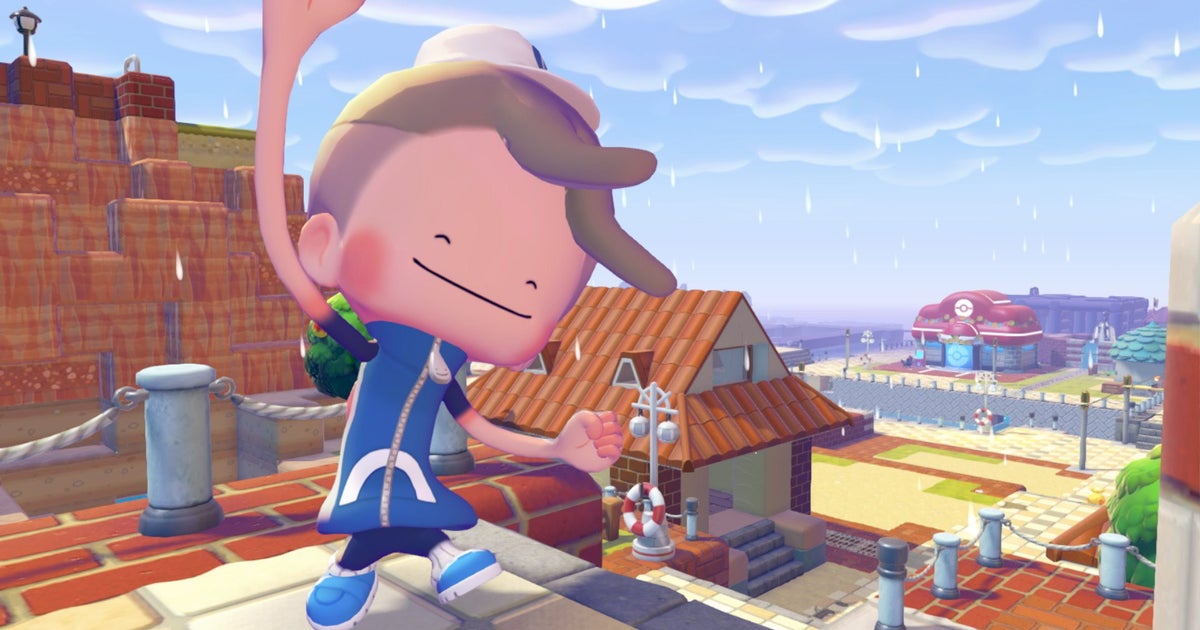
I was quite taken aback when I checked my Pokémon Pokopia playtime on Monday and found I’d somehow logged close to 24 hours over the weekend. However, that didn’t prevent me from chuckling when my colleagues mentioned losing sleep over it. Absurd, I thought! Unthinkable! Yet, not even a day later, I find myself writing this article while battling fatigue due to staying up until 2 AM last night, fully engrossed in fixing every single bridge in Bleak Beach. Pokopia has genuinely captivated me.
After a couple of hours with Pokopia and its delightfully bizarre post-apocalyptic setting, I was already sold on the game, and its hold has only intensified since then. The vibrant personalities of the Pokémon contribute significantly to my enjoyment; they are simply delightful companions. While I know they repeat the same random phrases, I still enjoy observing their animated conversations and how they interact with their surroundings—playing in the sandpit I built or lounging in deck chairs for a nap. Their quirky behaviors really charm me.
Moreover, the team at Omega Force, known for the impressive Dragon Quest Builders series, has crafted a wonderfully immersive and surprising campaign. Each distinct area in Pokopia presents its own Pokémon, resources, vibes, and important problems to tackle. For instance, in Rocky Ridges, I’m currently organizing a party, while at Bleak Beach—my favorite locale—the eternal cloud cover poses a significant challenge. These major campaign objectives are intertwined with smaller tasks that lead to exciting discoveries and handy tools.
Unlike the similar Animal Crossing, which keeps players engaged by withholding content, Pokopia offers genuine, immediate rewards. Despite some built-in wait times, the game constantly provides excitement. The addition of evergreen activities like crafting and customization leads to engaging cycles of exploration and acquisition, creating a sense of time distortion. I’ve spent considerable time optimizing irrigation systems and, having unlocked electricity, I’m reevaluating how I envision Pokopia’s world, which is on the path to becoming an intricate network of power lines and windmills. Omega Team excels at introducing new elements, ensuring every session yields something fresh to tackle.
Interestingly, as enjoyable as all this content is, what truly absorbs my time is that specific craving for fixing and restoring, akin to the satisfaction I find in Power Wash Simulator. In Pokopia, the world is a decayed shadow of its former self, left to deteriorate in the absence of humans. Trash accumulates with untold secrets in Rocky Ridges; cracked pathways and dilapidated structures abound; in Bleak Beach, collapsing walkways and eroded harbors call for my attention, and I cannot resist their allure!
Engaging with this fragmented world feels almost like an archaeological endeavor. I’m fascinated by how Omega Force has sprinkled hints amidst the ruins, enabling players to reconstruct the pre-calamity reality. Observing the landscape reveals patterns in the placement of eerily intact street lamps or hints of where handrails once extended. Even submerged remnants below the water can provide clues about former roads and walkways. Thus, the excitement of Pokopia isn’t solely in building; it’s in restoring the shattered world to its former glory, one piece at a time.
This meticulous endeavor demands a keen eye and imagination to fill in the gaps—much like a true archaeologist’s work. The satisfaction is immense! From the ruins I encountered, I’m gradually building a new Pokéfuture rooted in a lost Poképast, relishing the entire process. Although there may be skepticism surrounding Pokopia due to the recent Pokémon series, Omega Force has crafted something authentically great, often in surprising ways. I’m entirely fine with it monopolizing my free time, even if the fatigue might be influencing my perspective.
