



“Hell is not other people. Hell is yourself.” – Ludwig Wittgenstein
The Journey Begins
The story opens with a group of children gazing into a hole. A hooded boy, bearing a hangman’s noose, navigates a boat on an endless sea. It’s unclear where he comes from or is headed, or if he was among those peering into that abyss. All I know is to follow the red lights flickering through the darkness—they guide me through the fog. The ocean feels infinite, and my boat seems minuscule.
Meeting the Girl
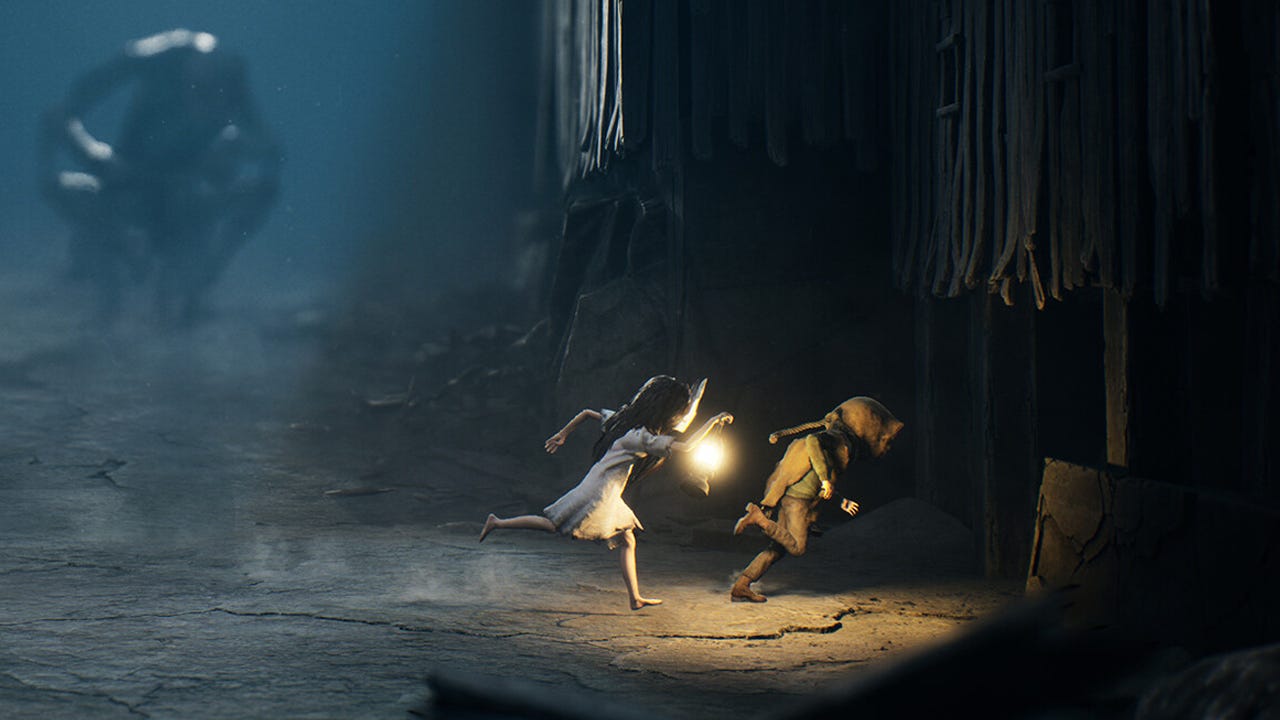
At the fourth buoy, the boy pulls a girl aboard. When he tries to remove her hare mask, she forcefully pins him down, tearing at his mask until he pushes her away. They lock eyes across the boat, and the distance feels immense. “I thought you were dead,” he says. “Where are the others?” she replies. He has no answers. She grabs a lantern and positions herself at the front, lighting the path ahead while the buoys still guide us.
Experiencing Reanimal
As I reach the conclusion of Reanimal, the latest horror puzzle platformer from Tarsier, I realize I’ve forgotten much of the intricate beginning. Engrossed in unraveling Reanimal’s mysteries, I momentarily lose sight of its key elements. A good narrative tells you what to expect from the start, and Reanimal excels in this regard, reminding players to hold onto all they’ve witnessed.
Cooperative Play
In the game, I control the boy while my partner controls the girl—it unfolds naturally. We navigate through sharp cliffs, past enormous mines, and through barren forests. Eventually, we encounter an industrial structure emerging from the mist. Reanimal excels in crafting vivid scenes.
Relationship and Storytelling
The siblings’ connection is never explicitly stated; we learn it through their actions—supporting and comforting each other through challenges. The narrative reveals itself gradually, inviting players to piece together the backstory of these characters. We soon realize our mission is to rescue other children, needing to find our friends.
Working Together
Reanimal can be enjoyed solo, but the experience is enriched when sharing the journey with someone else. Collaborating to overcome obstacles fosters a sense of achievement and community. The subtle differences in gameplay mechanics—like the girl’s ability to carry a lantern while holding other items—add layers to our cooperative strategies and decision-making.
Confronting Nightmares
The game’s environment presents various challenges. We grapple with haunting imagery and terrifying encounters, such as contorted bodies and menacing creatures. The tension escalates as we run from unimaginable horrors. While I won’t spoil the experience, it’s evident that the world the siblings have returned to is filled with dread—a place they seemingly chose to revisit, possibly reflecting the remnants of their past trauma. As we explore further, the liminality of the journey captivates us, begging for a deeper understanding of its narrative threads.
