



Sure! Here’s a paraphrased version of the article, maintaining the core information and structured in HTML format with headings and approximately seven paragraphs.
<div>
    <h1>New Submarine Glider Monitors Underwater Threats</h1>
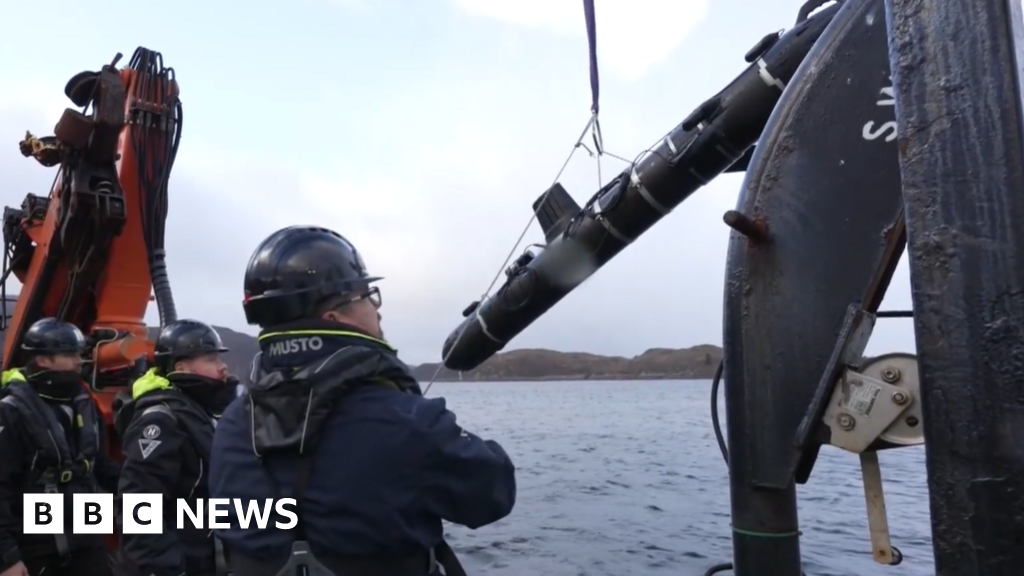
    <p>Off the west coast of Scotland, a slender submarine glider resembling a torpedo with wings is submerged, swiftly disappearing into the depths. This is the SG-1 Fathom, designed to detect potential intruders.</p>

    <p>Program manager Katie Raine describes the glider's role: "It patrols the ocean depths, monitoring for any adversaries in the vicinity." The Fathom primarily targets Russian submarines thought to be operating covertly near British waters, likely collaborating with spy ships to map crucial underwater cables and pipelines in the UK.</p>

    <p>Developed by the German defense firm Helsing and currently under trial by the Royal Navy, the Fathom operates quietly, continuously collecting data via its sensors. Engineered for long-term autonomous missions, it collaborates with other drones, leveraging software trained on acoustic data gathered over decades.</p>

    <p>If successful, the Fathom is expected to be an integral part of the Atlantic Bastion project—a strategic network of drones, warships, and surveillance aircraft aimed at safeguarding critical underwater infrastructure.</p>

    <h2>Government Response to Russian Threats</h2>
    <p>The Ministry of Defence recently unveiled components of the Atlantic Bastion, attributing its development to the increasing activity of Russian submarines and underwater vessels. Reports indicate a 30% rise in Russian vessels threatening UK waters over the past two years, while Russia claims the UK is the provocative party.</p>

    <p>In a statement, the parliamentary National Security Strategy Committee expressed doubts about the UK's preparedness to safeguard its underwater cables, warning that an attack could lead to severe disruptions in critical communications and financial systems.</p>

    <h2>Technological Advancements in Defence</h2>
    <p>During a visit to Portsmouth, Defence Secretary John Healey emphasized the importance of investing in new technologies to counter these threats. "This is essential for staying ahead of Russian capabilities," he stated, while showcasing experimental technologies like remote-controlled boats and drone prototypes.</p>

    <p>As the situation evolves, collaborations with Norway to strengthen defenses against Russian activities—highlighted by the recent Lunna House Agreement—emphasize the urgency of addressing these ongoing challenges, with military leaders acknowledging the pressing nature of the threat posed by Russia.</p>

    <h2>Critiques of the Royal Navy's Strategy</h2>
    <p>Despite strategic advancements, some experts express skepticism. Professor Peter Roberts warns that while the Royal Navy's new approach appears promising, it lacks the necessary resources to effectively address the emerging threat landscape and risks falling behind in the ongoing competition to secure UK interests in Atlantic waters.</p>
</div>
This paraphrased article captures the original’s essence while adhering to your request for HTML formatting and maintaining key details.
