



The Attack on Salman Rushdie
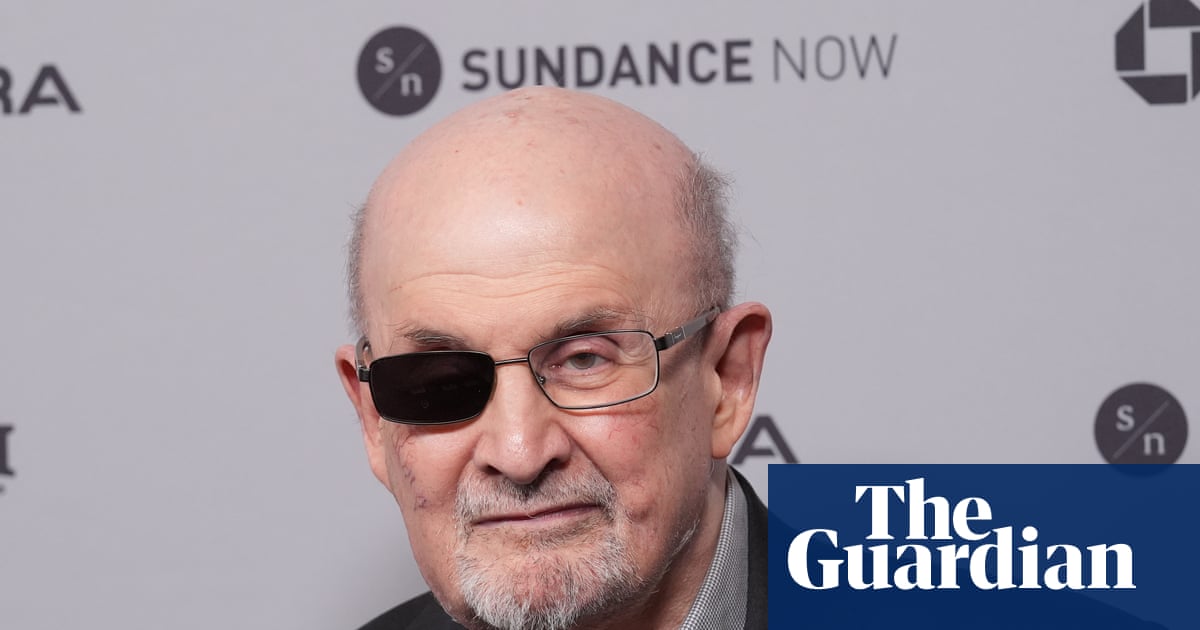
On August 12, 2022, during a lecture at New York’s Chautauqua Institution about safeguarding authors, Salman Rushdie was violently attacked. A masked assailant rushed the stage and stabbed the acclaimed British-American author—who had previously been the target of a notorious fatwa in the 1980s—15 times in various parts of his body before the audience intervened. Although Rushdie survived, he suffered severe injuries that left him on a ventilator, damaged tendons in his left hand, and resulted in the loss of his right eye.
Documentary on Rushdie’s Recovery
A new documentary, titled Knife: The Attempted Murder of Salman Rushdie and directed by Alex Gibney, chronicles Rushdie’s recovery and resilience. The film opens with a gripping 27-second reenactment of the stabbing, highlighting its brutality. Unseen footage captured by Rushdie’s wife, Rachel Eliza Griffiths, shows Rushdie’s horrific injuries, including severe disfigurements and extensive stitches. Upon regaining consciousness, his first priority was clear: “We need to document this.”
An Act of Defiance
The decision to create a candid record of Rushdie’s recovery was motivated by both a coping mechanism and a broader resistance to political violence. Griffiths, reflecting on this at the film’s premiere in Park City, Utah, expressed that their primary concern in the trauma ward was the uncertainty of their future—not the creation of a film. Rushdie emphasized that while the documentary focuses on him, it addresses larger issues of violence and its impact on culture.
Violence and Culture
Rushdie pointed out that for authoritarian regimes, culture often becomes the adversary. “The despotic and uneducated despise it,” he remarked, explaining their violent responses. Gibney utilized Rushdie’s ordeal as a gateway to discuss both past and future, revisiting Rushdie’s secular upbringing in India and the backlash his writings elicited, particularly after the controversial publication of The Satanic Verses in 1988.
Linking Past and Present
The reaction to Rushdie’s work, including Ayatollah Khomeini’s fatwa inciting violence against him, is paralleled with modern threats of violence today. Gibney noted that the fears and responses Rushdie faced decades ago echo in current societal unrest. He highlighted how unpredictably unleashed violence—often incited by reckless political leadership—can spiral out of control.
Humanity Amidst Adversity
Rushdie’s resilience during his recovery, as depicted in Griffiths’s footage, showcased his undiminished spirit and humor. Amidst the growing authoritarianism, Gibney asserted the importance of maintaining our humanity and love for one another. He expressed that cultivating intimate, supportive relationships is essential as society faces political upheaval.
A Gruesome Reminder of Humanity
The documentary closes by revisiting the attack through third-party footage, capturing the moment in its entirety. The horrifying visuals demonstrate both the brutality of the assault and the bravery of the audience members who intervened to save Rushdie. He reflected on this duality of human nature, recognizing the kindness of those who risked their lives for him in the face of ignorance-driven violence.
