



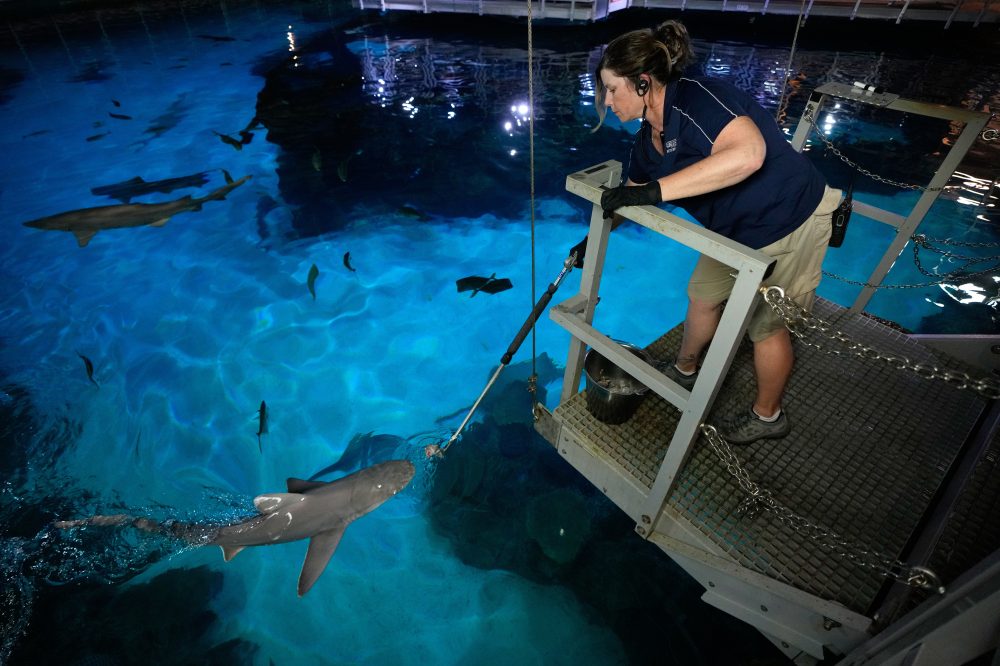
Feeding Sharks at Mandalay Bay’s Aquarium
The Shark Reef Aquarium at Mandalay Bay Resort serves 15 species of sharks three times a week, providing over 300 pounds of quality seafood. Under the guidance of lead aquarist Becky O’Brien, the facility houses more than 3,400 marine animals in a 1.3 million-gallon aquarium that has attracted over 21 million visitors since its opening in 2000.
A Unique Role for Aquarist Becky O’Brien
Becky O’Brien, who manages feeding at the aquarium, never envisioned herself as a shark nutritionist in a Las Vegas resort. However, her team diligently prepares meals for 15 different shark species, ensuring a diverse diet to maintain the health of the animals.
High-Quality Diets
O’Brien humorously states that the sharks enjoy a better diet than many visitors on the Strip, referencing the high-quality seafood available. The aquarium’s sharks receive balanced nutrition to support their specific physiological needs, particularly their fatty livers, which help control their buoyancy.
Diverse Menu for Marine Life
The sharks’ diet includes various fish such as mackerel and sardines, sourced from both wild catches and sustainable fisheries. The aquarium’s weekly fish consumption exceeds 300 pounds, allowing O’Brien’s team to replicate the sharks’ natural feeding habits.
Monitoring Health During Feedings
Feeding sessions are crucial for monitoring shark health. Changes in eating behavior can indicate potential health issues or breeding readiness. During mating season, male sharks often reduce their food intake significantly.
Conservation Efforts
The aquarium is home to zebra sharks, an endangered species threatened by overfishing and habitat loss. In collaboration with global organizations, the facility participates in breeding programs aimed at restoring zebra shark populations in the wild.
Longer Lifespans in Captivity
Curator Jack Jewell noted that many of the aquarium’s sharks live longer than their counterparts in the wild. For instance, a sand tiger shark at the aquarium is estimated to be between 33 and 36 years old, significantly exceeding their typical lifespan in nature.
