



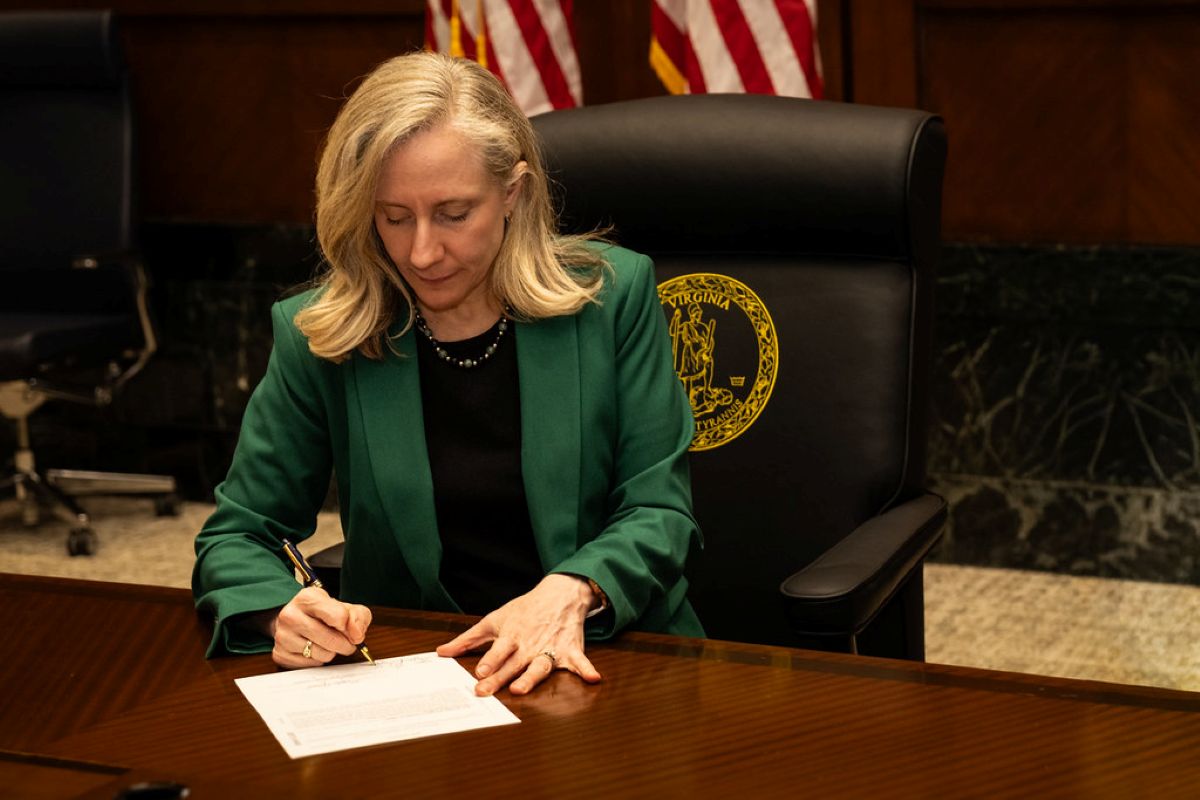
Governor Abigail Spanberger of Virginia vetoed a bill on Friday aimed at legalizing skill games, marking her second veto related to gambling within a two-day span.
In her rejection of Senate Bill 661 (the skill games bill) on Friday and Senate Bill 756 (which proposed a casino in Fairfax County) on Thursday, the newly inaugurated Democratic governor emphasized the need for a centralized authority to oversee all gambling activities in Virginia.
“The lack of a unified regulatory body for gaming presents oversight gaps that jeopardize Virginia’s capacity to ensure consistent enforcement, combat illegal activities, and safeguard consumers,” she stated. “Legalizing skill gaming and adding more machines to our communities would further strain our already fragmented system.”
Virginia currently permits a variety of gambling options, including a state lottery, sports betting, casino gaming, horse racing, and historical horse racing.
Ongoing Debate Over Skill Games in Virginia
The state has a tangled history with skill games, often referred to as gray machines. Initially introduced to raise funds during the COVID-19 pandemic, lawmakers enacted a ban in 2021 on these slot-like machines found in local establishments. However, businesses operating these machines successfully contested the law, leading to a prolonged legal battle until the state Supreme Court reinstated the ban in 2023.
Governor’s Concerns Over Impact on Communities
Senate Bill 661 aimed to authorize up to 25,000 machines across the state, with a proposed 25% tax on gross profits. The state’s general fund would receive 75% of the revenue, while the locality hosting the machines would get 15%. The remaining funds would support problem gambling treatment and oversight costs. Estimates suggest that if 25,000 machines were permitted, this tax could generate approximately $346.8 million annually.
Alongside her concerns about lacking centralized regulation, Spanberger highlighted data from a prior instance when 9,000 machines were allowed during the pandemic, illustrating disproportionate placements in economically disadvantaged communities. “The data reveal that these devices are primarily situated in areas with higher poverty rates and lower educational attainment,” she noted in her veto statement.
Challenges for Proposed NoVA Casino
On Thursday, Spanberger also vetoed SB 756. She pointed out that local officials from Fairfax County opposed the establishment of a casino resort within the state’s most populous area, home to over 1.1 million residents. The proposed measure would have bypassed a public vote in Fairfax County regarding the casino in Tysons Corner, setting a concerning precedent for local governance.
“This legislation removes local input and decision-making, which is unprecedented for casino location regulations set by the General Assembly,” the governor remarked in her veto announcement.
Currently, Virginia is home to several casinos, including Hard Rock in Bristol and Caesars in Danville. Following the defeat of two referendums in Richmond, the city of Petersburg will have a chance at a casino in 2024.
Possibility of Legislative Override
While Spanberger has vetoed the bills, the General Assembly has the opportunity to override these vetoes when they reconvene on April 22. A two-thirds majority in both the House and Senate will be required to overturn her decisions.
