



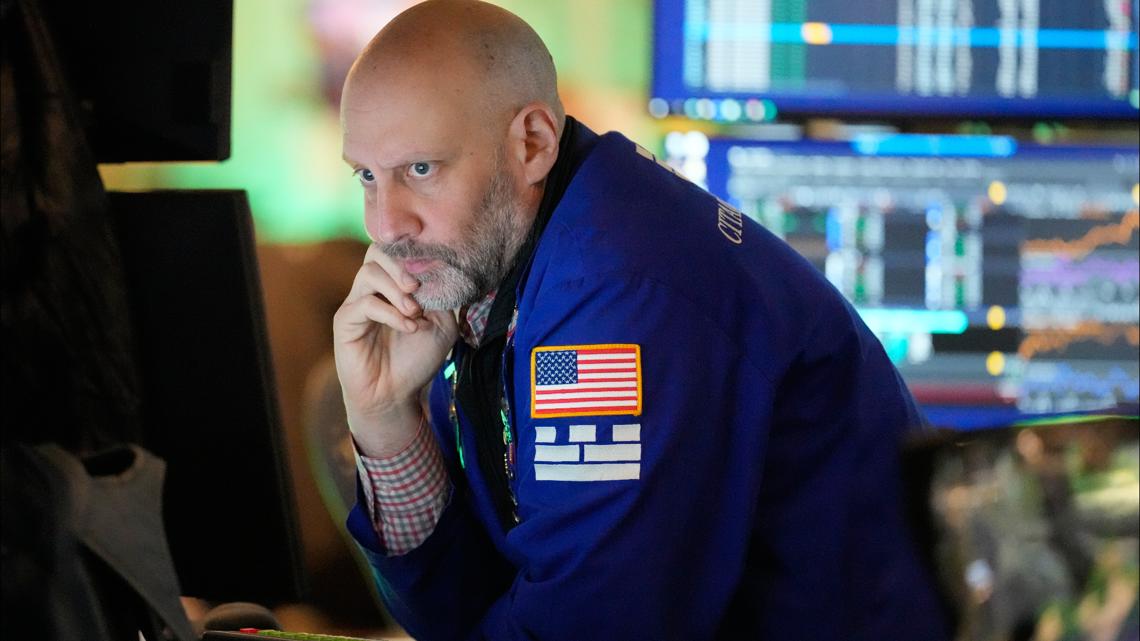
Just yesterday, U.S. stocks began with significant declines but managed to recover and finish the day with slight increases.
Market Reaction to Global Sell-Off
WASHINGTON — A sell-off is hitting Wall Street on Tuesday, following a global trend, as oil prices surge amid concerns that the conflict with Iran could inflict more enduring damage to the economy than initially anticipated.
Stock Performance
Midday trading saw the S&P 500 drop by 1.6%, having previously declined by as much as 2.5%. The Dow Jones Industrial Average was down 840 points, or 1.7%, at 11:30 a.m. Eastern time, while the Nasdaq composite also fell by 1.7%.
Oil Prices and Market Instability
In contrast to yesterday’s performance, today has seen oil prices escalate once again, raising more concerns. Brent crude, the international benchmark, surged by 7.8% to $83.79, rising from nearly $70 just days ago. Meanwhile, U.S. crude prices rose 7.6% to $76.63.
Geopolitical Tensions and Market Uncertainty
Oil prices spiked after Iran’s attack on the U.S. Embassy in Saudi Arabia, expanding its list of targets to include critical areas for global oil and gas production. Anxiety is particularly acute regarding the Strait of Hormuz, a vital passage through which about one-fifth of the world’s oil flows. An Iranian military leader declared, “The Strait of Hormuz is closed,” threatening to target any ships that attempt to pass.
Fed Policy and Inflation Concerns
Worries persist over how long the conflict might last, as a recent attack by the U.S. and Israel has already resulted in the death of Iranian Supreme Leader Ayatollah Ali Khamenei. In this context, President Donald Trump noted that “Wars can be fought ‘forever’,” signaling ongoing military engagement. Some investors believe this downturn is not a precursor to a prolonged bear market, suggesting stocks might rebound if the conflict is brief.
Impact on Households and Businesses
Rising oil prices are intensifying inflationary pressures, impacting U.S. households and businesses by increasing gas prices and shipping costs. The average gasoline price in the U.S. rose overnight by 11 cents to around $3.11, according to AAA data. Consequently, energy-reliant companies are seeing significant market declines as investors react to these economic pressures.
Investment Trends and Future Outlook
In bond markets, Treasury yields have increased due to inflation fears, with the yield on the 10-year Treasury initially exceeding 4.10% before settling at 4.06%. Higher yields can raise borrowing costs for households and businesses, placing downward pressure on stock prices and other investments. Furthermore, inflation may restrict the Federal Reserve’s ability to lower interest rates, despite ongoing calls from Trump for immediate rate cuts.
