



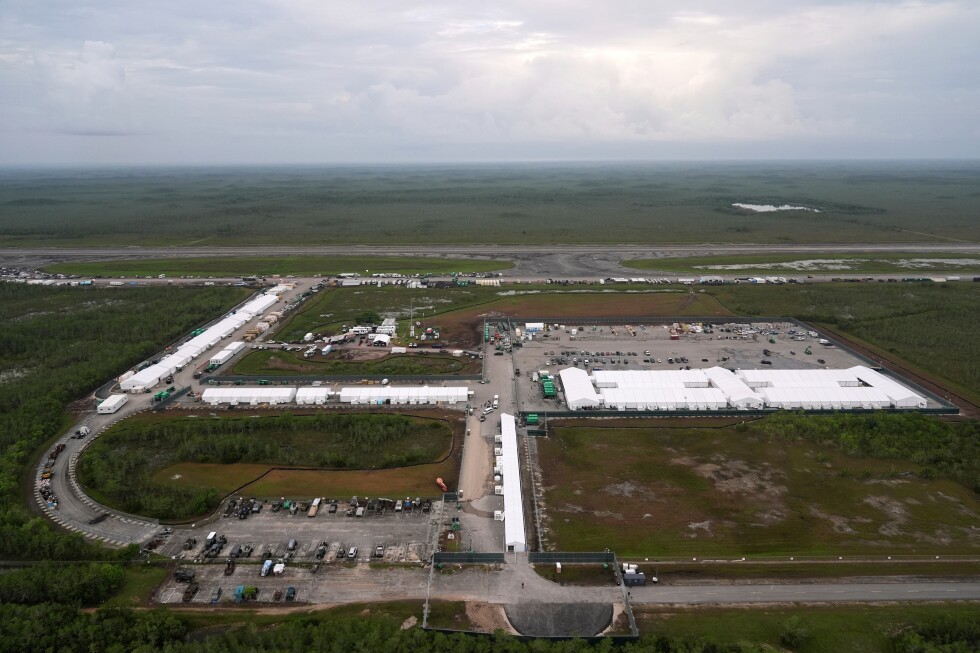
MIAMI (AP) — Felipe Hernandez Espinosa endured 45 days at “Alligator Alcatraz,” an immigration detention facility in Florida where detainees reported issues such as worms in the food, non-flushing toilets, and overflowing sewage. The place is infested with mosquitoes and other insects.
Hernandez, a 34-year-old seeking asylum, has spent the last five months at an immigration detention camp at the Fort Bliss Army base in El Paso, Texas—where two migrants died in January—and reports similar deplorable conditions, according to human rights advocates. He wishes to return to Nicaragua but has been told he must appear before a judge. After nearly seven months of detention, his hearing is set for February 26.
Extended detentions have increased during President Donald Trump’s second term, mainly due to a new directive that generally prevents immigration judges from releasing detainees while their cases are pending in overcrowded courts. Many, like Hernandez, are ready to abandon their attempts to remain in the U.S.
“I came to this country thinking they would help me, but I’ve been detained for six months without committing a crime,” he expressed in a phone interview from Fort Bliss. “It has been too long. I feel desperate.”
The Supreme Court established a ruling in 2001 that immigrants cannot be held indefinitely, determining that six months of detention is a reasonable maximum. Currently, the number of detainees held by ICE has exceeded 70,000, with 7,252 individuals in custody for at least six months as of mid-January. Among them, 79 have been detained for more than two years, more than double the figure from December 2024.
The Trump administration is offering plane tickets and $2,600 to those who leave voluntarily; however, detainees like Hernandez are told they cannot exit until they see a judge.
Legal Concerns Highlight Ongoing Issues
Attorney Ana Alicia Huerta, during her visit to an ICE detention center in McFarland, California, found that several detainees had signed forms indicating their willingness to leave the U.S. but were still awaiting their deportation. “All are telling me: ‘I don’t understand why I’m here. I’m ready to be deported,’” Huerta stated, emphasizing that such cases are becoming more prevalent.
