



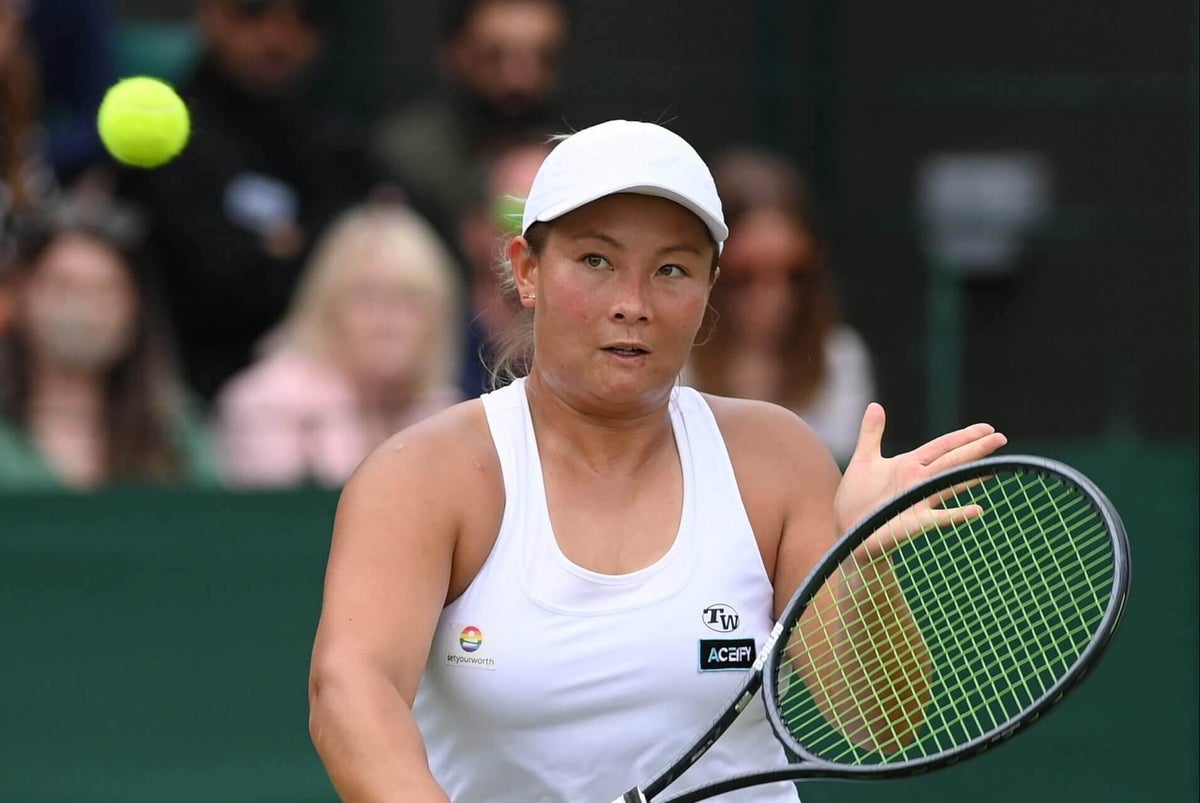
Tara Moore Seeks $20 Million in Damages from WTA Tour
Tara Moore, a former British doubles No. 1 currently serving a four-year doping ban after testing positive for two prohibited anabolic steroids, is pursuing $20 million in damages from the WTA Tour.
Moore asserts that her positive tests for boldenone and nandrolone resulted from eating contaminated meat. In a legal filing made this month in a New York federal court, she claims the WTA had “concrete, actionable knowledge of a specific and well-documented danger of contaminated meat in Bogotá, Colombia, yet chose to remain silent, failing to warn athletes about the risk.”
This latest legal action follows a four-year doping suspension handed down to the 33-year-old last year, despite her previous exoneration. Moore was provisionally suspended in May 2022 after her positive tests for the anabolic steroids following a tournament in Colombia, which took place a month earlier. She contended that the steroids in her system were due to consuming beef and/or pork during her stay.
In December 2023, an independent tribunal ruled that Moore bore no fault or negligence. However, the International Tennis Integrity Agency (ITIA), responsible for the sport’s anti-doping program, appealed this decision to the Court of Arbitration for Sport (CAS).
In July, CAS sided with the ITIA, dismissing Moore’s counter-appeal and imposing a four-year ban, retroactive to her provisional suspension. This means that Moore, who has previously ranked as high as No. 77 in doubles and No. 145 in singles, will not be eligible to compete until the start of the 2028 season.
Following the CAS ruling, Moore took to social media, stating that “the anti-doping system is broken” and describing the process as “subjective.” She expressed that the past three and a half years have shattered her and changed her fundamentally.
Moore, a British citizen living in Indiana, has consistently denied knowingly consuming a banned substance. Her lawsuit argues that the CAS system assumes guilt, placing an almost impossible burden of proof on the accused, which she claims contradicts foundational legal principles in New York and U.S. law.
In response to her recent filing, a WTA spokesperson emphasized that the arbitration was neutral and upheld by a credible arbitrator, adding that further comments would not be made while the matter is ongoing. Both CAS and the ITIA have refrained from commenting on the case.
