



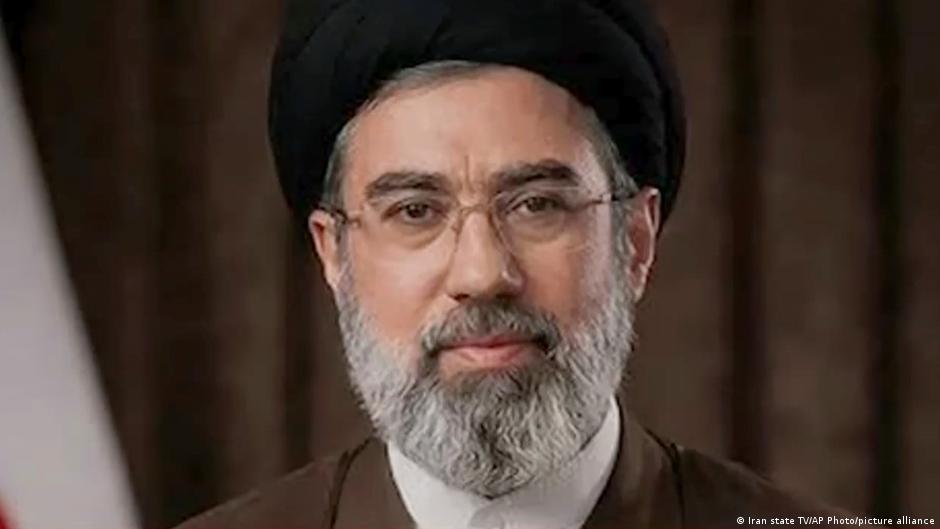
Mojtaba Khamenei, born on September 8, 1969, in Mashhad, is the second son of Ali Khamenei, Iran’s former supreme leader, who was killed in an Israeli strike on February 28. On March 8, a newly formed 88-member Assembly of Experts appointed him the Islamic Republic’s new supreme leader, amidst an ongoing conflict with the US and Israel.
Mojtaba is often characterized as an enigmatic yet influential presence in Iran’s power dynamics. He maintains significant relationships with the powerful Islamic Revolutionary Guard Corps (IRGC), which is widely believed to exert substantial control within the country.
The Assembly of Experts has called on the Iranian populace to rally behind their newly appointed leader and emphasize the importance of unity.
Despite his emergence as a leader, Mojtaba is viewed as a continuation of his father’s hardline regime. US President Donald Trump has previously referred to the appointment of Khamenei’s son as “unacceptable,” suggesting that Iran’s new leader may not endure if his appointment is not aligned with US interests.
Trump was quoted by Axios stating, “They are wasting their time. Khamenei’s son is a lightweight.” Following the leadership transition, Israel’s defense minister noted that any successor of Ali Khamenei would be seen as a “target for elimination.”
Mojtaba Khamenei: A Central Power Broker in Iran
Although the 56-year-old cleric has preferred to stay out of the public eye and never held an official government role, he is understood to wield considerable influence, particularly within the IRGC. His political significance became known in the mid-1990s as he was often seen alongside IRGC members and veterans of the Iran-Iraq war.
Mojtaba gained visibility during the 2005 presidential elections, which he is believed to have influenced to ensure the election of Mahmoud Ahmadinejad, a relative unknown at the time. This election weakened former president Akbar Hashemi Rafsanjani politically, although he refrained from responding to the situation publicly. Mojtaba faced similar accusations during Ahmadinejad’s 2009 reelection when protests erupted, with some demonstrators vocally opposing Mojtaba’s succession to his father’s position.
Mojtaba’s Alleged Financial Interests
Rumors surrounding Mojtaba’s alleged corruption have surfaced, with sources claiming that over 60% of Iran’s economy is managed through entities under Ali Khamenei’s control, including foundations and construction headquarters. Mojtaba is believed to oversee these financial operations.
A 2026 Bloomberg investigation revealed that Mojtaba’s investments include lucrative real estate in cities like London and Dubai, along with interests in various sectors across Europe. His wealth appears to be structured through intermediaries and complex corporate arrangements.
Mojtaba’s Early Life and Education
Official narratives depict Mojtaba as living modestly. After attending Alavi School, he entered the Qom seminary to further his Islamic education. His father emerged as a significant religious and political figure opposing the monarchy, and Mojtaba himself joined the IRGC in 1987 after completing high school.
In 1999, he began studying Islamic theology in Qom, aiming to become a cleric. Reports indicate that Mojtaba participated in the Iran-Iraq war as a teenager, and many people who served with him later became crucial figures in Iran’s intelligence and security landscape.
Not many anticipated that Mojtaba would eventually ascend to the highest leadership position in Iran, including individuals within his own family.
Edited by: Shamil Shams
